Social media management is defined as the ongoing process of creating, scheduling, publishing, engaging with, and analysing content across social platforms to grow a brand’s presence and drive measurable business results. For small and medium-sized businesses, this discipline covers far more than posting updates on Facebook or Instagram. It includes community management, social listening, and structured reporting, all working together as a coordinated system. Tools like Hootsuite, Buffer, and Sprout Social have made this process more accessible, but the strategy behind them is what separates brands that grow from those that stagnate. Social media management software sees a 72% adoption rate with an average ROI timeline of 11 months, which shows this is a long-term investment, not a quick fix.
What is social media management and why does it matter?
Social media management is the operational backbone of your brand’s online presence. It keeps your messaging consistent, your audience engaged, and your content flowing without gaps. Without a structured approach, even the best content gets lost in the noise.
The social media management definition extends well beyond scheduling posts. It covers five core functions that work together:
- Content creation: Producing written, visual, and video content tailored to each platform and audience.
- Scheduling and publishing: Planning and automating posts using tools like Buffer or Hootsuite to maintain a consistent presence.
- Community management: Responding to comments, messages, and mentions to build genuine relationships with followers.
- Social listening: Monitoring brand mentions, competitor activity, and industry conversations to inform your strategy.
- Analytics and reporting: Tracking performance data to understand what works and adjust your approach accordingly.
Each pillar supports the others. Strong content creation means nothing if community management is ignored. Analytics without action is just data. The five core pillars function as a system, not a checklist.
Pro Tip: Align each pillar directly with a business goal. If your goal is lead generation, weight your analytics towards conversion metrics. If it is brand awareness, prioritise reach and engagement data.

How does social media management differ from social media marketing?
These two terms are often used interchangeably, but they describe different activities with different purposes. Understanding the distinction helps you allocate your time and budget more effectively.
Social media management focuses on day-to-day operations: scheduling, posting, responding, and reporting. Social media marketing refers to paid and organic campaigns designed to achieve specific growth outcomes, such as driving traffic, generating leads, or promoting a product launch. Management is the engine. Marketing is the fuel.
| Activity | Social Media Management | Social Media Marketing |
|---|---|---|
| Primary focus | Daily operations and consistency | Campaign growth and conversions |
| Key tasks | Scheduling, engagement, reporting | Paid ads, promotions, audience targeting |
| Goal | Brand health and community trust | Reach new audiences and drive sales |
| Timeframe | Ongoing, continuous | Campaign-based, time-limited |
| Tools used | Hootsuite, Buffer, Sprout Social | Meta Ads Manager, Google Ads |
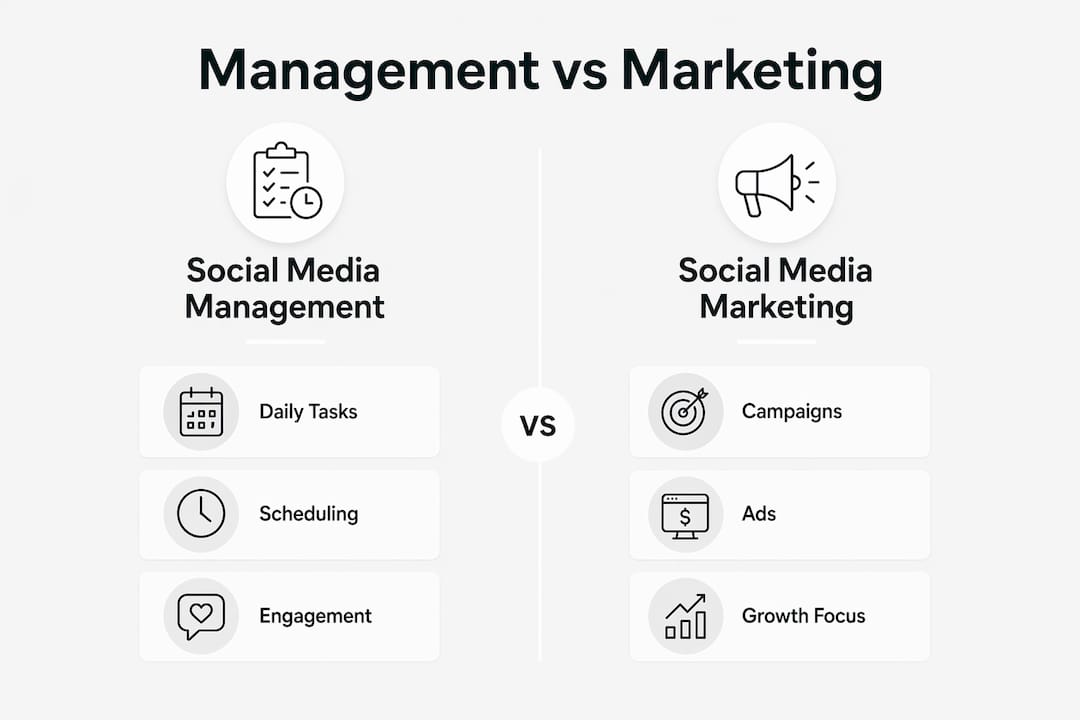
The two functions are most effective when integrated. Your management activity creates the consistent presence that makes marketing campaigns land better. A business that runs paid ads without a well-managed organic presence loses credibility the moment a prospect checks the profile. Social media management acts as the operational backbone that sustains brand consistency between campaigns.
What tools and strategies help smbs manage social media effectively?
Knowing how to manage social media well starts with choosing the right tools for your stage of growth. The good news is that affordable entry-level options start around £5 per channel monthly, while enterprise solutions scale up to £160 per user monthly. You do not need the most expensive platform to get results.
Here is a practical approach for small and medium-sized businesses:
- Choose a scheduling tool. Platforms like Buffer, Later, or Hootsuite let you plan and automate posts across multiple channels from one dashboard. This removes the daily scramble and keeps your publishing consistent.
- Build a content calendar. Map out your posts at least two weeks in advance. Include content themes, key dates, and platform-specific formats. A simple spreadsheet works at first, but dedicated tools like Trello or Notion scale better.
- Set up a monitoring feed. Use social listening features within your scheduling tool, or a standalone option, to track brand mentions and relevant keywords. This tells you what people are saying about your business in real time.
- Establish an approval process. Even a two-person team benefits from a review step before publishing. This prevents off-brand messaging and catches errors before they go live.
- Review analytics weekly. Set aside 30 minutes each week to check your top-performing content, engagement rates, and follower growth. Use this data to shape the following week’s content plan.
For a curated list of options suited to smaller budgets, the best tools for small business guide from Fyldedigital covers the most practical choices available in 2026.
Pro Tip: Automation handles consistency, but authentic engagement builds loyalty. Schedule your posts, but always respond to comments and messages manually. Audiences notice the difference between a bot reply and a real conversation.
What challenges do smbs face in social media management?
Managing social media as a small business is genuinely demanding. The platforms move fast, audiences expect quick responses, and maintaining quality across multiple channels stretches limited teams thin. Recognising the common pitfalls is the first step to avoiding them.
- Time pressure: Posting consistently while running a business is one of the most common reasons SMBs fall behind. Batching content creation into dedicated weekly sessions reduces the daily burden significantly.
- Brand inconsistency: When multiple people post without clear guidelines, tone and visual style drift. A simple brand style guide covering fonts, colours, tone of voice, and approved hashtags solves this quickly.
- Slow response times: Many SMBs underestimate the need for real-time community management. A comment left unanswered for 24 hours signals disengagement to both the individual and anyone else reading the thread.
- Cross-department coordination: Integrated cross-team workflows involving legal, HR, and customer service are critical for avoiding off-brand or non-compliant messaging. This matters most when handling complaints or sensitive topics publicly.
- Burnout: The always-on nature of social media creates real pressure. Setting clear response windows, such as 9am to 5pm on weekdays, and communicating them in your bio manages expectations without sacrificing professionalism.
Having a crisis management plan is not optional. Know in advance who approves responses to negative press, how quickly you aim to reply, and what your escalation process looks like.
How do you measure the success of your social media efforts?
Effective social media measurement tracks engagement rates, reach, sentiment, and conversion metrics aligned with your business goals. Without this structure, you are guessing rather than deciding.
The key is to match your metrics to your objectives. If you want to build brand awareness, track reach and impressions. If you want to drive enquiries, track link clicks and conversion rates from social traffic. Vanity metrics like follower counts tell you very little on their own.
| Metric | What It Measures | Why It Matters |
|---|---|---|
| Engagement rate | Likes, comments, shares per post | Shows how well content resonates with your audience |
| Reach | Unique accounts that saw your content | Indicates brand visibility and content distribution |
| Sentiment | Positive vs. negative brand mentions | Reflects overall brand perception in real time |
| Click-through rate | Clicks on links within posts | Measures how effectively content drives traffic |
| Conversion rate | Actions taken after clicking (enquiries, purchases) | Directly ties social activity to business outcomes |
Most scheduling tools include built-in analytics dashboards. Hootsuite Analytics, Sprout Social Reports, and Buffer Analyse all provide these metrics in exportable formats. For a deeper look at social media management platforms that include strong reporting features, Fyldedigital has reviewed the leading options available to SMBs.
Review your data monthly and compare it against the previous period. Look for patterns: which content formats drive the most engagement, which days see the highest reach, and which calls to action generate the most clicks. This turns reporting from a box-ticking exercise into a genuine planning tool.
Key takeaways
Effective social media management requires five coordinated pillars, the right tools, and consistent measurement to deliver real business results.
| Point | Details |
|---|---|
| Management vs. marketing | Management handles daily operations; marketing drives campaign growth. Both are needed. |
| Five core pillars | Content creation, scheduling, community management, social listening, and analytics work as a system. |
| Tool investment | Entry-level tools start around £5 per channel monthly and deliver measurable ROI within 11 months on average. |
| Cross-team coordination | Approval workflows and brand guidelines prevent inconsistency and compliance issues as your team grows. |
| Measurement discipline | Align KPIs to business goals and review analytics weekly to turn data into decisions. |
Why most smbs get social media management wrong
I have worked with dozens of small businesses across the Fylde Coast and beyond, and the most common mistake I see is treating social media management as a content production task. Business owners focus on what to post and when, but they neglect the half of the job that actually builds loyalty: responding, listening, and adapting.
Community management demands real-time responsiveness that most small teams simply have not planned for. A well-crafted post that gets three unanswered questions in the comments does more damage than no post at all. It signals that no one is home.
The second mistake is treating social media as separate from the rest of the business. Modern social media management is an operational discipline that touches customer service, sales, and even HR. The businesses I see growing consistently are the ones that have brought their social presence into their broader operations, not kept it siloed with one junior member of staff.
My honest advice: before you invest in more content, invest in a system. Build a simple approval workflow, set response time expectations, and connect your social data to your sales reporting. The content will perform better once the infrastructure is in place.
— tibor
How Fyldedigital helps smbs take control of their social presence
If you have read this far and recognised gaps in your current approach, you are not alone. Most SMBs have the ambition but not the systems to manage social media at the level their brand deserves.
Fyldedigital works with small and medium-sized businesses to build social media strategies that are practical, consistent, and tied to real business outcomes. From content planning and scheduling to community management and monthly reporting, the team handles the operational side so you can focus on running your business. Whether you need a full managed service or guidance on how to manage social media more effectively yourself, Fyldedigital offers tailored support that fits your budget and goals. Explore the social media services available for businesses across Blackpool and the Fylde Coast.
FAQ
What is the social media management definition?
Social media management is the ongoing process of creating, scheduling, publishing, engaging with, and analysing content across social platforms to build brand presence and drive business results. It covers both the operational and strategic sides of a brand’s social activity.
What does social media monitoring mean?
Social media monitoring, also called social listening, is the practice of tracking brand mentions, keywords, and competitor activity across platforms in real time. It helps businesses respond quickly to conversations and identify trends relevant to their audience.
How much do social media management tools cost?
Entry-level social media management tools start at around £5 per channel monthly, with enterprise platforms reaching up to £160 per user monthly. The right choice depends on the number of platforms you manage and the features you need, such as scheduling, analytics, or team collaboration.
What are the main benefits of social media management for smbs?
The core benefits include consistent brand presence, stronger audience engagement, faster response to customer enquiries, and data-driven content decisions. Businesses that manage social media systematically also see clearer links between their social activity and sales outcomes.
How many pillars does social media management have?
Social media management is built on five pillars: content creation, scheduling and publishing, community management, social listening, and analytics and reporting. Each pillar supports the others, and neglecting any one of them weakens the overall strategy.