Automated email marketing turns routine sends into a measurable revenue engine for small and medium-sized businesses. If you’re weighing whether to invest the time and budget, here’s the short answer: it recovers lost sales, scales personalisation without extra headcount, and frees your team to focus on work that actually needs human judgement.
TL;DR: Automation replaces repetitive manual sends with behaviour-triggered sequences tied to your CRM, producing better timing, higher conversion rates, and clearer attribution.
- Recover abandoned revenue: Cart abandonment sequences recapture sales that would otherwise be lost silently.
- Scale personalisation: Dynamic content and CRM data let you send relevant messages to thousands of contacts without writing each one individually.
- Free staff time: Removing manual list management and scheduling lets your team focus on strategy and customer relationships, as Mailchimp’s automation guide confirms.
- Stay compliant: GDPR and PECR obligations are easier to manage when consent records and suppression lists are built into your platform from day one.
Table of Contents
- What is automated email marketing, and how does it differ from manual sends?
- Why automation delivers real business benefits for SMBs
- Which automated campaigns should you build first?
- What are the core components of an automated email system?
- How do you measure whether automation is improving ROI?
- When should you automate, and when does a manual send work better?
- UK compliance: GDPR, PECR, and deliverability essentials
- Which tools suit UK SMBs?
- Key takeaways
- What to expect in the first 90 days
- Fyldedigital can set this up for you
- Useful sources
What is automated email marketing, and how does it differ from manual sends?
Email marketing automation uses triggers, segmentation rules, and pre-built workflows to send the right message at the right moment, without anyone pressing “send” each time. A trigger might be a form submission, a product view, a purchase, or a date. The platform evaluates that event, matches the contact to a segment, selects the appropriate content block, and dispatches the email automatically.
Manual batch sends work differently. You build a list, write an email, choose a send time, and broadcast it to everyone at once. That approach is fine for one-off announcements, but it cannot replicate the timeliness or relevance of a triggered message sent seconds after a customer abandons a basket.
The practical difference comes down to three things:
- Personalisation: Dynamic content blocks pull in CRM data (name, purchase history, location) automatically, as Bloomreach’s automation guide explains.
Think of it as the difference between a broadcast and a conversation.
Why automation delivers real business benefits for SMBs
The core advantage is that automation closes the gap between your strategy and its execution. Instead of chipping away at a manual send list, your campaigns run continuously in the background.
Automated workflows convert at higher rates because they reach subscribers at peak intent moments. A welcome email sent within minutes of sign-up performs far better than one sent the following morning. An abandoned cart reminder sent two hours after the customer left your site catches them while the purchase is still on their mind.
The business benefits stack up across four areas:
- Team efficiency: Removing repetitive scheduling and list-management tasks lets your marketing and sales teams focus on higher-value work, which directly improves your digital marketing workflow.
Triggered emails also outperform bulk sends on engagement, and adding personalised product recommendations to transactional messages increases revenue per open. That combination of better timing and relevant content is what makes automation worth the setup investment.
Which automated campaigns should you build first?
Start with the flows that produce the fastest, most measurable returns. For most UK SMBs, that means several key campaigns in a recommended sequence:
- Welcome series shortly after sign-up to set expectations and introduce your brand, which tends to have the highest engagement.
- Abandoned cart recovery soon after abandonment to recapture revenue from shoppers who left without buying, with measurable results typically seen within a month.
- Onboarding sequence soon after purchase or sign-up to reduce early churn by guiding new customers.
- Re-engagement campaigns targeting inactivity over a period to win back dormant contacts, ideally run periodically.
- Upsell and renewal reminders triggered by purchase milestones to increase order value and reduce subscription drop-off with minimal ongoing effort.
High-impact flows like welcome and abandoned cart are the right starting point because they address moments of clear intent. Subject lines for these emails should be direct and specific: “You left something behind” outperforms “Don’t miss out” every time. Each email needs one clear call to action, not three competing options.
What are the core components of an automated email system?
Understanding the moving parts helps you brief a platform, an agency, or an in-house team accurately. The key components are:
- Triggers: The event that starts a workflow (form fill, purchase, page visit, date).
- Segments: Dynamic audience groups built from CRM data, behaviour, or lifecycle stage.
- Content blocks: Personalised sections that pull in product images, names, or recommendations automatically.
- Workflow logic: If/then branching that routes contacts down different paths based on their actions.
- CRM integration: The single source of truth that ties email activity to real business events.
A sample workflow for a new lead looks like this:
- Contact submits an enquiry form on your website.
- CRM creates a contact record and tags them as “new lead.”
- Welcome email sends immediately with relevant content.
- If the contact opens and clicks within 48 hours, a follow-up nurture email triggers.
- If there is no engagement after five days, a re-engagement email sends with a different subject line.
- Sales team receives a CRM notification when the contact reaches a defined engagement threshold.
The CRM is the foundation. Automation built on weak or incomplete data produces irrelevant messages, which damages your sender reputation and frustrates contacts. A well-designed lead generation website feeding clean data into your CRM is what makes this system work reliably.
How do you measure whether automation is improving ROI?
| KPI | What it measures | How to calculate |
|---|---|---|
| Conversion rate | Percentage of recipients who complete a goal | (Conversions ÷ Emails delivered) × 100 |
| Revenue per email | Average revenue generated per send | Total revenue ÷ Emails delivered |
| Customer acquisition cost (CAC) | Cost to acquire one new customer | Total marketing spend ÷ New customers |
| Customer lifetime value (LTV) | Total revenue from a customer over time | Average order value × Purchase frequency × Retention period |
| Email attribution | Revenue directly linked to email campaigns | CRM-tracked conversions from email clicks |
CRM integration is what makes attribution reliable. When your email platform and CRM share data, you can trace a sale back to the specific email that triggered it, which is the evidence you need to justify budget or agency fees.
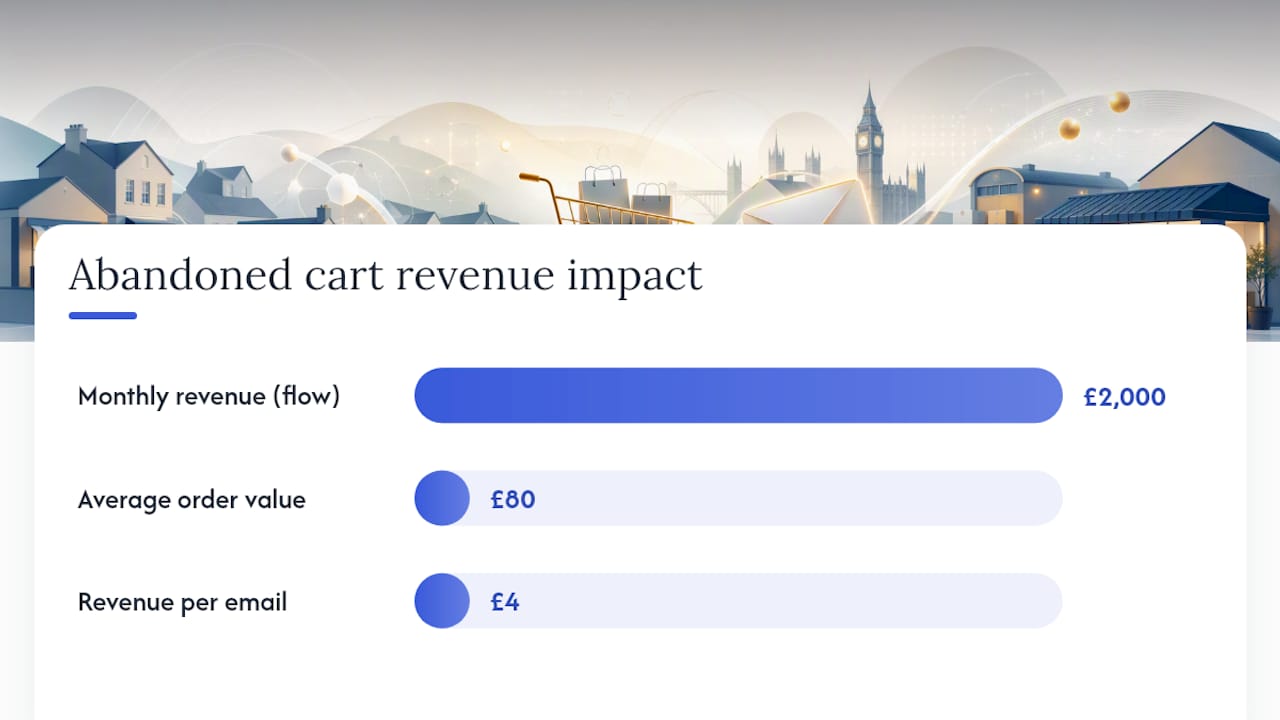
Example: If your abandoned cart sequence sends 500 emails per month and converts at 5%, that is 25 recovered sales. At an average order value of £80, that is £2,000 in monthly revenue from a single automated flow.
When should you automate, and when does a manual send work better?
Automation suits repeatable, data-driven scenarios. Manual sends are better for one-off or highly creative communications.
Automate when:
- The trigger is a specific, repeatable behaviour (sign-up, purchase, inactivity).
- The message needs to be timely (within hours, not days).
- The audience is large enough that manual personalisation is impractical.
- You have CRM data to make the content relevant.
Keep it manual when:
- You’re sending a one-off announcement (a product launch, a local event).
- The message requires individual creative judgement (a bespoke proposal follow-up).
- Your list is small enough that a personal approach adds genuine value.
A simple rule for SMBs with limited staff: if you find yourself sending the same type of email more than once a month to a defined group, it belongs in an automated workflow.
UK compliance: GDPR, PECR, and deliverability essentials
UK businesses must comply with both the UK GDPR and the Privacy and Electronic Communications Regulations (PECR) when sending marketing emails. The key requirements:
- Consent: You need freely given, specific, informed, and unambiguous consent for marketing emails to individuals. Pre-ticked boxes do not count.
- Record-keeping: Store consent records (date, source, wording) in your CRM. You will need them if the ICO investigates.
- Preference centres: Give subscribers control over frequency and content type.
- Unsubscribe: Every marketing email must include a clear, working unsubscribe link.
On the technical side, deliverability depends on authentication: SPF, DKIM, and DMARC records must be configured on your sending domain. Without them, your emails are more likely to land in spam, regardless of how good the content is.
Practical hygiene steps:
- Remove hard bounces immediately.
- Suppress contacts who have not engaged in 12 months before re-engaging them in a dedicated win-back flow.
- Never purchase email lists. They contain invalid addresses and contacts who never consented.
Pro Tip: Set up a DMARC record at “p=none” first to monitor your email authentication without blocking legitimate sends, then move to “p=quarantine” once you’ve confirmed your sending sources are all authenticated.
Which tools suit UK SMBs?
Platform choice depends on your CRM, your team’s technical confidence, and your budget. Here are the main categories with named examples:
- Dedicated email marketing platforms: — Mailchimp is a widely used entry point with solid automation features for smaller lists. monday campaigns suits teams already using monday.com for project management.
Selection criteria to prioritise: native CRM integration, GDPR-compliant consent management, deliverability support (dedicated IP options, authentication guidance), and transparent reporting that ties email activity to revenue.
Key takeaways
Automated email marketing works because behaviour-triggered sequences, built on clean CRM data, reach the right contact at the right moment and tie every send directly to measurable revenue.
| Point | Details |
|---|---|
| Start with high-impact flows | Welcome series and abandoned cart recovery deliver the fastest, most measurable returns for SMBs. |
| CRM integration is the foundation | Automation built on clean CRM data produces accurate triggers, better personalisation, and reliable attribution. |
| Compliance is non-negotiable | UK GDPR and PECR require explicit consent, proper record-keeping, and a working unsubscribe in every marketing email. |
| Measure revenue per email | Track conversion rate, revenue per email, CAC, and LTV to prove ROI and justify further investment. |
| Fyldedigital supports implementation | Fyldedigital helps UK SMBs set up compliant, CRM-integrated email automation as part of a broader digital marketing service. |
What to expect in the first 90 days
The businesses that get the most from email automation are rarely the ones with the most complex setups. They’re the ones that started with a single well-built flow, measured it honestly, and iterated from there.
In the first 30 days, the main job is data quality and technical setup: authentication records, consent management, and a clean CRM. That groundwork is unglamorous, but it determines whether your emails land in inboxes or spam folders. The second month is where the first flow goes live and real data starts coming in. By day 90, most SMBs have a clear picture of their revenue per email and a justified decision about which campaign to build next.
The gap between “we have an email platform” and “our email programme drives measurable revenue” is almost always an execution gap, not a strategy gap. Automation closes it by removing the manual steps that cause delays and inconsistency.
Fyldedigital can set this up for you
Getting email automation right from the start saves months of troubleshooting later. Fyldedigital works with UK small and medium-sized businesses to set up CRM-integrated email workflows, configure SPF/DKIM/DMARC authentication, build GDPR-compliant consent processes, and create the first high-impact flows that generate measurable returns quickly.
The practical starting point is a review of your current setup: what data you have, which flows would deliver the fastest return, and what needs to be in place technically before you launch. That review also covers your website’s role in feeding quality data into your automation system, because a well-built website is often what makes the difference between a list that grows and one that stagnates.
To get started, visit Fyldedigital’s services page and request a free digital marketing review. You’ll come away with a clear picture of what to build first and what it will cost.
This article provides general information about email marketing automation and UK compliance considerations. It is not legal advice. Confirm your specific obligations under UK GDPR and PECR with the ICO or a qualified legal professional.
Useful sources
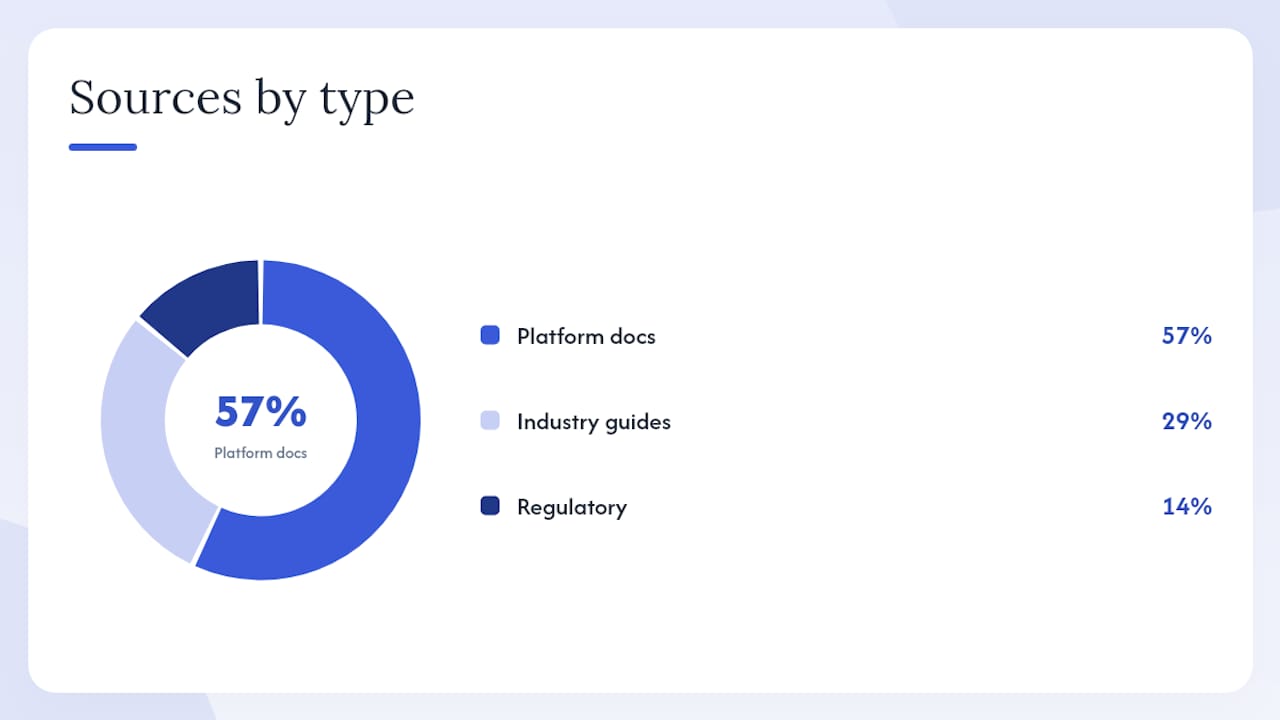
The sources below were used in preparing this guide. Platform documentation covers mechanics and campaign examples; industry guides cover strategy and attribution; regulatory guidance covers UK legal obligations.
| Source | Type | What it covers |
|---|---|---|
| monday campaigns: What Is Email Marketing Automation | Platform documentation | Triggers, segmentation, dynamic content, CRM integration, deliverability |
| monday campaigns: Email Automation Campaigns | Platform documentation | Revenue attribution, workflow conversion rates, sales-marketing alignment |
| monday campaigns: Creating Automated Email Campaigns | Platform documentation | High-impact campaign priorities, AI optimisation, send-time guidance |
| SAP Emarsys: Email Marketing Automation Guide | Industry guide | Triggered email performance, transactional revenue, predictive segmentation |
| Bloomreach: Email Marketing Automation Guide | Industry guide | Personalisation at scale, behavioural data activation |
| Mailchimp: What is Email Marketing Automation? | Platform documentation | Automation definition, common flows, time-saving benefits |
| ICO: Guide to PECR | Regulatory guidance | UK consent requirements for electronic marketing |