The core mobile marketing approaches list every UK marketer should consider in 2026 covers thirteen distinct channels: SMS/RCS, push notifications, in-app messaging, WhatsApp Business messaging, mobile-optimised email, responsive web and progressive web apps (PWAs), social ads built for mobile-first creative, location-based geofencing and beacons, QR codes and camera-triggered experiences, augmented and virtual reality (AR/VR), voice search optimisation, chatbots and conversational interfaces, and app-install campaigns with app store optimisation (ASO).
Here is the quick-reference list with a primary use case for each:
- SMS/RCS — time-sensitive promotions, appointment reminders, and post-purchase updates with near-instant read rates
- Push notifications — re-engagement and behavioural triggers for users who already have your app or have opted in via browser
- In-app messaging — onboarding flows, upsell nudges, and feature announcements delivered inside your app
- WhatsApp Business messaging — conversational customer service and personalised offers over a channel customers already trust
- Mobile-optimised email — nurture sequences and newsletters rendered correctly on small screens
- Responsive web / PWA — a mobile-first website or installable web app that loads fast and converts on any device
- Social ads for mobile — paid reach on Instagram, TikTok, Facebook, and YouTube using vertical video and native formats
- Location-based (geofencing / beacons) — proximity-triggered offers and footfall attribution for physical locations
- QR codes and camera experiences — offline-to-online bridges on print, packaging, and out-of-home media
- AR/VR experiences — product visualisation, virtual try-ons, and immersive brand moments
- Voice search optimisation — capturing conversational queries from smart speakers and mobile assistants
- Chatbots and conversational marketing — automated lead qualification and support across web, app, and messaging platforms
- App-install campaigns and ASO — paid user acquisition combined with organic discoverability in the App Store and Google Play
Smartphone ownership and mobile internet usage have reached the point where mobile is no longer a secondary screen for most audiences. For UK SMEs, that means the question is not whether to invest in mobile channels but which ones to prioritise first.
Key takeaways
Mobile marketing success in 2026 depends on choosing the right channels for your audience and goal, building compliant data foundations first, and running bounded tests before scaling spend.
| Point | Details |
|---|---|
| Start with compliance | Clean opt-in records and PECR-compliant consent flows must be in place before any SMS or push campaign launches. |
| Prioritise triggered flows | Post-purchase SMS sequences and behavioural in-app messages deliver the highest incremental return for most SMEs. |
| Run a six-week test | One channel, one primary metric, a holdout group, and an adopt/revise/defer decision at the end of week six. |
| Measure retention, not just installs | Judge app acquisition campaigns by retention and revenue per user, not raw install volume. |
| Fyldedigital builds the foundation | Fyldedigital provides mobile-first web design, GDPR-compliant tracking, and paid media management for UK SMEs. |
Table of Contents
- What does each mobile marketing approach actually do?
- How do you decide which mobile approaches to run first?
- What KPIs should you track for mobile marketing?
- What are the UK legal requirements for mobile marketing?
- Which platforms and tools are available to UK marketers?
- What does a realistic six-week mobile test plan look like?
- Short examples showing mobile approaches in action
- Why most mobile strategies fail before they start
- How Fyldedigital helps UK SMEs build mobile-first campaigns
- Sources
What does each mobile marketing approach actually do?
Understanding the full mobile marketing approaches list means going beyond names. Below is an operational catalogue you can use to brief a team, evaluate a platform, or plan a campaign.
SMS and RCS
SMS delivers short text messages directly to a subscriber’s phone number. RCS (Rich Communication Services) is the upgraded version: it supports images, carousels, branded sender IDs, and read receipts within the native messaging app. Both channels share one defining characteristic — open rates that consistently outperform email. Post-purchase confirmations, flash-sale alerts, and appointment reminders are natural fits.

Pros: High visibility, no app required, works on every handset. Cons: Character limits, consent burden under PECR (see Section 5), and costs per message that add up at volume.
Example use case: A Blackpool restaurant sends an RCS message with a branded image and a one-tap booking link to lapsed customers on a quiet Tuesday afternoon.
Triggered post-purchase SMS sequences and behavioural in-app flows consistently deliver the highest incremental return for SMEs — not high-volume discovery spend. Prioritise these before scaling acquisition budgets.
Consent required: explicit opt-in under PECR.
WhatsApp Business messaging
WhatsApp Business lets brands send templated messages, product catalogues, and conversational replies through a verified business profile. With over two billion active users globally, it carries a familiarity that formal SMS lacks. Airship’s channel guide notes that owned messaging channels like this are increasingly central to lifecycle campaigns covering onboarding, transactional updates, and re-engagement.
Pros: High engagement, rich media support, conversational two-way flow. Cons: Requires WhatsApp Business API for scale (involves a third-party provider), and template messages must be pre-approved by Meta.
Consent required: opt-in to receive business messages.
Push notifications
Push notifications appear on a user’s lock screen or notification tray without the user opening an app. They are split into two types: app push (requires your app to be installed) and web push (requires browser permission). MoEngage’s 2026 trends analysis highlights behavioural-triggered push as one of the highest-priority tactics, particularly when paired with smart suppression controls to avoid opt-out fatigue.
Pros: Immediate delivery, no email inbox competition, supports rich media. Cons: Permission rates vary; over-sending drives unsubscribes quickly.
Consent required: explicit opt-in at app install or browser prompt.
In-app messaging
In-app messages appear while a user is actively inside your app. Unlike push, they do not require a separate permission grant, making them a lower-friction channel for onboarding prompts, feature spotlights, and upsell moments. MoEngage and Airship both flag in-app messaging as a priority tactic for 2026, particularly when triggered by specific user behaviours rather than broadcast to all users.
Pros: Contextually relevant, no opt-in required beyond app use, high visibility. Cons: Only reaches active app users; no reach beyond the app session.
Mobile-optimised email
Email rendered correctly on a 375px screen is a different product from desktop email. Single-column layouts, large tap targets, preheader text, and compressed images are non-negotiable. Mobile-optimised email suits nurture sequences, newsletters, and transactional confirmations where a longer read is appropriate.
Pros: Low cost per send, owned channel, rich content possible. Cons: Inbox competition is fierce; deliverability requires ongoing list hygiene.
Consent required: soft opt-in rules apply under PECR for existing customers; explicit opt-in for new contacts.
Responsive web and progressive web apps (PWAs)
A responsive website adapts its layout to any screen size. A PWA goes further: it can be installed to a home screen, load offline, and send push notifications without requiring an app store listing. For SMEs without the budget for a native app, a well-built PWA delivers most of the engagement benefits at a fraction of the development cost. Fyldedigital’s web design service covers mobile-first builds that meet these standards.
Pros: No app store approval needed, single codebase, improves SEO. Cons: Slightly fewer native device integrations than a full native app.
Social ads for mobile
Vertical video, Stories ads, Reels, and TikTok in-feed placements are built for thumb-scrolling. Mobile-first creative means designing for sound-off viewing, on-screen text within the first three seconds, and a clear call to action before the user scrolls past. Platforms including Meta Ads, TikTok Ads, and YouTube Shorts all offer UK-targeted placements with granular audience controls. For practical tool recommendations, social media management tools for small businesses covers scheduling and ad management options.
Pros: Massive reach, precise targeting, measurable cost per result. Cons: Creative fatigue is fast; requires regular asset refresh.
Location-based marketing: geofencing and beacons
Geofencing draws a virtual boundary around a physical location; when a device enters or exits that boundary, it can trigger an ad, a push notification, or a data event. Beacons use Bluetooth Low Energy (BLE) to trigger hyper-local messages inside a venue. Both approaches suit retail, hospitality, and events. Cross-location digital screen campaigns show how physical and digital channels can reinforce each other across multiple sites.
Pros: Highly contextual, drives footfall, measurable attribution. Cons: Requires location permissions from users; beacon infrastructure has upfront cost.
Consent required: location data is personal data under UK GDPR.
QR codes and camera-triggered experiences
QR codes bridge print, packaging, and out-of-home media to digital destinations. A well-placed QR code on a flyer, product label, or poster can drive app downloads, landing pages, loyalty sign-ups, or AR experiences. They cost almost nothing to generate and are measurable via UTM parameters. Shopify’s practical channel examples include QR-to-AR executions that let customers visualise products before purchase.
Pros: Zero marginal cost, works offline-to-online, trackable. Cons: Requires a compelling destination; generic QR codes to homepages waste the click.
AR/VR experiences
Augmented reality overlays digital content onto the real world through a phone camera. Virtual reality requires a headset. For most SMEs, AR is the practical option: product try-ons, room visualisers, and branded filters on Instagram and Snapchat are all accessible without custom app development. Platforms including Meta Spark and Snapchat Lens Studio offer no-code AR creation tools.

Pros: High novelty and shareability, reduces purchase hesitation. Cons: Production cost for quality AR is higher; adoption varies by audience age and category.
Voice search optimisation
Smart speakers and mobile voice assistants handle a growing share of search queries, particularly local and conversational ones (“find a plumber near me”, “what time does the café open”). Optimising for voice means targeting long-tail, question-format keywords, securing featured snippets, and maintaining accurate Google Business Profile data. SEO best practices for higher rankings covers the technical foundations that underpin voice search performance.
Pros: Captures high-intent local queries, complements broader SEO. Cons: Attribution is harder; voice results often deliver zero-click answers.
Chatbots and conversational marketing
Chatbots handle initial enquiries, qualify leads, and route customers to the right resource without human intervention. Deployed on a website, within an app, or via WhatsApp, they reduce response time and capture contact details outside office hours. Platforms including Tidio, Intercom, and ManyChat offer UK-available solutions at SME-friendly price points.
Pros: 24/7 availability, scalable, captures leads at the moment of intent. Cons: Poorly scripted bots frustrate users; requires regular content updates.
App-install campaigns and ASO
App-install campaigns run through Google Universal App Campaigns and Meta App Install Ads to drive downloads. App store optimisation (ASO) improves organic discoverability through keyword-rich titles, descriptions, and screenshot design in the App Store and Google Play. FroggyAds’ 2026 trends brief recommends measuring acquisition by onboarding completion and retention rather than raw install volume alone.
Pros: Scalable paid reach, measurable cost per install. Cons: High competition in most categories; install alone is a weak success metric.
Consent required: tracking for attribution requires ATT consent on iOS.
How do you decide which mobile approaches to run first?
Trying to run every channel simultaneously is one of the most common mistakes in mobile marketing. The 2026 industry guidance from FroggyAds is explicit: run bounded tests with adopt/revise/defer decision points rather than wholesale adoption of every new signal.
Use these five criteria to score each approach before committing budget:
- Audience fit — does your audience actually use this channel? A B2B professional audience may respond well to LinkedIn mobile ads and email; a consumer retail audience may respond better to SMS and Instagram Stories.
- Campaign goal — acquisition, retention, and re-engagement each suit different channels. SMS and push excel at retention; social ads and ASO drive acquisition.
- Budget and cost model — SMS costs per message; social ads cost per click or impression; PWA development is a one-off build cost. Map the model to your cash flow.
- Technical complexity — push notifications require SDK integration; QR codes require nothing beyond a URL. Be honest about your team’s capacity.
- Data and privacy burden — SMS and location-based targeting carry the heaviest consent obligations under UK GDPR and PECR. Factor in the compliance overhead before committing.
A simple decision matrix helps. Rate each approach Low, Medium, or High across cost, complexity, and privacy burden, then cross-reference with your primary goal. Channels scoring Low/Low/Low on all three with a strong audience fit are your starting point.
The small-test playbook: Pick one channel. Run a four-to-six-week test with a defined audience segment (minimum 500 contacts for statistical reliability on most messaging channels), a single primary metric, and a holdout group receiving no message. At the end of the test period, apply three decisions: adopt (results exceed threshold, scale up), revise (results are directionally positive but below threshold, adjust and retest), or defer (no signal, park the channel for three months).
Pro Tip: Set your success threshold before the test starts, not after. Deciding what “good” looks like in retrospect is how confirmation bias creeps into channel decisions.
What KPIs should you track for mobile marketing?
Tracking the right metrics separates campaigns that improve over time from those that just consume budget. Fyldedigital’s guide to digital marketing metrics covers the broader measurement framework; the table below focuses on mobile-specific KPIs.
| KPI | Definition | Indicative benchmark range |
|---|---|---|
| SMS delivery rate | Percentage of messages successfully delivered | typically high for clean lists |
| Push notification open rate | Percentage of delivered pushes opened | varies widely depending on category and timing |
| In-app message click rate | Percentage of in-app message impressions that result in a tap | can be significant for behavioural triggers |
| Email open rate (mobile) | Percentage of emails opened on a mobile device | a substantial share of all email opens occur on mobile |
| Click-through rate (CTR) | Percentage of recipients who click a link | varies by channel and campaign quality |
| Conversion rate | Percentage of clicks resulting in a desired action | Highly category-dependent |
| Cost per install (CPI) | Total ad spend divided by number of app installs | Varies widely by platform and category |
| — | Percentage of users still active after install | widely varies depending on app category and quality |
| Revenue per user (RPU) | Total revenue divided by active user count | Business-specific |
Benchmarks are indicative ranges drawn from industry commentary; your category and audience will shift these figures.
Attribution on mobile is genuinely complex. Cross-device journeys, iOS App Tracking Transparency (ATT) restrictions, and browser privacy changes mean last-click attribution routinely undercounts mobile’s contribution. Use holdout groups and incrementality testing wherever possible. For paid mobile acquisition, measuring PPC success properly covers attribution models that apply equally to mobile ad campaigns.
Test-setup checklist:
- Define one primary metric and one secondary metric before the test starts
- Set a minimum audience size (500+ for messaging; 1,000+ for paid ads to reach significance faster)
- Create a holdout group of at least 10–20% of the eligible audience
- Fix the test duration (four to six weeks for most channels)
- Document the variant clearly: what changed, for whom, and when
- Record baseline performance in the two weeks before the test launches
Pew Research’s mobile fact sheet confirms that smartphone ownership is near-universal in developed markets, which means reach is rarely the constraint. Engagement quality and conversion efficiency are where most campaigns win or lose.
What are the UK legal requirements for mobile marketing?
UK mobile marketing operates under two primary frameworks: UK GDPR / the Data Protection Act 2018 and the Privacy and Electronic Communications Regulations 2003 (PECR). Getting this wrong carries ICO enforcement risk and, more practically, destroys subscriber trust.
Core compliance checklist:
- Identify a lawful basis for processing personal data (consent is the most common for direct marketing)
- Collect consent at the point of data capture, not retrospectively
- Record consent with a timestamp, the exact wording shown, and the channel consented to
- Provide a clear, easy opt-out mechanism in every message
- Honour opt-outs within five working days (best practice is immediate suppression)
- Never send SMS or MMS marketing to a number without prior explicit consent under PECR
- Soft opt-in applies only to existing customers, for similar products/services, with a clear opt-out at the time of collection
- For push notifications, treat the browser or app permission prompt as the consent event and log it
- Location data is personal data: obtain explicit consent before using geofencing or beacon data for marketing
- Maintain a suppression list and check new contacts against it before every send
- Conduct a Data Protection Impact Assessment (DPIA) for any high-risk processing (large-scale location tracking, profiling)
Example opt-in wording for SMS: “Tick here to receive occasional text messages from [Business Name] about offers and news. You can opt out at any time by replying STOP. We will not share your number with third parties. See our Privacy Policy at [URL].”
The Information Commissioner’s Office publishes detailed PECR guidance at ico.org.uk, including model templates for consent records and opt-out flows. Always check the ICO’s current guidance before launching a new messaging channel, as enforcement priorities shift.
For local service businesses managing appointment reminders and engagement messages, customer engagement reminder types for local services provides practical examples of compliant reminder mechanics.
Which platforms and tools are available to UK marketers?
Platform choice matters less than the criteria you use to evaluate it. Below are the key categories with UK-available examples and the primary selection criteria for each.
SMS and RCS providers
UK-available providers include Twilio, Vonage (now part of Ericsson), and EZ Texting. Selection criteria: UK short-code or long-number availability, PECR-compliant opt-out handling, suppression list management, and pricing per message (typically pence per SMS at volume).
Push notification platforms
Airship, OneSignal, and Braze all serve UK clients. Prioritise platforms with behavioural trigger support, frequency capping, and A/B testing built in. MoEngage specifically recommends smart suppression controls as a 2026 priority to protect opt-in rates.
Mobile analytics and attribution
AppsFlyer, Adjust, and Firebase Analytics (Google) are the most widely used. For web-based mobile analytics, Google Analytics 4 with mobile segments is the standard starting point. Key criteria: iOS ATT compatibility, cross-device stitching, and cohort analysis capability.
Mobile ad platforms
Google Ads (Universal App Campaigns, Performance Max), Meta Ads Manager, TikTok Ads, and Snapchat Ads all offer UK-targeted mobile placements. For a comparison of paid search and paid social approaches, SEO vs PPC covers the strategic trade-offs.
ASO tools
AppFollow, Sensor Tower, and AppTweak provide keyword research, review management, and competitor tracking for the App Store and Google Play. Free tiers exist for smaller apps.
Chatbot and conversational platforms
Tidio and ManyChat are accessible for SMEs. Intercom suits businesses with a larger customer base and a need for CRM integration. All three offer UK data residency options.
AR/VR builders
Meta Spark Studio and Snapchat Lens Studio are free to use for filter and lens creation. For product visualisation AR, platforms including Zakeke and Threekit offer e-commerce integrations.
How to pick any platform:
- Confirm data residency options (UK or EU servers preferred for UK GDPR compliance)
- Check consent and suppression features are built in, not bolted on
- Verify reporting granularity matches your KPI framework
- Test integration with your existing CRM or e-commerce platform before committing
- Review SLAs for deliverability and uptime, particularly for transactional messaging
What does a realistic six-week mobile test plan look like?
Most SMEs underestimate how quickly a mobile channel test can be set up and overestimate how much it costs to get a meaningful result. The framework below is designed for a business running its first structured mobile campaign.
Cost and complexity at a glance:
- SMS campaign: Low-to-medium cost (pence per message), low technical complexity, medium compliance burden
- Push notification campaign: Low cost (platform fees), medium technical complexity (SDK required), low compliance burden once opt-in is in place
- Social mobile ads: Medium-to-high cost (ad spend), low technical complexity, low compliance burden
- PWA build: Medium-to-high one-off cost, high technical complexity, low ongoing compliance burden
- QR code campaign: Very low cost, very low complexity, low compliance burden
Six-week test plan:
- Week 1 — Technical set-up and permission audit: Install tracking tags, verify opt-in lists are clean and consented, set up holdout group, confirm creative formats meet platform specs, and brief any agency or developer resource needed.
- Week 2 — Creative and copy production: Build message variants (at least two for A/B testing), design mobile-first assets, write fallback flows for non-openers, and QA on multiple devices.
- Week 3 — Soft launch: Send to 20% of the eligible audience to catch deliverability issues, rendering problems, or unexpected opt-out spikes before full deployment.
- Week 4 — Full launch: Deploy to the full test audience, activate holdout suppression, and begin daily monitoring of delivery rate, open rate, and primary conversion metric.
- Week 5 — Monitoring and optimisation: Review mid-point data. If open rates are significantly below benchmark, test a subject line or send-time variant. Do not change the primary offer mid-test.
- Week 6 — Decision week: Compare test group against holdout on the primary metric. Apply the adopt/revise/defer framework. Document findings and brief the next test.
Quick implementation checks before any send:
- Deliverability: test send to seed addresses across major UK mobile carriers (EE, O2, Vodafone, Three)
- Permission audit: confirm every contact on the send list has a valid, recorded opt-in
- Creative formats: verify images render at 375px width and text is legible at default font size
- Tracking: confirm UTM parameters or deep links are firing correctly in analytics
- Fallback flows: set up a plain-text fallback for SMS and a no-image fallback for email
For small businesses without in-house technical resource, a single developer day is typically sufficient to set up tracking and SDK integration for a push or SMS test. Agency project management expectations for SMB owners covers what to expect when briefing external resource.
Short examples showing mobile approaches in action
These examples illustrate how different channels perform in practice. Each carries one lesson you can apply directly.
SMS post-purchase sequence (retail, UK): A clothing retailer sent a two-message SMS sequence: a dispatch confirmation with a tracking link, followed 48 hours after delivery by a review request with a discount code for the next order. The sequence ran on Vibes’ documented SMS growth trend of shifting SMS from pure promotion to service-plus-promotion. Lesson: combining transactional and promotional messages in one sequence increases both trust and repeat purchase rate.
Push notification re-engagement (app, UK hospitality): A hotel booking app sent a behavioural push to users who had searched but not booked within 24 hours, personalised with the destination they searched. Open rates on triggered pushes outperformed broadcast pushes significantly. Lesson: trigger logic based on user behaviour consistently outperforms scheduled broadcast pushes.
QR code to AR (retail, international): A furniture retailer added QR codes to printed catalogues linking to an AR room visualiser. Customers who used the AR feature converted at a higher rate than those who did not. Shopify’s mobile marketing examples document similar AR-to-purchase patterns. Lesson: QR codes are only as effective as the destination they point to; an AR or interactive experience dramatically raises the value of the click.
Geofencing (food and beverage, UK): A quick-service restaurant chain set a geofence around competitor locations and served a mobile display ad with a discount offer to users entering the zone. Lesson: geofencing works best when the offer is immediate and the distance to your location is short.
Voice search optimisation (local services, UK): A plumbing business optimised its Google Business Profile and added FAQ schema to its website targeting “emergency plumber [town name]” queries. Voice assistant results began surfacing the business for local emergency queries within eight weeks. Lesson: voice search wins are often local wins; accurate, structured local data is the primary lever.
Fyldedigital works with UK SMEs to build the mobile-ready foundations that make these approaches viable: fast-loading responsive sites, GDPR-compliant tracking, and paid media set-up that measures what actually matters.
Why most mobile strategies fail before they start
The honest problem with mobile marketing for SMEs is not a lack of channels. It is a lack of foundations. Most small businesses attempting SMS campaigns are working from uncleaned lists with mixed consent records. Most push notification programmes are broadcasting to everyone at the same time rather than triggering on behaviour. Most mobile ad campaigns are sending traffic to desktop-designed landing pages that load slowly on 4G.
MoEngage’s 2026 trends analysis makes the point clearly: AI-assisted segmentation and behavioural triggers are priority tactics this year, not new channels. The businesses seeing the best results are not the ones adding the most channels. They are the ones doing fewer things with more precision.
Personalisation built on first-party and zero-party data is more sustainable under evolving privacy rules than cookie-based targeting. That means investing in consent-first data collection, clean CRM records, and preference centres before scaling spend. The channel comes second. The data quality comes first.
My practical advice to any SME starting out: pick one channel, build the compliance and tracking infrastructure properly, run a bounded six-week test, and make an evidence-based decision before touching the next channel. Chipping away at one thing well beats spreading thin across everything.
How Fyldedigital helps UK SMEs build mobile-first campaigns
Running effective mobile campaigns requires more than a channel list. It requires a mobile-first website that loads quickly, tracking that works within UK GDPR constraints, and paid media set-up that measures real business outcomes rather than vanity metrics.
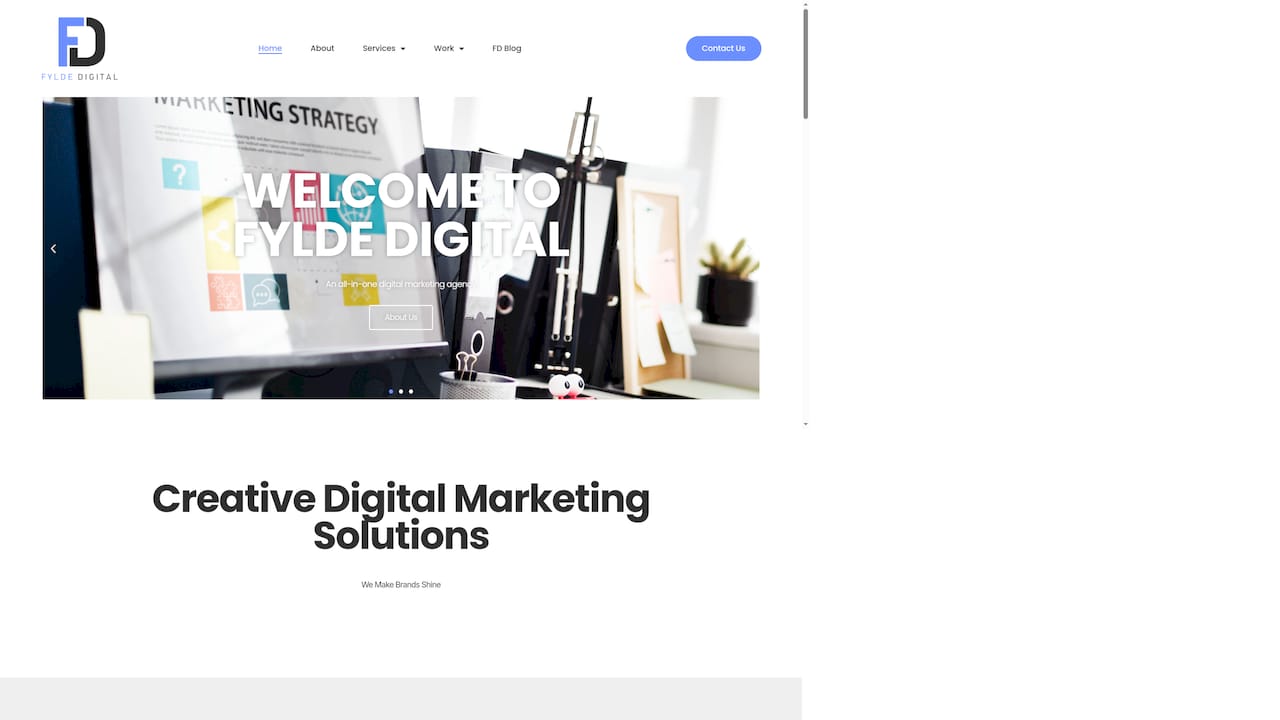
Fyldedigital supports UK small and medium-sized businesses with mobile-first web design, SEO, PPC management, and social media campaigns built around the decision framework in this article. Every project starts with a free website and SEO review so you know exactly where your mobile presence stands before committing to a channel strategy. If you are ready to build a mobile marketing foundation that converts, request your free review today.
Sources
- 12 Mobile Marketing Trends to Watch in 2026 | MoEngage
- Mobile marketing: Complete channel guide 2026 | Airship
- Mobile marketing examples and techniques | Shopify
- Mobile fact sheet | Pew Research Center