Most UK small businesses pay between £75 and £250 a month for proper website maintenance, covering hosting, security updates, backups and a small allowance of content edits. Quotes below that band usually mean platform-only automation with little or no human support behind it. Costs climb sharply once you add e-commerce, custom applications or ongoing SEO and content work.
TL;DR:
- Websites with automated platform-only support typically cost between £30 and £75 a month, with minimal human involvement and limited support outside business hours.
- Mid-tier packages costing between £75 and £250 usually include managed hosting, security monitoring, backups, and few content edits for standard WordPress sites.
- E-commerce and custom applications require budgets from £150 to over £1,000 monthly due to complex testing, security needs, and potential revenue impact from downtime.
- Annual costs such as hosting vary widely, from around £115 for shared hosting to over £4,800 for dedicated infrastructure, with hidden expenses like security breaches and premium plugin renewals common.
- DIY maintenance can cost significant owner time and risk expensive emergency fixes, making professional support more cost-effective for high-risk or complex sites.
Table of Contents
- Website maintenance cost UK: the three main price bands
- What does website maintenance actually include?
- How much should you budget by website type?
- Annual line-item costs you should budget for
- DIY maintenance versus hiring a professional
- How to budget and evaluate competing quotes
- What Fylde Digital sees on the ground with local SME sites
- Get a free website and maintenance review from Fylde Digital
- Sources
Website maintenance cost UK: the three main price bands
Not every quote for “website maintenance” buys the same thing, and the gap between the cheapest and most thorough options is enormous. Understanding the three broad bands helps you work out what you’re actually being sold before you sign anything.
Budget band: £30 to £75 a month. This typically covers shared hosting, automated plugin updates and ticketing support. There’s rarely a named contact, and cheap plans often rely on automation rather than active human monitoring, which is fine until something breaks outside business hours.
Mid-tier band: £75 to £250 a month. This is the realistic range for a standard WordPress business site with 20 to 60 pages, and it should include managed hosting, proper backup testing, security monitoring and a handful of content edits each month.
Full-service band: £500 to £2,000+ a month. Comprehensive packages that fold in SEO, content creation and reporting sit here. You’re paying for strategy and output, not just upkeep.
The split between platform costs and labour explains most of the price difference. Hosting, SSL certificates and software licences are fixed costs that barely change whatever you pay. Labour, the hours a person spends actually checking, testing and responding, is where the real variation sits. A few signs a quote is platform-only rather than a staffed retainer:
- No named contact or account manager mentioned anywhere in the proposal.
- Response times aren’t specified, or are vague (“as soon as possible”).
- Backup testing isn’t mentioned, only backup frequency.
- Content edits are billed separately at an hourly rate rather than included.
What does website maintenance actually include?
A maintenance retainer is really three layers stacked together, and most disputes between agencies and clients come from confusing one layer for another.
- Essential recurring items. Domain renewal, hosting, SSL certificates, automated backups and core software updates. These are non-negotiable baseline costs that keep a site online and secure.
- Operational items. Staging environments for testing changes, uptime monitoring, and checking plugin or theme compatibility after updates. Skip this layer and you risk a routine WordPress update breaking your checkout page with nobody noticing for days.
- Growth and add-on items. Content edits, SEO work, and analytics reporting. These are frequently sold as extras rather than bundled in, even by agencies who imply otherwise in their headline pricing.
Pro Tip: Ask any prospective provider to show you which layer each line item on their quote falls into. If they can’t separate “keeping the site alive” from “growing the site”, that’s a fair sign the quote hasn’t been thought through properly.
Content edits sit in an awkward middle ground. Some agencies include two or three hours a month as standard; others charge £40 to £90 per hour for anything beyond emergency fixes. Ask for the number of included hours in writing, not just the word “minor” or “reasonable”.
How much should you budget by website type?
Your maintenance cost should track the complexity of what you’re running, not just its page count. A five-page brochure site and a five-page booking platform with live payment processing have almost nothing in common cost-wise, despite looking similar on the surface.
- Brochure sites (a handful of static pages, no bookings or payments): roughly £30 to £75 a month, or £360 to £900 a year. Minimal moving parts, low risk.
- Standard business sites (20 to 60 pages, forms, maybe a blog): £75 to £250 a month, matching the mid-tier band above.
- E-commerce sites: £150 to £500+ a month. Payment gateways, stock syncing and checkout flows all need testing after every update, and downtime here has a direct revenue cost, not just an inconvenience one.
- Custom applications (bespoke booking systems, member portals, API integrations): £300 to £1,000+ a month, often scoped as a bespoke retainer rather than a standard package.
E-commerce and account-based platforms need tighter service level agreements because the cost of something going wrong is measured in lost transactions, not just annoyed visitors. Ask yourself three questions to place your own site correctly: does it take payments, does it store customer accounts or data, and does a fault stop someone completing a purchase or booking? Two or more “yes” answers usually mean you belong in the e-commerce or custom band, whatever your page count suggests.
Annual line-item costs you should budget for
Beyond the monthly retainer figure, several costs are best planned annually because they renew on fixed cycles rather than monthly ones.
Hosting shows the widest spread of any single line item, ranging from around £115 to £4,800 a year depending on whether you’re on shared, VPS or dedicated infrastructure. Domain renewal and basic managed hosting are the most predictable costs on this list; plugin licensing and premium integrations are where budgets quietly balloon.
Hidden costs worth flagging before they surprise you: malware removal after a security breach (often £100 to £500 as a one-off), premium plugin integrations that renew annually and get forgotten, and transactional email services for order confirmations or password resets, which are sometimes billed as a separate SaaS subscription entirely.
DIY maintenance versus hiring a professional
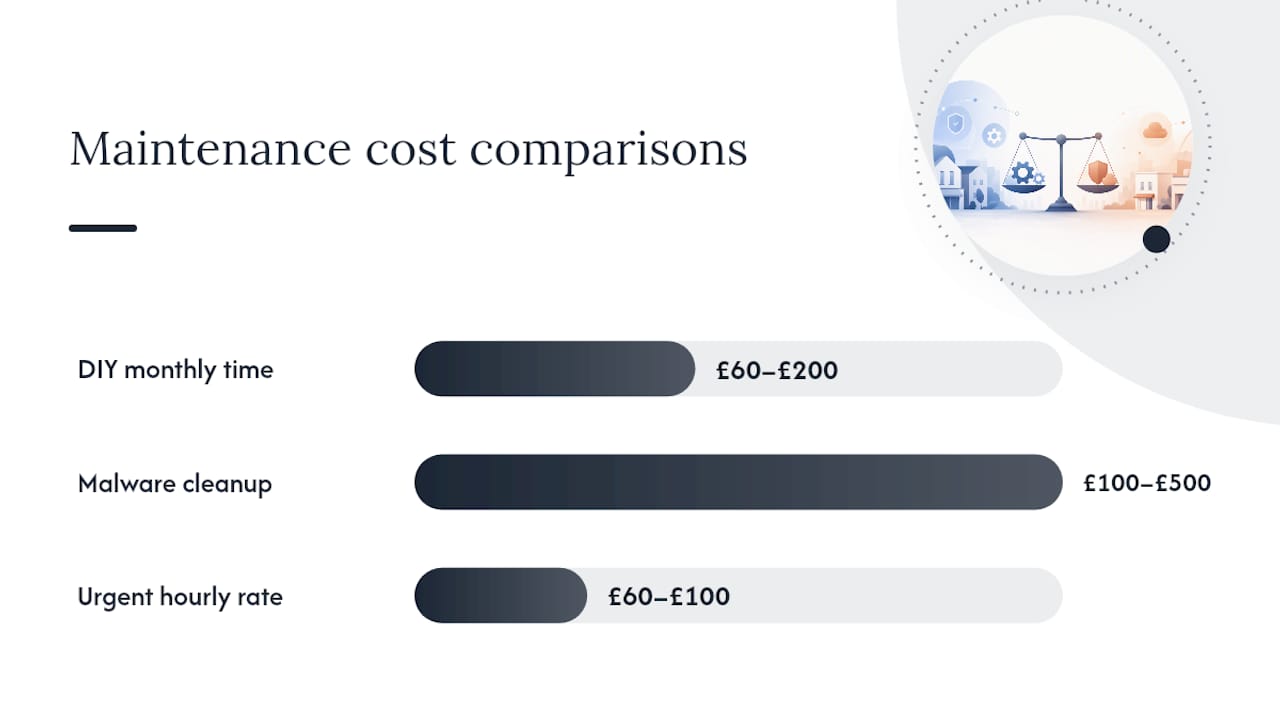
Doing it yourself looks cheap until you price your own time properly. Basic monthly maintenance, updates, backup checks, security scans and minor content edits, typically takes two to four hours a month if done properly. At a modest freelance rate of £30 to £50 an hour, that’s £60 to £200 of your own time, before accounting for the fact that most business owners aren’t specialists and take longer than a professional would.
The real risk isn’t the time cost, it’s what happens when something breaks. A hacked site or corrupted backup can mean:
- Malware cleanup, typically £100 to £500 depending on severity.
- Lost trading days while an e-commerce site is offline.
- Emergency freelancer rates, often double standard hourly pricing for urgent work.
A named freelancer suits a simple brochure site with low risk tolerance for delay. An agency retainer makes more sense once you need guaranteed response times, holiday cover, or a named contact with accountability rather than whoever happens to pick up the ticket.
How to budget and evaluate competing quotes
Before comparing prices, compare what’s actually inside each quote. Ask every provider these questions directly:
- What’s the guaranteed response time for a site-down emergency?
- Is backup restoration actually tested, or just backups taken?
- How many support hours are included before extra billing kicks in?
- Who owns the licences for any premium plugins or themes used?
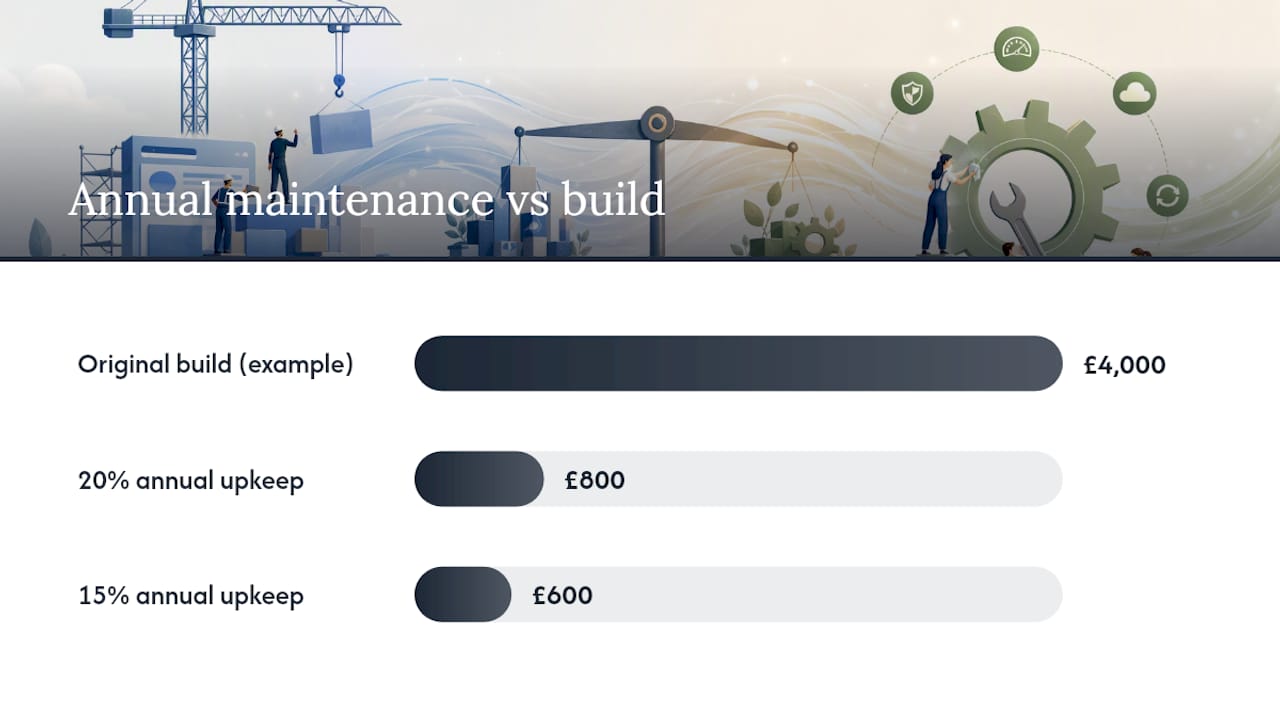
For a budgeting sanity check, a reasonable heuristic is 15 to 20% of your original build cost per year on ongoing maintenance. A £4,000 build should therefore land around £600 to £800 a year in upkeep, roughly matching the mid-tier monthly band.
Pro Tip: When negotiating, don’t ask for a lower monthly fee. Ask the provider to convert the same budget into more included hours or a faster response guarantee. That’s usually an easier concession for them to make than a straight discount.
What Fylde Digital sees on the ground with local SME sites
Working with small and medium businesses, a consistent pattern emerges: businesses that budget realistically for maintenance from day one tend to spend less overall than those who treat it as an afterthought. A typical bundle for a local SME might combine managed hosting, monthly security and backup checks, a small block of content edit hours, and light local SEO support, indicative pricing rather than a fixed contract, since every site’s starting condition differs.
What surprises most owners isn’t the monthly figure, it’s how much of the “growth” layer, copywriting and ongoing SEO, gets sold separately from basic upkeep, even when a single provider handles both.
Get a free website and maintenance review from Fylde Digital
Some providers give you a fixed, transparent monthly plan instead of a platform-only package with hidden hourly extras bolted on later. That means you know exactly what your retainer buys, from hosting and security through to a real allowance of content edits, before you commit to anything.

If you’re currently paying for maintenance and aren’t sure whether you’re getting platform automation or genuine human support, request a free website review. Fylde Digital will look at your current setup, flag anything missing against the checklist above, and put together a tailored web design and maintenance quote that matches your site’s actual complexity rather than a generic package. Get in touch to book your free review and see where your current spend is really going.
Sources
Figures drawn from Progressive Robot, Expert Market, Red Evolution, and DevsTree UK.
- Website Maintenance Cost UK: Essential Guide to Avoid Waste
- How Much Does Web Maintenance Cost? | Expert Market
- How Much Does Website Management Cost In The UK? | Red Evolution