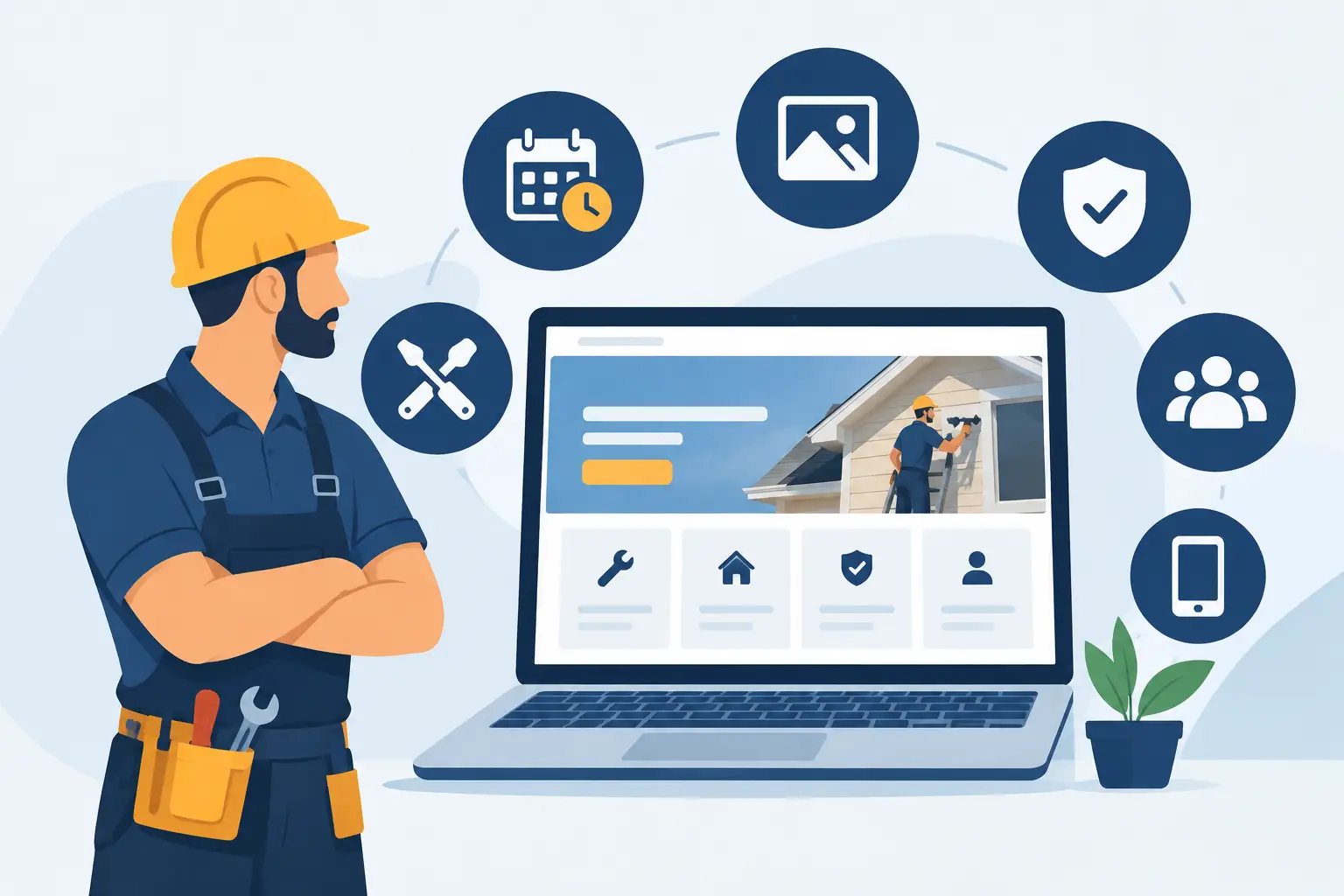
A PPC landing page is a standalone page built to fulfill one campaign promise: the exact click a visitor just made from an ad. Get this right and the single most important thing is message match: the headline, offer, and layout must mirror what the ad promised, driving toward one conversion goal. Everything below explains why that matters, what to build, how to test it, and what to avoid.
TL;DR:
- A PPC landing page should have message match with the ad’s headline and offer, and serve only one clear conversion goal to maximize effectiveness.
- The page must include a strong headline, a single prominent call-to-action, benefit-focused copy, and trust signals, all with a mobile-first, fast-loading design.
- Testing should prioritize headline, CTA wording, and form length, with at least hundreds of conversions per variant, while fixing issues like slow load times and navigation distractions.
- Avoid sending ads to the homepage, using multiple CTAs, or asking for unnecessary information early, as these mistakes waste PPC budget and reduce conversions.
- Building dedicated, optimized landing pages or deep-linking depends on the offer’s value and campaign scale, with simple templates often outperforming bespoke designs for faster testing and results.
Table of Contents
- What is a PPC landing page and how does it differ from other pages?
- What core elements does a high-converting PPC landing page need?
- How do you build and optimise a landing page for paid ads?
- How should you test PPC landing pages and which metrics matter?
- What mistakes waste the most PPC budget?
- How does Fylde Digital approach landing page work?
- Should you build a dedicated landing page or just deep-link?
- How Fylde Digital can help with your landing pages
- Where this guide’s claims come from
- Sources
- FAQ
What is a PPC landing page and how does it differ from other pages?
A PPC landing page is a purpose-built page that receives traffic from a paid ad and exists to complete one job: convert that specific click. It has no other purpose. Unlike a homepage, which juggles navigation, brand storytelling, and dozens of possible next steps, a landing page strips all of that away and leaves one path forward.
The difference from an SEO landing page matters too. An SEO page needs to satisfy broad search intent and often ranks for several related terms, so it carries more context, internal links, and supporting content. A PPC page serves one ad group, sometimes one ad, and its lifespan can be as short as a single campaign. When the promotion ends, the page often gets retired or rewritten entirely.
Message match is the connective tissue between the ad and the page. If your ad promises “£50 off your first consultation,” the landing page headline needs to say exactly that within the first few seconds of loading, not a vaguer version buried under a hero image about your company values. Google Ads and Google’s own guidance treat this seriously: landing page relevance is one of the components of Quality Score, which directly influences your cost per click. A page that mismatches the ad’s promise doesn’t just convert worse, it can quietly inflate what you’re paying to reach the same audience.
Three things separate a PPC landing page from every other page on your site:
- One goal. A single conversion action, whether that’s a form fill, a call, or a purchase, with no competing links pulling attention elsewhere.
- Message parity. The headline, imagery, and offer echo the exact ad the visitor clicked, not a generic version of your services.
- A short, campaign-bound life. It’s built to serve one promotion or one audience segment and gets updated or removed when that campaign ends.
Data backs this structural choice. Unbounce’s research on PPC-specific pages shows dedicated landing pages convert meaningfully better than sending traffic to a general page, and they make reporting and testing far easier because you’re isolating one variable at a time rather than diluting results across a page with multiple purposes.
What core elements does a high-converting PPC landing page need?
Every high-converting PPC landing page shares the same skeleton, regardless of industry: a headline that continues the ad’s sentence, one visible action, and nothing that distracts from either. Analysis of thousands of landing pages backs this up directly: the strongest performers consistently “answer the ad”, with message match and a clear offer outperforming more elaborate designs almost every time.
Here’s what belongs on the page, in order of priority:
- A hero headline and subheadline that mirror the ad. If your ad says “Free Quote in 24 Hours,” your headline should say the same thing, not “Welcome to Our Services.” The subheadline can add one supporting detail, such as a timeframe or a specific benefit.
- A single, visible call to action, repeated at logical points. One CTA, phrased consistently (“Get My Free Quote,” not “Submit” in one place and “Learn More” in another), placed above the fold and again after your supporting content.
- Benefit-led copy broken into short, scannable points. Explain what the visitor gets, not what your business does. Three or four bullet points beat two paragraphs of prose here.
- Trust signals that reduce hesitation. Reviews, client logos, accreditation badges, or a specific number (jobs completed, years trading) placed near the CTA where doubt tends to surface.
- A minimal layout with no distracting navigation. Strip the main menu, footer links, and anything that offers an exit route other than converting or leaving.
- A form asking for the minimum viable information. Name, email, and phone number in most cases. Every extra field is a reason to abandon.
- Mobile-first layout and fast load times. Mobile traffic represents a majority of overall web visits, so a page that isn’t built mobile-first is losing conversions before the copy even gets read.
Pro Tip: Write your headline before you design anything else. If it doesn’t read as a direct continuation of your ad copy, the rest of the page won’t save it, no matter how polished the layout.
Visual hierarchy does the heavy lifting here. Your eye should move from headline to supporting proof to CTA in a straight line, with no competing element pulling attention sideways. That’s the entire job of good landing page design: remove choices, not add features.
How do you build and optimise a landing page for paid ads?
Building a landing page that performs starts with treating the ad and the page as one continuous sentence, not two separate projects handed to different people. If your ad headline reads “Save 20% on Annual Plans,” your landing page headline should use those same words, not a rephrased version that technically means the same thing. Ad-to-page mismatch is one of the fastest ways to inflate your bounce rate, and message match is treated as non-negotiable by anyone running serious paid campaigns.

For businesses running several ad variants, Dynamic Text Replacement lets the page headline automatically swap in the keyword or phrase the visitor searched for, so someone who searched “emergency plumber Preston” sees a headline referencing that exact phrase rather than a generic one. It’s a small technical step that meaningfully lifts relevance without building a separate page for every keyword.
Segmentation matters just as much. If one ad group targets small businesses and another targets larger organisations, each deserves its own page, or at minimum its own headline and proof points, because the objections and priorities differ.
A few structural and technical checks make the difference between a page that loads fast and converts, and one that quietly bleeds budget:
- Strip the main navigation menu entirely. Every link that isn’t the CTA is a distraction from the one job the page has.
- Design the CTA button to contrast visually against the background, and use action-led text (“Book My Consultation”) rather than generic labels like “Submit.”
- Compress and lazy-load images so the hero loads in under two seconds; Shopify’s guidance on PPC pages specifically flags page speed as one of the highest-leverage fixes available.
- Set up UTM parameters consistently across every ad, so you know exactly which campaign, ad group, and keyword drove each conversion.
- Install conversion pixels and GA4 events before launch, not after, so you’re not missing the first week of data.
- Check accessibility basics: sufficient colour contrast, readable font sizes, and forms that work with keyboard navigation only.
- Confirm your privacy policy link is present and your form complies with UK data protection requirements, particularly if you’re capturing phone numbers or email addresses for follow-up marketing.
Pro Tip: Test your landing page on a genuinely old phone, not just your own new one. A three-year-old Android handset on a patchy 4G connection will expose loading problems your test devices never will.
None of this needs to be expensive to get right. A well-structured template with disciplined copy will usually outperform an expensive, cluttered custom build. Fylde Digital’s guide to designing landing pages that convert walks through the copy and layout decisions in more depth if you want a fuller reference.
How should you test PPC landing pages and which metrics matter?
Test the elements that touch conversion directly before you touch anything cosmetic. Headline, CTA wording and placement, hero image, and form field count should come before button colour or font choice, because they’re the variables most likely to move the needle. Unbounce recommends testing one variable at a time and prioritising the elements that most affect the decision to convert, rather than spreading attention thin across a dozen small tweaks at once.
A practical order of operations for testing:
- Headline and subheadline first. This is the highest-impact test because it’s the first thing every visitor reads.
- CTA copy and placement second. Test action-specific phrasing against generic phrasing, and test position (above the fold versus repeated further down).
- Hero image or video third. A relevant, specific image usually beats generic stock photography, but only real testing confirms it for your audience.
- Form length fourth. Removing even one non-essential field often lifts completion rates measurably.
Run each test until you’ve gathered enough conversions to trust the result, not until you’ve hit an arbitrary deadline. As a rough rule of thumb, wait for at least a few hundred conversions per variant before declaring a winner, and always run tests for full weekly cycles so you’re not comparing a Tuesday to a Saturday.
One statistic worth building your entire testing calendar around: a one-second delay in mobile load time can reduce mobile conversions by up to 20%. If your page takes three seconds longer to load on a phone than it does on your office broadband, you may be losing more from that alone than any headline tweak could recover.
The metrics that actually matter for PPC landing pages are narrower than most dashboards suggest:
- Conversion rate — the percentage of visitors completing your one defined action.
- Cost per acquisition (CPA) or return on ad spend (ROAS) — whether the page is actually profitable at your current spend level, not just busy.
- Bounce rate — a high bounce rate on a landing page usually signals a message mismatch, not a design problem.
- Page speed — directly tied to both conversion rate and Quality Score, so it’s worth treating as a conversion metric, not a technical afterthought.
Better landing page relevance doesn’t just lift conversions. It improves Quality Score, which can lower your CPC, meaning the same monthly budget buys more clicks over time. For structured testing, Google Ads’ own experiments feature, GA4’s event tracking, and dedicated platforms like Unbounce all give you the infrastructure to run this properly. Fylde Digital’s breakdown of how to measure PPC success covers the tracking setup in more detail.
What mistakes waste the most PPC budget?
Most wasted PPC budget traces back to five repeatable mistakes, and every one of them has a fast fix.
- Sending paid traffic to the homepage. This is the single most common error, and it dilutes message match immediately because the homepage serves every visitor, not the one who just clicked your specific ad. Fix: deep-link to a dedicated campaign page or build a lightweight one before the campaign launches, even if it’s a simple template.
- Running multiple competing CTAs. A page offering “Book a Demo,” “Download Our Guide,” and “Contact Sales” simultaneously forces the visitor to choose, and indecision usually ends in leaving. Fix: pick one primary action and remove or visually mute the rest.
- Building slow, non-responsive pages. Heavy image files and desktop-first layouts punish the majority of visitors arriving on mobile. Fix: compress every asset before upload and host on infrastructure built for speed, not just cost.
- Asking for too much information too early. Long forms with fields for job title, company size, and budget range before the visitor has decided to trust you will kill completion rates. Fix: capture the minimum first, whether that’s just name and email, and enrich the record later through follow-up.
- Skipping analytics and testing altogether. Launching a page without conversion tracking means you’re optimising blind, and every future decision becomes guesswork. Fix: install baseline tracking before the first click arrives, then build a simple monthly testing calendar so improvement becomes routine rather than occasional.
How does Fylde Digital approach landing page work?
Landing pages can be treated as a system, not a one-off design task, because a page built without a testing plan behind it tends to plateau within weeks. PPC management and web design services ideally work together deliberately: whoever writes the ad copy is briefed on the landing page build, and vice versa, so message match isn’t left to chance between two disconnected workstreams.
The workflow follows a consistent shape across client campaigns: audit the current page or lack of one, build a focused page around a single offer and CTA, launch with tracking already configured, then run structured tests on the highest-impact elements first. That order matters. Measuring before optimising means every subsequent change is judged against a real baseline, not a guess.
Treating landing pages as conversion systems, combining message match with proper measurement through UTMs and conversion pixels, alongside a steady cadence of experiments, is what reliably brings cost per acquisition down over time rather than leaving it to chance.
For small and medium-sized businesses without an in-house team to run this process continuously, that combination of PPC management, page design, and ongoing testing is where an agency partnership tends to earn its keep, particularly when campaigns need to scale beyond a single template page into a proper experimentation roadmap.
Should you build a dedicated landing page or just deep-link?

Build a dedicated page when the offer is high-value, bespoke, or seasonal: a limited-time promotion, a specific service package, or anything where the ad’s promise needs its own supporting proof. Deep-linking, sending traffic straight to an existing product or service page, works fine when that page already matches the ad closely, such as a single product ad pointing to that product’s own listing.
Resource constraints often decide the answer in practice. A well-built template that enforces message match and a single CTA will outperform a rushed bespoke page nearly every time, so start with a template when speed matters and reserve custom builds for campaigns with real budget behind them. The honest answer is rarely “always build custom.” It’s start simple, measure what happens, and let the data tell you where a bespoke page earns its cost.
— tibor
How Fylde Digital can help with your landing pages
If you’re running paid ads and sending that traffic anywhere other than a page built specifically for the click, you’re likely paying more per lead than you need to. Fylde Digital’s PPC management and content services are built around exactly the process described above: audit what’s currently converting (or not), build a focused page around one offer, set up proper tracking from day one, and run the tests that actually move the needle rather than guessing at colours and fonts.
A first engagement typically starts with a straightforward audit of your existing pages and campaigns, followed by a short list of recommended experiments and a tracking setup that means you can see, in real numbers, what’s working. If your current landing page is really just your homepage with a different URL, that audit alone usually surfaces the fastest wins. Get in touch through the services page to ask about a landing page and PPC audit for your next campaign.
Where this guide’s claims come from
Every specific claim in this guide is drawn from published, checkable sources rather than assumption. Google’s own documentation on Quality Score and landing page relevance explains the direct link between page quality and what you pay per click. Industry analysis from PPC.io’s review of thousands of landing pages and Unbounce’s optimisation guidance supplied the practical patterns around message match and testing priority, while Shopify’s PPC landing page guide backed the navigation and speed recommendations. Mobile traffic figures came from Statista’s ongoing tracking of device share, which underpins every mobile-first recommendation made above.
Sources
- Google Ads Help — About Quality Score
- Unbounce — PPC landing page optimisation
- Ppc
- Statista — Share of website traffic from mobile devices
FAQ
How much should I pay for a landing page?
Costs vary widely depending on whether you’re using a template builder or commissioning a bespoke design with copywriting and tracking included. Fylde Digital doesn’t publish fixed landing page pricing, so current rates and packages are available on request through the services page.
What is a good example of a landing page?
A good landing page mirrors its ad exactly: same headline promise, one visible CTA, minimal navigation, and proof points placed near the action button. The pages that consistently perform best in analysis of thousands of examples are the ones that “answer the ad” rather than the ones with the most elaborate design.
Is PPC just Google Ads?
No, PPC (pay-per-click) is the broader advertising model, and Google Ads is simply the largest platform using it. Other platforms including social media ad networks also run on the same pay-per-click principle, though the landing page best practices described here apply across all of them.
What does SEO and PPC mean?
SEO (search engine optimisation) is the practice of earning organic, unpaid rankings in search results over time, while PPC (pay-per-click) means paying for each click an ad receives to appear instantly. They serve different timelines: SEO builds sustainable visibility gradually, while PPC delivers traffic immediately for as long as the budget runs.