Digital marketing pain points are the specific, recurring obstacles that prevent small and medium-sized businesses from executing online marketing that delivers measurable results. Budget limits, content demands, measurement gaps, and technology disruption sit at the core of these struggles. According to the 2026 State of Marketing survey, measuring ROI is the top challenge cited by 33% of marketers. That figure tells you something important: even experienced teams cannot always prove their work is paying off. This guide breaks down each major obstacle and gives you practical ways to address it, drawing on Fyldedigital’s experience working with SMBs across the Fylde Coast and beyond.
1. What are the top digital marketing pain points for SMBs?
Digital marketing pain points, known in industry practice as marketing friction points, cover every barrier that slows or stops a business from reaching its audience online. For small and medium-sized businesses, these barriers tend to cluster around four areas: budget, content, measurement, and technology. Each one compounds the others. A tight budget limits content output. Poor content hurts measurement. Weak data makes technology decisions harder to justify.
Understanding which friction point hits your business hardest is the first step. The digital marketing guide for small businesses from Fyldedigital outlines how SMBs can map their specific challenges before committing resources.

2. Budget and resource constraints
Budget is the most fundamental constraint in digital marketing for SMBs. Rising costs in paid search and social advertising mean that the same spend buys fewer clicks than it did two years ago. Economic pressure on CMOs to defend spending continuously has trickled down to business owners who must justify every pound. The result is a cycle where under-investment leads to weak results, which makes it harder to argue for more budget.
The most common resource mistakes SMBs make include:
- Spreading spend across too many channels before mastering one
- Paying for paid advertising without a conversion-focused website to receive the traffic
- Neglecting SEO because results take longer, even though organic traffic compounds over time
- Hiring generalists when a specialist in one channel would deliver better returns
Pro Tip: Audit your current channel mix and cut any channel where you cannot measure a direct link to enquiries or sales. Redirect that budget to your strongest performer for 90 days and compare results.
A lean budget works best when it is concentrated. One well-executed SEO campaign or a tightly targeted pay-per-click campaign will outperform five mediocre efforts spread thin. Fyldedigital’s lead generation web design approach is built on this principle: fewer channels, better execution, clearer results.
3. Which content challenges cause the most difficulty?
Content production is one of the most persistent online marketing obstacles for SMBs. Over 50% of marketers report producing high-quality content consistently as a major hurdle, up from 17% in 2025. That jump in one year reflects how much the bar has risen, not how much worse teams have become.
The core problem is not a lack of ideas. It is the combination of volume, quality, and differentiation required to stand out. Creating awareness and visibility is now the top marketing challenge for 62% of marketers, with differentiating from competitors close behind at 60%. Both challenges are driven by content saturation. Every niche is crowded. Every platform rewards consistency. Short attention spans mean a piece of content has seconds to earn a reader’s focus.
Practical steps to address content challenges:
- Build a content calendar around three to five core topics your audience searches for, not topics you find interesting.
- Repurpose one long-form article into social posts, a short video script, and an email newsletter to multiply output without multiplying effort.
- Use customer questions from enquiry forms and sales calls as direct content briefs. Real questions produce content that ranks and converts.
- Publish less frequently if needed, but never sacrifice quality. One authoritative post per fortnight outperforms four thin posts per week.
Content saturation and shrinking attention spans make relevance the deciding factor. Brands that answer a specific question better than anyone else win visibility. Generic content disappears.
Pro Tip: Before writing any piece of content, identify the single question it answers. If you cannot state that question in one sentence, the brief is not ready.
4. How do measurement and ROI remain ongoing marketing challenges?
Proving that marketing spend generates business results is the top frustration of digital marketing for most SMBs. Only 37% of marketers find it easy to directly connect social media activity to business results. That means the majority are making budget decisions with incomplete information.
Two structural forces make measurement harder every year:
- Data privacy regulations have reduced the reliability of third-party tracking. Cookies are disappearing. Consent requirements fragment data sets. Attribution models built on third-party signals are becoming less accurate.
- Platform fragmentation means a customer might discover your brand on Instagram, research you on Google, and convert via a direct visit. Standard last-click attribution gives all credit to the final touchpoint and misses the full picture.
Experts recommend shifting from seeking perfect attribution to holistic strategies like incrementality testing. Incrementality testing measures the actual lift a campaign produces by comparing results between exposed and unexposed audiences. It is more reliable than multi-touch attribution in a privacy-constrained world.
Pro Tip: Track three metrics that connect directly to revenue: cost per lead, lead-to-customer conversion rate, and average order value. Everything else is context, not proof.
Fyldedigital’s guide to key digital marketing metrics gives SMBs a practical framework for building a measurement system that survives platform changes and privacy updates.
5. What technology and platform trends disrupt digital marketing?
Technology moves faster than most SMB marketing teams can absorb. 34% of marketers struggle to keep up with new platform features and algorithm updates. Each major platform, from Google Search to Meta to TikTok, updates its algorithm multiple times per year. Each update can shift traffic and visibility overnight.
The table below shows the four main technology disruptions and their practical impact on SMB marketing:
| Disruption | Practical impact on SMBs |
|---|---|
| AI content generation | Faster output, but governance and brand consistency risks increase |
| Algorithm updates | Organic reach fluctuates; channel strategies need regular review |
| Privacy regulations | Third-party data shrinks; first-party data collection becomes critical |
| Channel fragmentation | Audiences split across more platforms; focus becomes harder to maintain |
AI is the most discussed disruption, but it carries a specific risk that is often underestimated. Nearly 42% of CMOs are classified as “at-risk” because their AI efforts have not transformed operating models despite isolated productivity gains. Isolated use of AI tools without governance produces inconsistent brand voice, factual errors, and compliance exposure.
The real challenge in AI adoption is governance: mitigating risks like hallucinations, brand inconsistency, and compliance failures rather than simply speeding up content production. SMBs that treat AI as a drafting assistant with human review built in will outperform those that use it as a replacement for editorial judgement.
Staying current with digital marketing trends in 2026 does not require adopting every new tool. It requires understanding which changes affect your specific channels and audience, then adapting deliberately.
6. Practical strategies to overcome your marketing struggles
The most effective response to digital marketing struggles is not to do more. It is to do fewer things with greater focus and better measurement. SMBs that try to match enterprise marketing output with a fraction of the budget consistently underperform. Those that concentrate resources on one or two channels and measure them rigorously tend to grow steadily.
Proven approaches that work for SMBs:
- Prioritise channels by audience fit, not trend. If your customers are local businesses, LinkedIn and SEO will outperform TikTok regardless of platform growth figures.
- Build first-party data from day one. Email lists, CRM records, and website analytics give you data that no platform change can take away.
- Set a 90-day experiment cycle. Test one new tactic per quarter, measure it against a clear benchmark, and keep or cut based on results. This prevents both stagnation and overextension.
- Invest in your website before your ad spend. A website that converts poorly wastes every pound you spend driving traffic to it. Fix the foundation first.
- Govern your AI tools. Create a short brand voice document and require human review of all AI-generated content before publication.
Pro Tip: If you are unsure where to start, request a free SEO review. An SMB SEO review identifies the gaps that are costing you visibility and gives you a prioritised list of fixes.
The role of social media in marketing has also shifted. Organic reach on most platforms has declined. Paid amplification of your best organic content is now more cost-effective than trying to maintain high posting frequency across multiple channels.
Key takeaways
The most effective way to address digital marketing pain points is to concentrate resources on measurable channels, build first-party data, and govern technology with human oversight rather than chasing every new tool or platform.
| Point | Details |
|---|---|
| Budget concentration beats spread | Focus spend on one or two channels and measure them rigorously before expanding. |
| Content quality over volume | Producing fewer, more relevant pieces consistently outperforms high-volume thin content. |
| Measurement needs a privacy-proof approach | Incrementality testing and first-party data replace unreliable third-party attribution. |
| AI requires governance, not just adoption | Human review and a brand voice document prevent consistency and compliance failures. |
| Website quality determines campaign returns | Ad spend and SEO both fail if the destination site does not convert visitors into leads. |
What I have learned about managing digital marketing pain points
The businesses I see struggle most are not the ones with the smallest budgets. They are the ones trying to do everything at once. A business owner running their own social media, writing blog posts, managing Google Ads, and updating their website simultaneously will do all of it poorly. The digital marketing challenges that feel most painful are usually symptoms of this overextension.
The shift that makes the biggest difference is treating marketing like a product. You would not launch ten products simultaneously with no testing. You would launch one, measure it, refine it, and scale what works. Marketing deserves the same discipline. Pick your primary channel, build a measurement framework around it, and give it 90 days of genuine effort before drawing conclusions.
Technology is the area where I see the most wasted time. Business owners spend hours evaluating AI tools, social scheduling platforms, and analytics dashboards when the real problem is that they have not defined what success looks like. No tool fixes a strategy gap. Define your goal first, then find the tool that measures progress toward it.
The SMBs that grow consistently are not the ones with the best tools or the biggest budgets. They are the ones that know exactly what they are measuring and why. That clarity is available to any business, regardless of size.
— tibor
How Fyldedigital helps SMBs cut through marketing obstacles
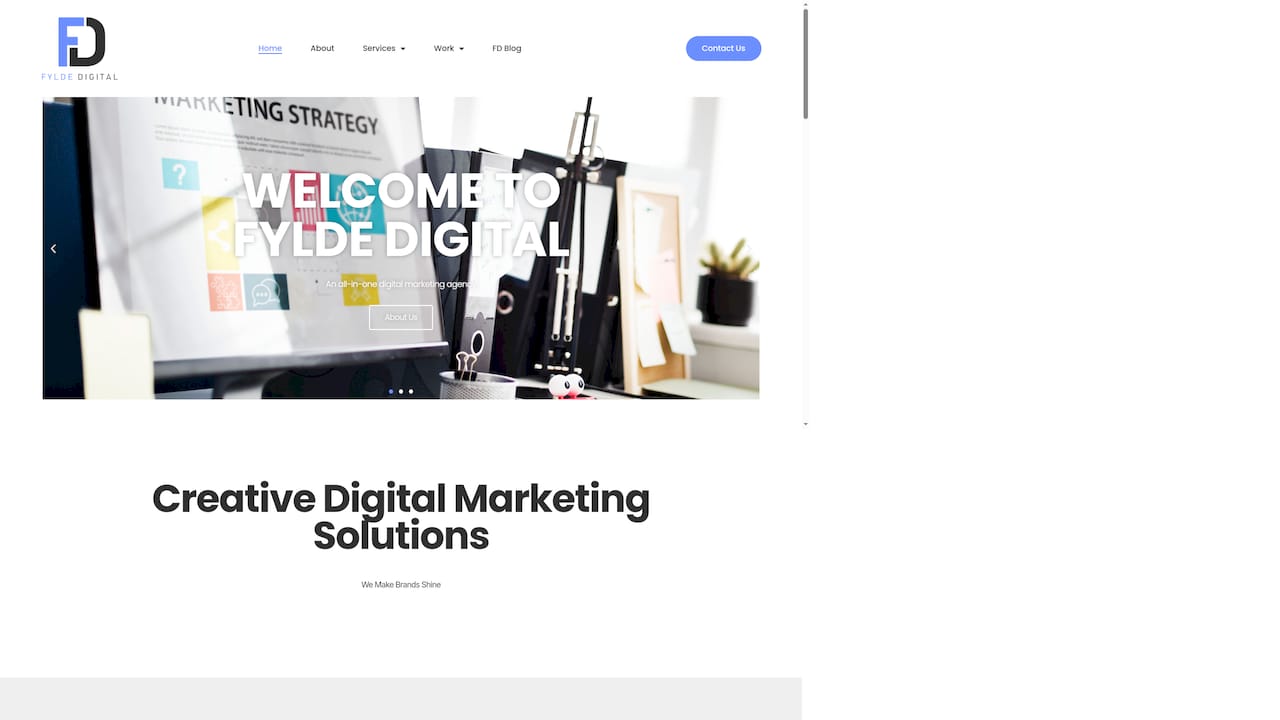
Fyldedigital works with small and medium-sized businesses across the Fylde Coast and beyond, addressing the exact marketing challenges covered in this guide. From web design in Blackpool built to convert visitors into enquiries, to targeted SEO campaigns that build organic visibility over time, every service is designed to deliver measurable results on a realistic budget. The agency offers free website and SEO reviews so you can see exactly where your current setup is losing you leads before committing to any spend. If your marketing feels like it is working hard without producing results, that review is the right place to start.
FAQ
What are the most common digital marketing pain points for SMBs?
Budget constraints, inconsistent content production, difficulty measuring ROI, and keeping pace with platform and technology changes are the four most common marketing challenges for small and medium-sized businesses. Each one affects the others, so addressing them in order of impact produces the fastest improvement.
Why is measuring marketing ROI so difficult?
Data privacy regulations have reduced third-party tracking reliability, and customers interact with multiple channels before converting. Only 37% of marketers find it straightforward to connect social media activity directly to business results, which reflects how fragmented the measurement environment has become.
How can a small business compete with larger marketing budgets?
Concentrate spend on one or two channels where your audience is most active, build first-party data through email and CRM, and measure cost per lead rather than vanity metrics. Focused, consistent effort on fewer channels consistently outperforms scattered spend across many.
Is AI useful for SMB digital marketing?
AI is useful for drafting and ideation, but governance is the critical factor. Nearly 42% of CMOs are at risk because unscaled AI efforts fail to transform results. SMBs should use AI as a drafting assistant with human review built in, not as a replacement for editorial judgement.
What should an SMB fix first in its digital marketing?
Fix the website before increasing ad spend or content output. A site that does not convert visitors into enquiries wastes every pound spent driving traffic to it. A free website review from Fyldedigital identifies the specific conversion gaps costing your business leads.