Video is the most direct route from a business to a customer’s memory. The role of video in branding is to create emotionally resonant experiences that build recognition, trust, and long-term loyalty. A single exposure to brand video advertising can generate a 1%–5% increase in sales spend over three years. That figure alone reframes video from a nice-to-have into a measurable commercial asset. For small and medium-sized business owners, understanding this shift is the first step toward using video with real purpose.
Video marketing, the recognised industry term for using filmed content across digital channels to promote a brand, covers everything from 30-second social clips to long-form webinars. The principles behind it are grounded in how people process information: visuals and sound together create stronger memory traces than text alone. Businesses that treat video as a core part of their branding strategy consistently outperform those that use it only for one-off promotions.
What is the role of video in branding?
Video builds brand identity by combining sight, sound, and story into a single experience. No other format delivers that combination at scale. When a viewer watches your brand video, they are not just receiving information. They are forming an emotional association with your business, and that association drives future purchasing decisions.
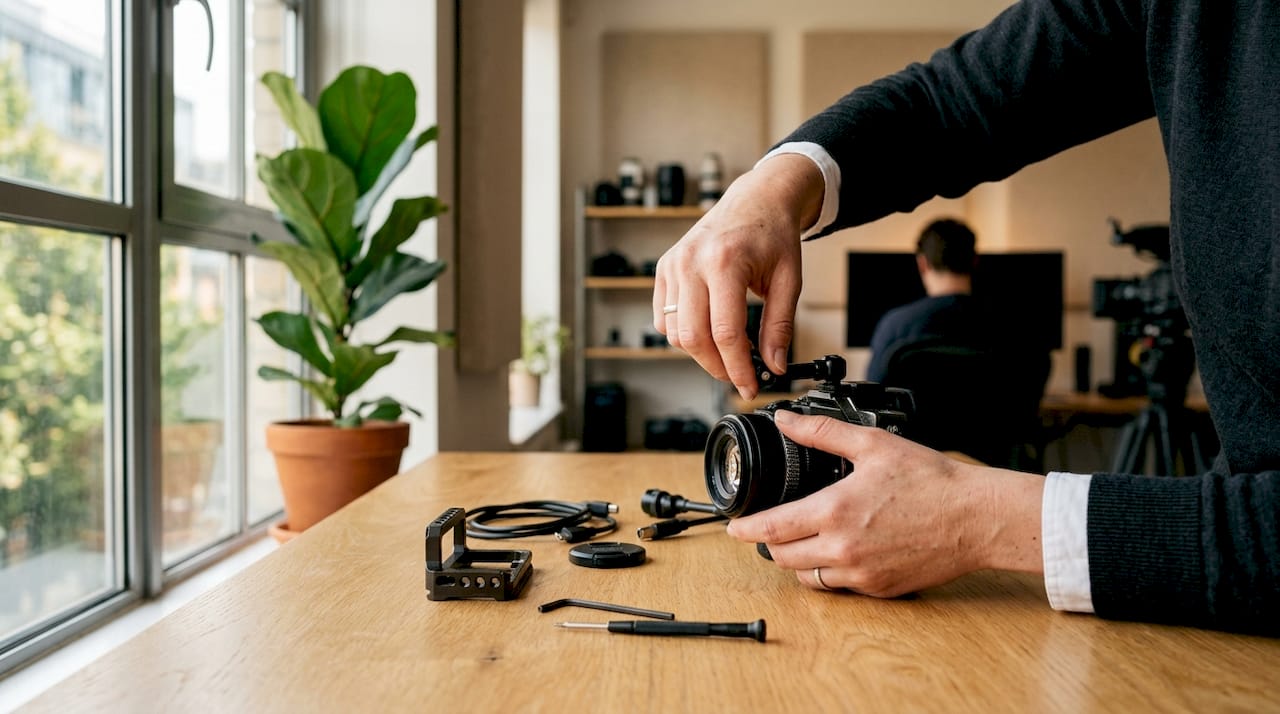
The psychology behind this is straightforward. The human brain processes visual information far faster than written text. Paired with music, tone of voice, and movement, video activates both the rational and emotional parts of the brain simultaneously. That dual activation is what makes brand recall from video so durable.
Branding through video content works best when it is consistent. Your colour palette, tone, and messaging should appear the same way across every video you produce. Inconsistency confuses audiences and weakens the mental shortcut your brand is trying to build.
Research confirms that hedonic video content, meaning entertaining and immersive content, creates a stronger positive brand image than purely educational material. This holds true even for serious businesses in B2B sectors. Entertaining your audience is not frivolous. It is one of the most effective branding tools available.
- Emotional connection: Video triggers feelings that text cannot replicate, making your brand more memorable.
- Consistent visual identity: Repeated exposure to your colours, logo, and tone builds recognition over time.
- Trust signals: Behind-the-scenes footage, customer testimonials, and founder stories humanise your business.
- Hedonic appeal: Entertaining content outperforms purely informational video for brand image building.
Pro Tip: Keep your brand colours, fonts, and tone of voice consistent across every video you produce. Viewers who see the same visual identity repeatedly will recognise your brand before they even read your name.
How can SMEs build practical video marketing strategies?
Budget is the first concern most business owners raise. The reality is more encouraging than you might expect. 57% of brands now allocate a dedicated budget line for short-form video, yet 41% spent under $20,000 on video promotion in 2025. That means effective video marketing does not require a large production budget. It requires clear thinking about format, message, and distribution.
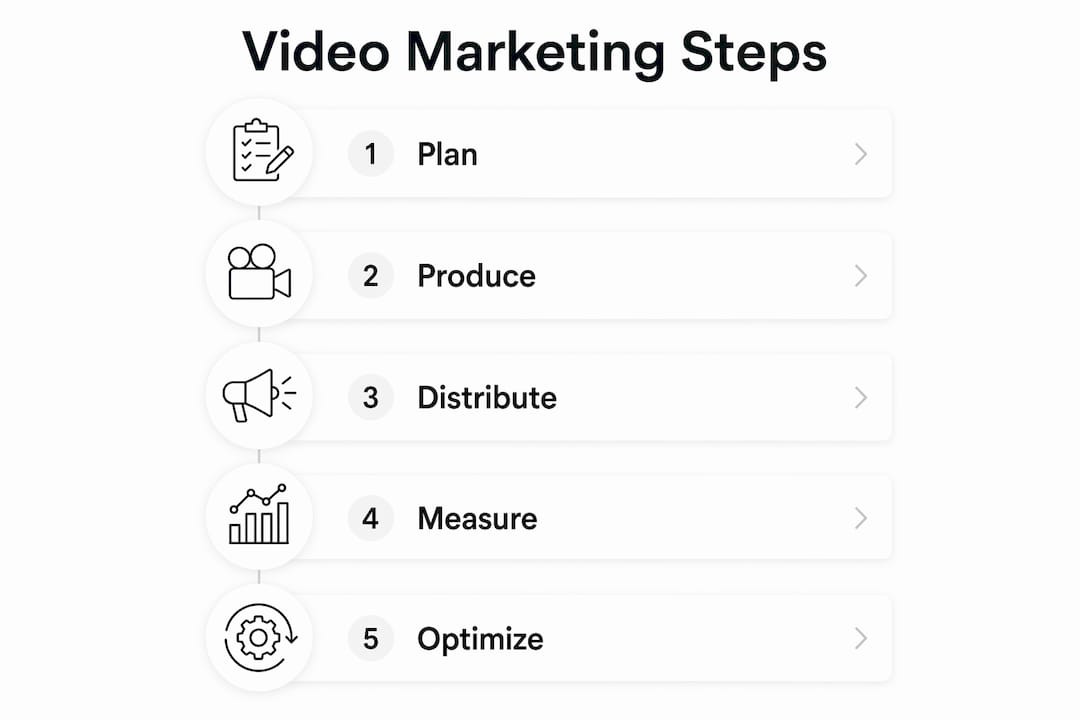
The in-house shift is the most significant change in video production right now. 80% of marketers now use AI tools for scripting, editing, and accessibility features in video production. This reduces dependence on external agencies and puts creative control directly in your hands. Tools like CapCut, Descript, and Adobe Express make professional-looking video achievable for small teams.
Here is a practical framework for building your video marketing approach:
- Define your brand story first. Before you film anything, write down what your business stands for, who it serves, and what makes it different. Every video should reflect those answers.
- Choose formats that match your goals. Short clips (under 60 seconds) work best for social media awareness. Explainer videos (90 seconds to 3 minutes) suit product pages and landing pages. Webinars and longer educational content build authority and credibility.
- Prioritise social media distribution. 83% of companies share video on social media, making it the leading distribution channel. Landing pages (65%) and email (48%) follow behind. Start where your audience already spends time.
- Batch your content creation. Film multiple short videos in a single session. This keeps your visual identity consistent and reduces the time cost of production.
- Repurpose across channels. A single 3-minute explainer video can become five social clips, a blog post, and an email sequence. One piece of content, multiple touchpoints.
Pro Tip: Film your videos with captions from the start. Most social media video is watched without sound. Captions increase completion rates and make your content accessible to a wider audience.
For creative social media campaigns that integrate video effectively, the format matters as much as the message. A well-crafted 30-second clip with a clear hook in the first three seconds will outperform a polished two-minute video that takes too long to get to the point.
How do you measure the impact of video on brand growth?
Measuring the impact of video on branding requires tracking both short-term engagement and long-term brand indicators. Views and click-through rates tell you whether people watched. Brand recall surveys and sales lift data tell you whether the video actually worked.
Nearly half of marketing teams plan to increase video budgets in 2026, yet many are asked to produce more with the same resources. That pressure makes measurement non-negotiable. Without data, you cannot justify the investment or improve your approach.
| Metric | What it tells you |
|---|---|
| View count | Reach and initial interest in your video content |
| Watch time and completion rate | Whether your content holds attention to the end |
| Engagement rate | Likes, shares, and comments showing audience response |
| Click-through rate | How many viewers took the next step after watching |
| Sales lift over time | Long-term commercial impact of brand video exposure |
The most overlooked metric is sales lift over time. A single brand video may not produce an immediate spike in enquiries. Its value compounds over months, which is why the three-year sales data from brand video exposure matters so much. Short-term thinking causes businesses to abandon video before it has had time to work.
Use your digital marketing metrics to build a baseline before you launch a video campaign. Track the same metrics at 30, 60, and 90 days. Compare brand search volume, direct traffic, and conversion rates against that baseline to see video’s contribution clearly.
What are the common myths about using video for branding?
The biggest myth is that video requires a large budget and a professional production crew. The data does not support this. Businesses spending under $20,000 annually on video promotion are achieving meaningful results. A smartphone, good lighting, and a clear script are enough to start.
A second misconception is that only entertaining or consumer-facing brands benefit from video. Hedonic short-form video builds stronger brand image than purely informational content, even in B2B and environmentally focused sectors. If your business feels serious or technical, that is not a reason to avoid entertaining content. It is a reason to try it.
- Myth: longer videos perform better. Research shows returns diminish beyond 20 seconds of active viewing. Voluntary attention to a well-made short video outperforms a longer video that viewers skip.
- Myth: video is only for B2C brands. Educational videos and webinars build credibility for professional services, trades, and B2B businesses just as effectively.
- Myth: you need to go viral to see results. Consistent, targeted video content reaching the right audience delivers more commercial value than a single viral moment.
“The brands that win with video are not the ones with the biggest budgets. They are the ones that show up consistently with content their audience actually wants to watch.”
The challenge of balancing short-term clicks against long-term brand building is real. Social platforms reward content that generates immediate engagement. Brand building through video content requires patience. The solution is to track both. Use engagement metrics for short-term feedback and brand recall or sales lift for long-term validation.
Understanding creative direction in marketing helps business owners make deliberate choices about tone, visual style, and narrative. Without that foundation, video content becomes reactive rather than purposeful.
Key takeaways
Video is the most effective format for building brand recognition, trust, and long-term sales growth, provided it is used consistently and measured properly.
| Point | Details |
|---|---|
| Long-term sales impact | A single brand video exposure can lift sales spend by 1%–5% over three years. |
| Budget is not a barrier | 41% of brands spent under $20,000 on video promotion in 2025 and still achieved results. |
| Entertaining content wins | Hedonic video builds stronger brand image than purely informational content, even in B2B. |
| Distribution matters | Social media reaches the widest audience, with 83% of companies using it as their primary video channel. |
| Measure beyond views | Track sales lift, brand recall, and direct traffic to assess video’s true commercial impact. |
Video in branding: what I have learned from working with SMEs
The business owners I see struggle most with video are not the ones with small budgets. They are the ones waiting for the perfect moment to start. They want the right camera, the right script, the right studio. By the time everything is ready, six months have passed and their competitors have published 40 videos.
My honest view is that the first video you make will not be your best. That is fine. The value of video in branding comes from repetition and consistency, not from a single polished production. The brands I have seen grow through video are the ones that committed to showing up regularly, refining their approach based on what the data told them, and staying true to their brand values throughout.
The in-house shift is real and it is an opportunity for SMEs. You do not need to outsource everything. A team member with a smartphone, a ring light, and a basic editing app can produce content that connects with your audience. AI tools now handle much of the technical work, from captions to colour correction. The barrier to entry has never been lower.
What I would tell any business owner starting out: pick one format, one platform, and one message. Film ten videos. Watch what happens. Then adjust. Video storytelling for brands is a skill that improves with practice, and the businesses that practise consistently are the ones that build lasting recognition.
— tibor
How Fyldedigital helps SMEs use video to build their brand
Your website is the home base for all your video content. Without a well-designed site that loads quickly and embeds video properly, even the best content loses its impact.
Fyldedigital works with small and medium-sized businesses to build websites that support video as a core branding tool, from conversion-focused landing pages to mobile-first layouts that keep viewers engaged. The team also supports businesses with digital marketing strategies that put video at the centre of brand growth. If you want to understand how your current site performs and where video could add the most value, Fyldedigital offers a free website review to get you started.
FAQ
What is the role of video in branding?
Video builds brand identity by combining visual storytelling, emotion, and consistent messaging into a format that audiences remember. A single brand video exposure can increase sales spend by 1%–5% over three years.
How much should a small business spend on video marketing?
41% of brands spent under $20,000 on video promotion in 2025 and still achieved meaningful results. Budget matters less than consistency and clarity of message.
What type of video works best for brand building?
Entertaining, hedonic video content builds a stronger brand image than purely informational content, even for serious or B2B businesses. Short-form clips under 60 seconds perform well on social media.
How do you measure whether video is working for your brand?
Track view count, watch time, engagement rate, and click-through rate for short-term feedback. Use sales lift data and brand recall surveys to measure long-term commercial impact.
Where should small businesses distribute their brand videos?
Social media is the leading channel, with 83% of companies using it for video distribution. Landing pages and email follow as secondary channels for deeper engagement.