Having a website and posting occasionally on social media is not the same as having a genuine digital marketing strategy. Many small and medium-sized businesses make this assumption, and it costs them leads, visibility, and growth. Digital marketing is the deliberate, strategic use of digital channels to reach and convert customers. This guide breaks it all down in plain terms, walking you through the key channels, the real benefits, and the common pitfalls that most mainstream guides conveniently skip over.
Table of Contents
- Defining digital marketing for small businesses
- Core digital marketing channels explained
- How digital marketing fuels business growth
- Common challenges and what most guides miss
- Our perspective: Why digital marketing strategy matters more than ever
- How to get started with digital marketing today
- Frequently asked questions
Key Takeaways
| Point | Details |
|---|---|
| Digital marketing defined | It’s more than just being online—it’s a strategic use of digital channels to drive business growth. |
| Core channels matter | SEO, social media, PPC, and email each play unique roles for small businesses. |
| Measure what matters | Track digital performance, but don’t overlook value from untrackable brand-building. |
| Focus beats scattergun | A few well-chosen channels consistently out-perform spreading efforts too thin. |
| Action yields results | Digital marketing is accessible to SMBs—fast action leads to faster growth. |
Defining digital marketing for small businesses
Now that you know digital marketing is the driving force beyond merely being online, let’s define it more closely and see what it really means for businesses like yours.
A lot of business owners think they’re doing digital marketing because they have a Facebook page or a basic website. But owning a digital presence is like owning a shop with no signage, no window display, and no staff to greet customers. Just being there isn’t enough. You need to actively attract, engage, and convert people who find you.
As HubSpot defines it, digital marketing is the use of internet-based channels to market to current and prospective customers. That definition sounds simple, but the implications for your business are significant. It means every email you send, every search result you appear in, every social post you publish, and every paid advert you run is part of your digital marketing effort. Whether you’re managing it intentionally or not.
Digital marketing isn’t a single tactic. It’s a system of connected channels working together to bring the right people to your business at the right moment.
For small and medium-sized businesses, this distinction matters enormously. Traditional marketing methods such as print adverts, leaflets, and local newspaper placements can reach a broad audience, but they’re expensive and difficult to measure. You rarely know how many people saw your ad, let alone how many came through the door because of it. Digital marketing flips this entirely. Every channel gives you data. You can see who clicked, who visited your site, who filled in an enquiry form, and where they came from.
The core digital marketing channels available to a small business include:
- Search engines such as Google and Bing, where potential customers actively search for products and services like yours
- Social media platforms including Facebook, Instagram, and LinkedIn, where you can build brand awareness and connect with your audience
- Email marketing, one of the most cost-effective tools for nurturing relationships and encouraging repeat business
- Your website, which acts as the hub of all your digital activity and often serves as your best salesperson
- Messaging apps and online directories, which are increasingly important for local and mobile-first discovery
What makes digital marketing genuinely powerful for an SMB is the ability to explore digital marketing services that fit your specific goals and budget. You don’t need to run every channel. You need to run the right channels, in the right way, consistently.
Core digital marketing channels explained
With a clear understanding of what digital marketing is, let’s break down the most important channels small businesses should consider.
Common channels for SMBs include SEO, content marketing, social media marketing, PPC, and email marketing. Each one serves a different purpose and suits different business goals. Here’s a practical look at each:
-
SEO (search engine optimisation) is the process of improving your website so it ranks higher in search engine results. When someone in Blackpool searches for “plumber near me” or “best Italian restaurant on the Fylde Coast,” SEO determines whether your business appears on page one or page five. It’s a long-term investment, but the returns compound over time. You can learn more about how SEO and PPC work together to drive traffic.
-
Content marketing involves creating useful, relevant content such as blog posts, guides, videos, and FAQs that attract and educate potential customers. A roofing company that publishes a guide on “how to spot roof damage after a storm” is positioning itself as a trusted expert before a customer even picks up the phone.
-
Social media marketing uses platforms like Facebook, Instagram, and LinkedIn to build brand awareness and foster community. It’s not just about posting updates. Effective social media management involves consistent messaging, engaging content, and a strategy that aligns with your audience’s habits and expectations.
-
PPC (pay-per-click) advertising lets you buy visibility on search engines or social platforms. You set a budget, choose your target audience, and only pay when someone clicks your ad. It’s fast and measurable, making it ideal if you need leads quickly while your SEO strategy builds momentum.
-
Email marketing remains one of the highest ROI channels available. Sending a well-crafted newsletter or promotional email to an engaged list costs very little and can drive significant repeat business from customers who already know and trust you.
Here’s a quick overview to help you match channels to your goals:
| Channel | Best for | Budget level | Time to results |
|---|---|---|---|
| SEO | Long-term visibility and organic leads | Low to medium | 3 to 6 months |
| Content marketing | Authority building and search rankings | Low to medium | 3 to 12 months |
| Social media | Brand awareness and engagement | Low to high | Ongoing |
| PPC | Immediate traffic and lead generation | Medium to high | Immediate |
| Email marketing | Customer retention and repeat sales | Very low | Immediate |
Pro Tip: Don’t try to be everywhere at once. Most small businesses see better results by mastering two or three channels before expanding. Spreading your effort too thin almost always leads to average performance across the board rather than excellent results in the areas that matter most.
How digital marketing fuels business growth
Now that each channel is clear, it’s important to see how these choices really impact the growth of a small business.
The measurable benefits of digital marketing for SMBs go well beyond simply getting more website visitors. When your digital marketing strategy is working properly, it creates a pipeline. Awareness leads to interest, interest leads to enquiries, and enquiries become customers. Done consistently, that pipeline becomes self-sustaining.

Digital marketing channels like SEO, content marketing, social media, PPC, and email marketing increase market reach and customer engagement. In practical terms, this means your business can reach people far beyond your immediate local area without the prohibitive cost of traditional advertising.
Here’s what real growth looks like when digital marketing is working for an SMB:
- Increased visibility: Your business appears in front of people who are actively looking for what you offer, rather than hoping they stumble upon you
- More qualified leads: Digital targeting means you’re attracting people who are genuinely interested, not just anyone with a letterbox
- Higher conversion rates: A well-designed website paired with strong SEO and clear calls to action turns visitors into enquiries more reliably than a traditional advert
- Better customer retention: Email campaigns and social media keep existing customers engaged between purchases, reducing churn and encouraging referrals
- Trackable ROI: You can see precisely where your leads come from and which channels deliver the best return, allowing you to invest wisely
To illustrate the contrast, consider this comparison of digital versus traditional marketing for a typical SMB:
| Metric | Traditional marketing | Digital marketing |
|---|---|---|
| Average cost per lead | High (£50 to £200+) | Low to medium (£5 to £50) |
| Audience targeting | Broad and geographic | Precise by interest, location, and behaviour |
| Measurability | Difficult to attribute | Clear data and analytics available |
| Speed of results | Slow | Variable but often faster |
| Scalability | Expensive to scale | Flexible and scalable with budget |
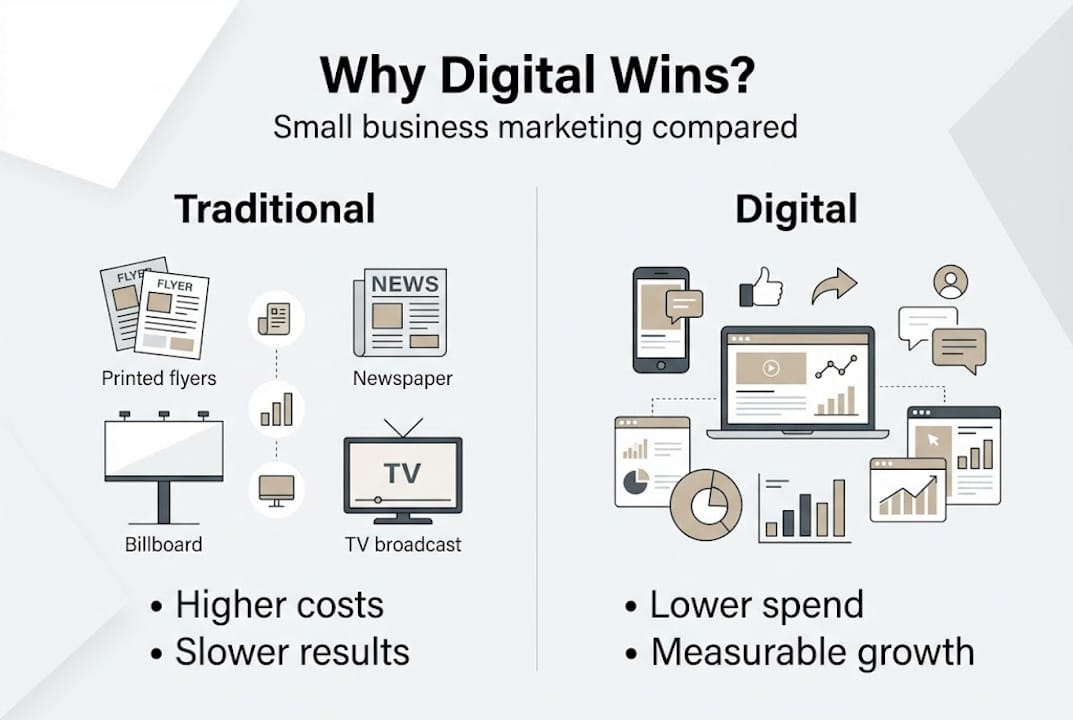
For a small business managing tight budgets, this is a significant advantage. Investing in targeted local SEO strategies, for example, means your spend is focused on the people most likely to become paying customers. A leaflet drop covers an area. A well-optimised Google Business Profile puts you in front of someone the moment they search for your services.
The compounding nature of digital marketing is worth emphasising. An SEO investment made today continues to generate traffic six months from now. A blog post written this quarter might still be attracting customers next year. Unlike a paid advert that stops working the moment you stop paying for it, organic digital marketing builds lasting momentum for your business.
Common challenges and what most guides miss
As you think about making digital marketing work for your business, it’s critical to understand the challenges and the blind spots that catch most businesses out.
Most introductory guides to digital marketing focus on the opportunity. Fewer of them are honest about the difficulty. Here are the three most common challenges small businesses face when they first engage with digital marketing:
- Channel overload: There are dozens of platforms, tools, and tactics competing for your attention. New businesses often try too many things at once, spreading budget and time too thin to see meaningful results on any single channel.
- Unclear goals: Without specific, measurable targets, it’s impossible to know whether your efforts are working. “Get more customers” is not a goal. “Generate 20 enquiries per month via organic search within six months” is a goal you can actually work towards and measure.
- Measurement errors: Businesses often track vanity metrics such as follower counts and page views rather than meaningful outcomes like enquiries, bookings, and revenue. These numbers feel good but tell you very little about whether your marketing is actually working.
The biggest blind spot, though, is the tendency to measure only what’s easy to measure and ignore everything else. This is where a lot of otherwise solid strategies fall apart.
Attribution-first performance marketing can understate brand-building impact when journeys include touchpoints you cannot fully track, such as privacy-restricted interactions or offline and peer-influenced discovery.
In plain terms, this means that a customer who heard about you from a friend, then searched your name on Google, then visited your website twice before calling you, may be recorded simply as an “organic search” conversion. The role of word-of-mouth, social proof, or even a business card they picked up at an event is invisible in the data. If you base all your decisions purely on what your analytics platform can see, you risk defunding the brand-building work that actually drove the journey.
Pro Tip: Don’t cut brand awareness activity just because it doesn’t show up clearly in your reporting. Customer journeys are rarely straight lines. The brand touchpoints that seem unmeasurable are often the ones doing the heaviest lifting.
When comparing SEO and PPC, for instance, many businesses focus entirely on the cost per click of PPC while undervaluing the long-term trust signals that SEO builds. Both play a role. The smartest approach is to understand how they complement each other rather than treating them as competing options.
Our perspective: Why digital marketing strategy matters more than ever
Here’s something we’ve observed time and again working with businesses across the Fylde Coast. The businesses that grow consistently are not the ones chasing every new platform or spending heavily on the latest trend. They’re the ones who master a focused set of channels and execute them with discipline and consistency.
The temptation to follow every shiny new tool is real. TikTok, AI-generated content, influencer partnerships. These aren’t necessarily wrong choices, but for most small businesses, they’re distractions until the foundations are solid. A well-optimised website, a reliable SEO strategy, and a consistent social presence will outperform a scattergun approach to every emerging channel.
We’d also challenge the assumption that more data automatically means better decisions. We’ve seen businesses obsess over analytics dashboards while missing the obvious: their customers aren’t converting because the website is confusing or the enquiry form is broken. Sometimes the most valuable insight isn’t in the data at all. It comes from picking up the phone and asking your customers how they found you and what nearly put them off.
Strategy first. Channels second. Consistency above all.
How to get started with digital marketing today
If you’re ready to move from understanding to action, expert help is close at hand. Growing your business online doesn’t have to be daunting or expensive. The key is starting with the right foundations and building from there.
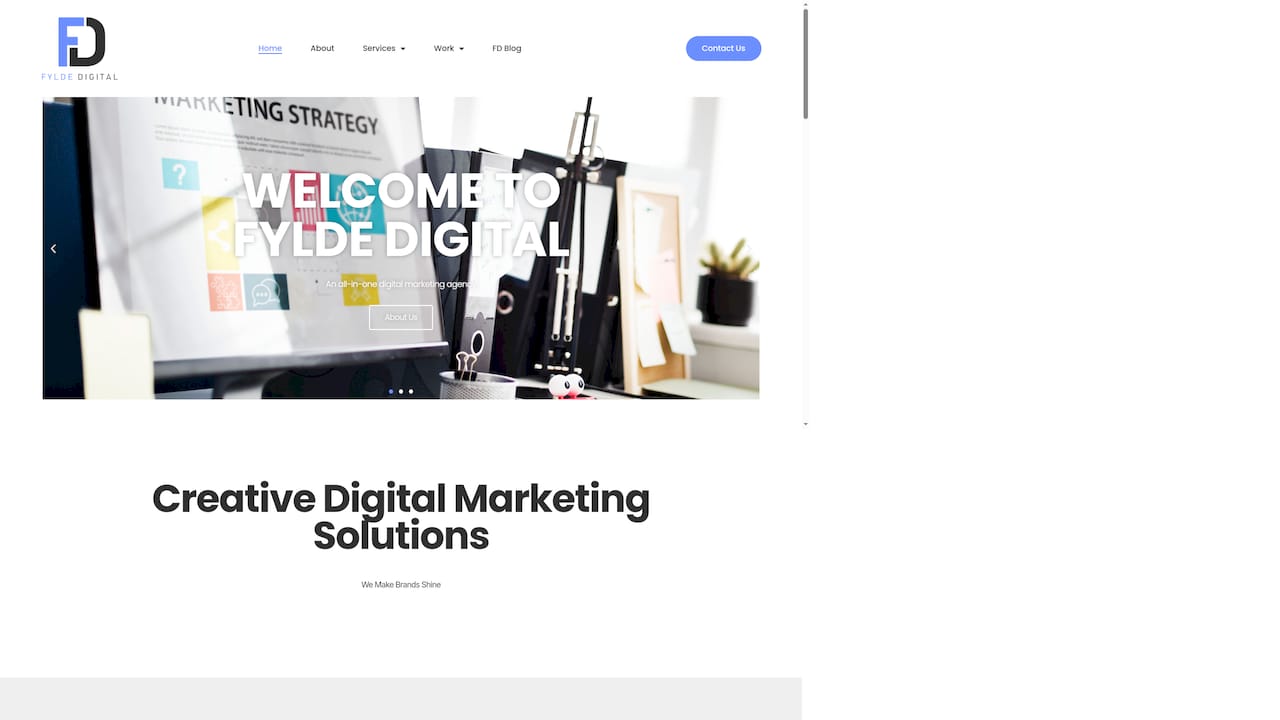
At Fylde Digital, we work with small and medium-sized businesses to build digital marketing strategies that actually deliver results. Whether you need a professionally designed website through our web design services, want to attract more local customers with SEO for Blackpool SMEs, or need consistent, engaging social media support, we can help you make sense of it all. Request a free website or SEO review today and find out exactly where your opportunities lie.
Frequently asked questions
What’s the difference between digital marketing and traditional marketing?
Digital marketing uses online channels such as social media, search engines, and email, while traditional marketing relies on offline methods like print adverts, radio, and television. Digital marketing is generally more cost-effective and measurable for small businesses.
Which digital marketing channel is best for my business?
It depends on your goals and industry, but most SMBs start with SEO, social media, and email for consistent, cost-effective results before expanding into paid advertising.
Can digital marketing be measured easily?
Most digital channels provide clear data and analytics, but brand-building impact is often underreported because not every customer touchpoint can be tracked, particularly offline and peer-influenced interactions.
Is digital marketing expensive for small businesses?
Digital marketing can be tailored to almost any budget. Channels like SEO and email marketing often deliver strong ROI at relatively low cost, making them highly accessible for small businesses compared to traditional advertising methods.