An SEO review, known in the industry as an SEO audit, is a structured evaluation of your website’s ability to rank in search engines and convert visitors into customers. For small and medium-sized businesses, understanding why you should request an SEO review is the difference between a website that quietly generates leads and one that sits invisible on page four of Google. Organic leads convert at 14.6% compared to just 1.7% for traditional outbound methods. That gap is enormous, and an SEO audit is the tool that helps you close it. Tools like Semrush, Google Search Console, and HubSpot all surface different layers of the same problem: most business websites have fixable issues that are silently costing them traffic every single day.
Why request an SEO review: the core case
An SEO review is not a luxury reserved for large corporations with dedicated marketing teams. It is a practical diagnostic that tells you exactly where your website is failing and what to fix first. SEO reviews identify technical errors, content gaps, and backlink issues that directly block ranking improvements and user experience. Without identifying these issues, your website remains invisible or underperforms in search results regardless of how much effort you put into other marketing.
The business case is straightforward. SEO produces approximately £22 for every £1 invested over the long term. That return compounds over time in a way that paid advertising simply cannot replicate. Every month you delay an audit is a month of missed organic traffic and lost enquiries.

Pro Tip: Request a free SEO review before committing to any paid advertising campaign. Knowing your organic baseline prevents you from spending on ads to compensate for fixable website problems.
What does an SEO review actually cover?
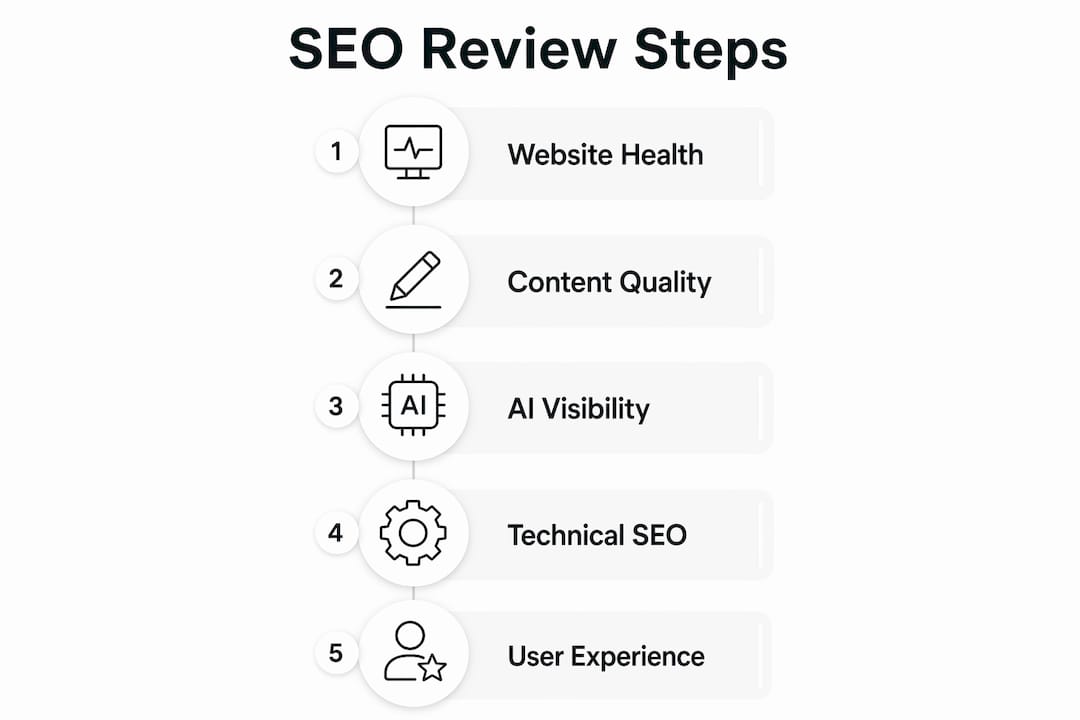
A thorough SEO audit covers far more than checking whether your keywords appear on the page. It evaluates your entire digital presence across several interconnected areas.
- Technical SEO: Crawlability, indexability, page speed, and mobile-friendliness. If Google cannot crawl your pages efficiently, nothing else matters. Tools like Semrush and Screaming Frog map these issues quickly.
- Content quality and keyword relevance: Are your pages targeting the right search terms? Is the content genuinely useful, or thin and generic? Content gaps are one of the most common reasons businesses plateau in search results.
- Backlink profile and domain authority: Who links to your website, and are those links from credible sources? A weak or toxic backlink profile suppresses rankings regardless of how good your on-page content is.
- User experience and mobile performance: Google’s ranking algorithm prioritises pages that load fast and work well on mobile devices. Poor user experience directly reduces your position in search results.
- AI visibility: Modern SEO audits must evaluate AI visibility, checking whether your content is correctly cited by AI tools like ChatGPT and Google’s AI Overviews. This is a new and growing dimension of search that most businesses have not yet considered.
SEO audits have evolved beyond traditional rankings to include ensuring positive brand representation in AI-powered search platforms. If your business is not appearing in AI-generated answers, you are missing a growing share of search traffic. You can explore what a thorough review covers in Fyldedigital’s SEO audit checklist to understand the full scope.
Pro Tip: Ask any SEO provider whether their audit includes AI visibility checks. If they look blank, find someone who understands where search is heading.
How does an SEO review improve rankings and conversions?
An SEO audit translates directly into better rankings and more revenue when you act on its findings. Here is how that process works in practice:
- Identify the blockers. The audit surfaces the specific technical and content issues preventing your pages from ranking. These might include slow load times, duplicate content, broken internal links, or missing meta descriptions.
- Prioritise by impact. An SEO audit provides a prioritised report detailing which issues matter most and how to fix them. This is critical for SMBs with limited time and budget. You fix the high-impact items first, not the cosmetic ones.
- Improve organic traffic. As technical and content issues are resolved, your pages begin to rank for more search terms. More rankings mean more visitors without paying for each click.
- Increase conversions. Better page speed, clearer content structure, and improved mobile experience all contribute to higher conversion rates. Visitors stay longer and take action more readily.
- Compound the gains over time. Unlike paid advertising, which stops the moment your budget runs out, SEO improvements accumulate. A page you optimise today continues to earn traffic for months and years.
SEO audits connect SEO efforts to measurable business outcomes like revenue, not just rankings or traffic. That connection is what makes the investment justifiable and repeatable. If you have ever wondered why your current efforts are not producing results, Fyldedigital’s guide on why SEO stops working explains the most common causes in plain terms.
When should smbs request an SEO review?
Timing matters when it comes to getting the most from an SEO assessment. There are specific moments when an audit delivers the greatest return.
- When organic traffic plateaus or drops. An SEO audit helps you discover why your site traffic may plateau or decline, identifying technical or content-related causes to fix. Without an audit, these issues remain hidden and limit growth.
- Before a website redesign. Redesigns frequently destroy existing SEO value if not managed carefully. An audit before you start protects your current rankings. Fyldedigital’s guide on SEO during redesigns covers exactly why this step is so often skipped and so costly.
- After a Google algorithm update. Major updates like Google’s core updates can shift rankings significantly. An audit identifies what changed and what needs to be addressed.
- On a regular schedule. Regular SEO audits, conducted quarterly or yearly, help businesses stay proactive, uncover growth opportunities, and adapt to search algorithm changes. Conducting audits periodically prevents traffic drops and keeps your strategy aligned with your goals.
- When launching new products or services. New offerings need new pages, new keywords, and new content strategies. An audit at launch sets the right foundation.
The businesses that treat SEO as a continuous process rather than a one-off task consistently outperform those that do not. 91% of SEO practitioners report positive impacts on website performance and marketing goals when SEO is treated as an ongoing process. That figure reflects a clear pattern: consistency wins.
How to request an SEO review effectively
Getting value from an SEO evaluation depends on how you approach it. Follow these steps to make the process worthwhile.
- Define your goals first. Know what you want to achieve before the audit begins. Are you trying to increase enquiries, rank for specific local search terms, or improve your conversion rate? Clear goals shape the audit’s focus.
- Choose between DIY and professional support. Tools like Google Search Console, Semrush, and Ahrefs provide solid starting points for a self-directed review. A professional audit from an agency like Fyldedigital goes deeper, interpreting the data in the context of your specific business and market. For guidance on choosing the right support, Fyldedigital’s article on selecting SEO agency support is worth reading before you commit.
- Prepare your key performance indicators. Share your current traffic data, conversion rates, and top-performing pages with whoever conducts the audit. Context makes the findings far more useful.
- Understand the output. A good audit report is not a list of errors. It is a ranked action plan. Ask your provider to walk you through the findings and explain which items to address first.
- Set a realistic timeline. SEO improvements take time to show results. Expect to see meaningful movement in rankings within three to six months of implementing audit recommendations, depending on the competitiveness of your market.
For a broader view of how an SEO review fits into your overall marketing strategy, Fyldedigital’s digital marketing audit guide for SMEs provides useful context on integrating multiple channels.
Key takeaways
An SEO review is the single most effective way for an SMB to identify what is blocking growth and build a clear, prioritised plan for improving search visibility and conversions.
| Point | Details |
|---|---|
| Organic ROI is substantial | SEO produces approximately £22 for every £1 invested, compounding over time unlike paid ads. |
| Audits cover more than keywords | A full review includes technical health, content gaps, backlinks, mobile performance, and AI visibility. |
| Timing determines value | Request a review before redesigns, after traffic drops, or on a regular quarterly or yearly schedule. |
| Prioritised output is the goal | A good audit delivers a ranked action plan, not just a list of errors, so you fix what matters first. |
| Ongoing reviews outperform one-offs | 91% of SEO practitioners report better results when SEO is treated as a continuous process. |
Why i think most smbs are getting this wrong
I have worked with enough small businesses to spot the pattern clearly. Most owners treat an SEO review as something you do once, usually after something has already gone wrong. Traffic drops, enquiries dry up, and then the audit gets commissioned as a rescue mission. That is the wrong way to use it.
The businesses that consistently grow their organic presence treat SEO reviews the way a good accountant treats quarterly reviews. They are not looking for a crisis. They are looking for early signals and opportunities before the competition spots them. Many SMBs underestimate SEO by treating it as a one-off effort instead of an ongoing growth engine. Audits shift focus towards continuous improvement and strategic prioritisation. That shift in mindset is worth more than any single technical fix.
What surprises me most is how often businesses invest heavily in paid advertising while their organic foundation is broken. They are paying for traffic to land on pages that load slowly, read poorly on mobile, and fail to convert. An audit would surface all of that in the first pass. Fixing those issues makes every pound of marketing spend work harder, whether it comes from Google Ads or organic search.
My recommendation is simple. Schedule an SEO review at least twice a year, and always run one before any significant change to your website. Treat the findings as a business document, not a technical report. The numbers in an audit report represent real customers you are either reaching or missing.
— tibor
See how Fyldedigital can help your business grow
If this article has made you think about the state of your own website’s search performance, that instinct is worth acting on. Fyldedigital works with small and medium-sized businesses across the Fylde Coast and beyond, helping them understand exactly where their websites are falling short and what to do about it.

Whether you are seeing a drop in enquiries, preparing for a website update, or simply want to know where you stand against your competitors, a professional SEO review gives you the clarity to make smart decisions. Explore Fyldedigital’s SEO best practices guide to understand the strategies that drive lasting results, or get in touch to request your free review today.
FAQ
What is an SEO review?
An SEO review, also called an SEO audit, is a structured evaluation of your website’s technical health, content quality, backlink profile, and user experience to identify what is preventing better search rankings.
How often should i request an SEO review?
Quarterly or yearly audits are recommended to stay ahead of algorithm changes and uncover growth opportunities before they are missed.
Can i do an SEO review myself?
Yes, tools like Google Search Console, Semrush, and Ahrefs allow you to conduct a basic self-directed review, though a professional audit provides deeper analysis and a prioritised action plan tailored to your business.
How long does it take to see results after an SEO review?
Most businesses see meaningful improvements in rankings and traffic within three to six months of implementing audit recommendations, depending on market competitiveness and the volume of issues addressed.
Why is an SEO review important for small businesses?
Without identifying technical errors and content gaps, small business websites remain invisible in search results, losing enquiries to competitors who have addressed the same fixable issues.