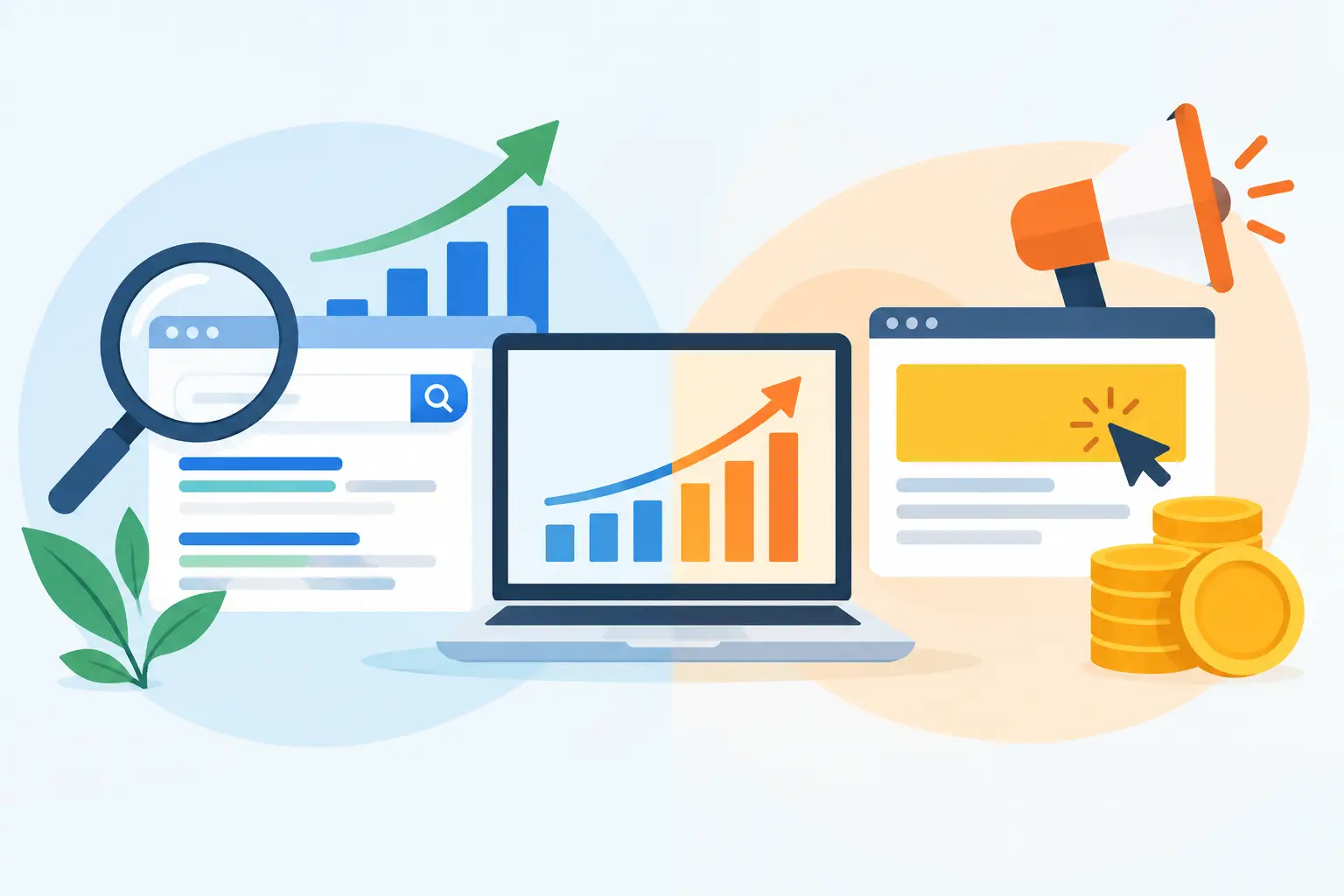
A new website, occasional social posts and a paid advert here and there can look like marketing activity. But if each element tells a different story, targets a different audience or sends people to a weak page, it will struggle to produce reliable results. This guide to integrated digital marketing explains how to bring your channels together around one commercial goal – more enquiries, bookings, sales or stronger brand recognition.
For many Blackpool and Fylde Coast businesses, the challenge is not a lack of ideas. It is fragmented delivery. One supplier manages the website, another runs adverts, someone internally posts on social media, and nobody has a complete view of what is generating a return. Integration creates that view and gives every pound of budget a clearer job.
What integrated digital marketing actually means
Integrated digital marketing is the planned use of connected channels to move the right people from first awareness to action. Your branding, website, search visibility, paid campaigns, email activity and social media should support the same proposition rather than compete for attention.
Think of a local fitness studio launching a new membership offer. A social campaign can introduce the offer and build interest. PPC can put it in front of people actively searching for a gym nearby. SEO can support long-term visibility for relevant local searches. The website landing page can answer the practical questions and make joining easy. Follow-up email can bring back visitors who were interested but not ready to commit.
Each channel has a separate role, but the customer experiences one business. That is the point.
Integration does not mean every business needs every marketing channel. A trades business may see its best return from local SEO, Google Ads and a conversion-focused website. A lifestyle brand may need stronger visual social content and email alongside paid campaigns. The right mix depends on your audience, sales cycle, budget and capacity to handle leads.
Start with the commercial outcome
Before choosing platforms or planning content, decide what success needs to look like. “More followers” may be useful, but it is rarely the business objective. A clearer target could be 20 qualified enquiries per month, more bookings during quiet periods, increased ecommerce revenue or improved visibility in a new service area.
Your main objective should shape the entire campaign. If you need leads, measure calls, form submissions and booked consultations, not only clicks. If you sell online, track revenue, average order value and repeat purchases. If you are building a newer brand, look at reach and engagement alongside the quality of traffic arriving on the site.
It also helps to identify the action that matters most. A potential customer may read a post, search for your company later, visit two pages and then call. That journey is not always neat, so avoid judging every channel in isolation. The first touchpoint may not create the sale, but it may have made the sale possible.
Build one message, then adapt it for each channel
A joined-up campaign begins with a clear value proposition. What do you offer, who is it for, and why should customers choose you rather than an alternative? This needs to be specific enough to guide the creative work, copy and targeting.
For example, “quality service” is too broad to carry a campaign. “Fast, fully managed boiler repairs across Blackpool with clear pricing” gives your website, adverts and social content something practical to say. The wording does not need to be identical everywhere, but the promise should remain consistent.
Your visual identity matters here too. Colours, imagery, typography and tone should feel recognisable across the website, social profiles, print materials and paid adverts. Consistency builds familiarity. It also prevents the common problem of polished adverts sending visitors to a website that feels outdated or unrelated.
Adapt the message to the channel rather than copying and pasting it. Search adverts should answer a high-intent query quickly. Social media can demonstrate personality, results and behind-the-scenes credibility. A service page should provide more detail, evidence and a strong call to action. The destination changes, but the core promise stays in place.
Make your website the campaign centre
Your website is where interest becomes action. That makes it the centre of an integrated marketing plan, even when social media or paid advertising drives the first visit.
Every campaign should send users to the most relevant page, not automatically to the homepage. Someone clicking an advert for wedding stationery should land on a page about wedding stationery, with examples, pricing guidance or a simple route to request a quote. The fewer unnecessary steps, the better.
A commercially effective page needs to work hard. It should load quickly, look professional on mobile, explain the benefit without waffle and make contact straightforward. Add trust signals that genuinely help customers decide, such as testimonials, case studies, accreditations, before-and-after work or clear information about your local coverage.
Do not let design and performance become separate conversations. A striking site can still underperform if it is difficult to navigate or lacks clear calls to action. Equally, a page built purely for conversion can weaken your brand if it looks generic. Strong web design balances both.
Connect SEO, PPC and social media
Search engine optimisation and PPC are often treated as rivals. In reality, they can work well together. PPC provides immediate visibility for valuable search terms, seasonal offers or new services. SEO builds durable organic visibility and improves the quality of your website content over time.
Paid search data can reveal which phrases create enquiries, while SEO research can show the questions customers ask before they are ready to buy. Use both to improve landing pages, service content and campaign messaging. If a term brings clicks but no leads, investigate the intent, advert wording and page experience before simply increasing spend.
Social media has a different role. It can build trust before a search takes place, keep existing customers engaged and give people a reason to remember your name. Short videos, project showcases, team content, customer feedback and useful advice all help to make a business more familiar.
The trade-off is that social reach alone is not a dependable lead-generation plan for every sector. Organic social content takes consistency, and results can be slower to measure. Paid social can extend reach quickly, but it needs strong creative and accurate targeting. Use social where your audience is likely to pay attention, not because every competitor has an account.
Measure the full customer journey
Integrated marketing becomes more effective when decisions come from evidence rather than assumptions. Set up tracking for the outcomes that matter, including form submissions, telephone calls, ecommerce purchases, brochure downloads or appointment requests.
Then review the path to conversion. Which pages encourage people to continue? Which campaigns bring the most qualified leads? Are mobile visitors dropping off at a particular point? Does one service generate plenty of interest but few profitable jobs? These questions reveal where budget and effort should move next.
Avoid making dramatic changes after a few days of data, especially with SEO or campaigns targeting longer buying cycles. Look for patterns over a sensible period. PPC may show useful signals quickly, while organic search typically needs more patience. The goal is not to make every number rise. It is to improve the numbers connected to profit and growth.
A simple monthly review is usually enough for smaller businesses. Compare results against your agreed objective, assess what influenced performance and agree practical next steps. This keeps activity accountable without turning reporting into a spreadsheet exercise.
Keep ownership clear
The biggest barrier to integration is often not technology. It is unclear responsibility. If no one owns the plan, content can be delayed, landing pages can be forgotten and campaigns can continue without being properly reviewed.
Whether you manage marketing in-house or work with an agency, establish one strategy, one calendar and one reporting view. Agree who approves creative, who responds to leads, what budget is available and how quickly changes can be made. A campaign that produces enquiries is only valuable if the business can follow up promptly and professionally.
This is where an all-in-one partner can make a real difference. Fylde Digital brings web design, SEO, PPC, social media, branding and creative work into one coordinated approach, so the message, campaign and website are pulling in the same direction.
Put this guide to integrated digital marketing into action
Start small if you need to. Choose one priority service or offer, sharpen the message, build or improve the relevant page, and support it with the channels most likely to reach your customers. Track the outcome, learn from the response and expand what works.
The strongest digital presence is not the one making the most noise. It is the one that makes it easier for the right customer to find you, trust you and take the next step.