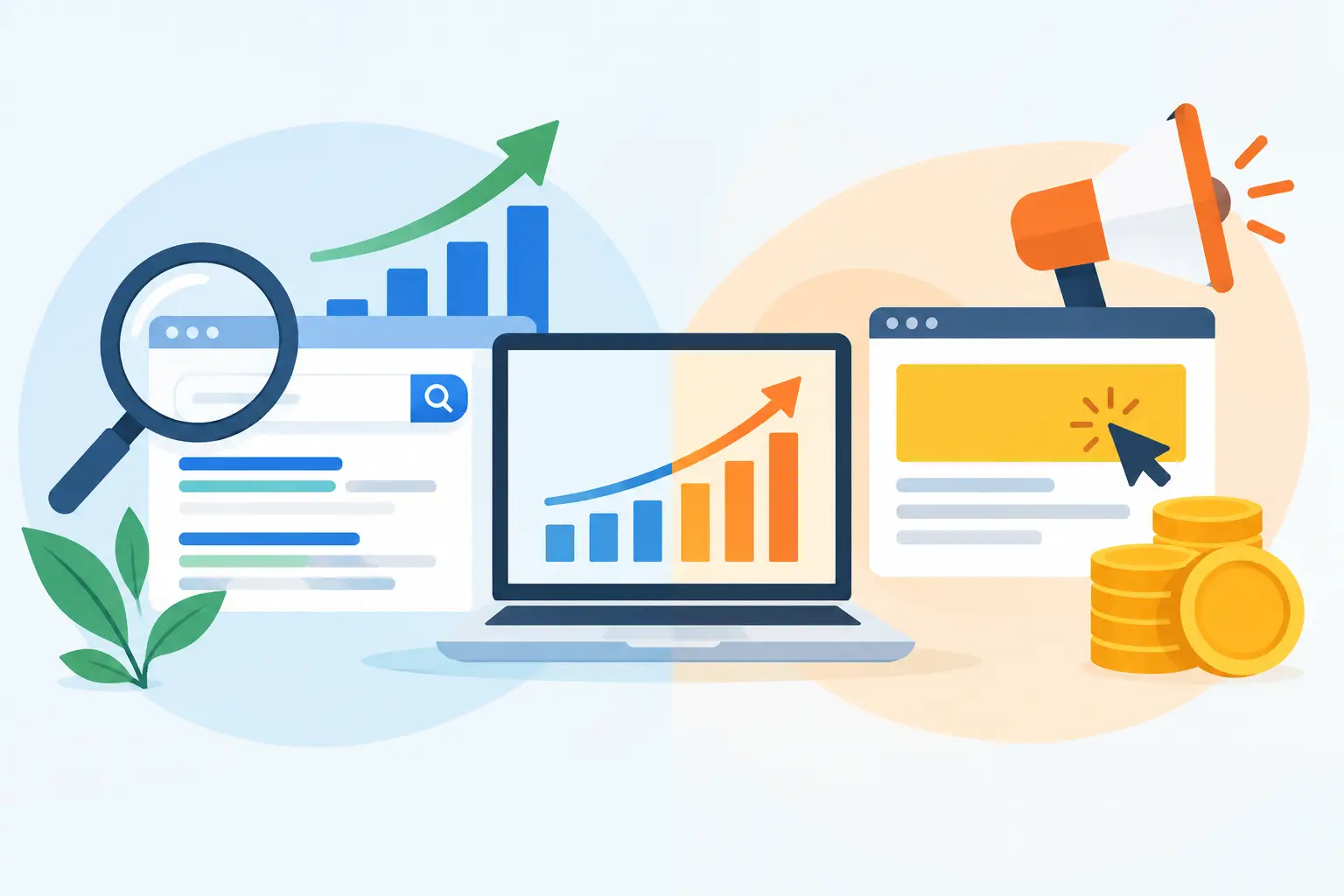
A customer in Blackpool searches for an emergency plumber, a new gym or a local accountant. Your business can appear because you have earned a strong organic position, because you have paid for an advert, or because both are working together. That is the real value of an SEO PPC comparison: it helps you decide how to put your marketing budget where it will create the most commercial impact.
SEO and PPC are often treated as competing channels. They are better understood as two different routes into the same search results page. One builds long-term visibility and trust. The other can put a focused offer in front of ready-to-act customers almost immediately. The right choice depends on your timescales, margins, market and website.
SEO PPC comparison: the core difference
Search engine optimisation, or SEO, improves your website so it can earn unpaid positions in search results. It involves technical website health, useful service pages, local search signals, content and authority. Rather than paying for each visitor, you invest in becoming a credible, relevant result for the searches that matter to your business.
Pay-per-click advertising, or PPC, places paid adverts in search results. You choose the terms you want to target, set a budget and bid for visibility. You usually pay when someone clicks. Google Ads is the most familiar platform, but the principle is simple: paid search gives you control over when and where your message appears.
The distinction matters. SEO can continue attracting enquiries after the work has been completed, although it needs ongoing attention to protect and improve positions. PPC traffic generally stops when the budget stops. In return, PPC lets you launch a campaign quickly, test demand and change direction without waiting months for rankings to develop.
When SEO is the stronger investment
SEO is a powerful choice for businesses that want dependable visibility for services people search for all year round. A Blackpool roofing firm, for example, may benefit from appearing consistently for searches around repairs, flat roofs and local roofers. Those pages can keep generating opportunities without a charge for every individual click.
It is particularly valuable when customers research before they enquire. People comparing solicitors, looking for treatment options or planning a larger home improvement project may visit several sites before making contact. Helpful, well-structured pages give your brand more chances to be seen during that decision process.
SEO also supports the credibility of your wider digital presence. Strong rankings usually sit alongside a fast, clear website, relevant information and a consistent local footprint. That benefits visitors arriving through social media, referrals and offline marketing too.
The trade-off is time. New websites and competitive sectors rarely reach valuable positions overnight. It can take several months to see meaningful progress, especially where established competitors already have strong websites and years of search authority. Any agency promising instant number-one rankings should be treated with caution.
SEO is not free marketing. There is no cost per click, but professional strategy, content, technical improvements and reporting require investment. The advantage is that the work builds an asset your business owns: a more useful, more visible website.
When PPC makes more sense
PPC is built for pace and precision. If you are promoting a limited-time offer, opening a new location or need leads while a new website gains organic traction, a paid campaign can start generating data quickly. You can target high-intent searches, show a specific message and send users to a page designed to convert.
For local businesses, that may mean appearing for searches with obvious buying intent, such as “boiler repair Blackpool” or “personal trainer near me”. A strong advert can put your business in front of people who need a solution now, rather than hoping they find you further down the organic results.
PPC is also useful for testing. Before committing to a major new service page or expanding into a new area, a campaign can show whether people are searching and whether they respond to your proposition. The search terms, click-through rates and conversion data can sharpen both advertising and SEO decisions.
However, clicks are not the same as customers. Competitive keywords can be expensive, and a weak landing page can waste budget quickly. A campaign needs thoughtful keyword selection, negative keywords to filter irrelevant searches, clear conversion tracking and regular optimisation. Sending paid traffic to a dated website with no obvious call to action is rarely a good use of money.
Cost, control and return on investment
The most useful SEO PPC comparison is not about which channel is cheaper. It is about what each pound is designed to achieve.
SEO tends to spread investment across the foundations of your online presence. You may pay for a site audit, technical fixes, service-page improvements, local optimisation and ongoing content. Results grow over time, and the cost per lead can become highly attractive once rankings are established. But this is not guaranteed, and results can fluctuate as competitors improve their own sites or search engines update their systems.
PPC has clearer short-term control. You can cap daily spend, pause a campaign and see what you have paid for clicks and tracked conversions. That visibility is useful, but the true return depends on lead quality, follow-up and your ability to turn enquiries into sales. A £20 click is worthwhile if it leads to a profitable long-term client. A £2 click is expensive if it produces no meaningful action.
Your target cost per lead should be based on commercial reality, not a guess. Consider the average value of a customer, your typical conversion rate from enquiry to sale, your gross margin and how long a client stays with you. This creates a more sensible benchmark than chasing the lowest possible click cost.
Why the best answer is often both
For many small and medium-sized businesses, SEO and PPC work best as a joined-up search strategy. PPC covers immediate demand while SEO builds a stronger long-term position. The two channels can also inform each other.
Paid search data can reveal the phrases that bring serious enquiries, the services customers value most and the messages that encourage action. That insight can guide SEO content and website improvements. Meanwhile, strong organic pages can improve the relevance of PPC landing pages, helping paid campaigns convert more effectively.
Using both also reduces reliance on a single route to market. If paid costs rise, a healthy organic presence gives you another source of enquiries. If organic rankings are still developing, PPC prevents your business from being invisible during a key trading period.
This does not mean every business should split its budget equally. A seasonal attraction may need a heavier PPC push before school holidays. A local tradesperson with steady, repeatable demand may prioritise SEO after launching a focused paid campaign. The right mix should follow your goals, not a generic percentage.
How to choose the right starting point
Start with urgency. If you need leads this month, PPC is usually the fastest route. If your goal is to reduce dependence on paid advertising over the next year, SEO deserves a clear share of your budget from the outset.
Next, assess your website. PPC needs a landing page that makes the next step obvious, whether that is calling, requesting a quote or booking an appointment. SEO needs a technically sound site with clear pages for your services and locations. If your site is slow, confusing or poorly presented, improving it may deliver better results than simply buying more traffic.
Then look at search behaviour and competition. Some services have expensive paid clicks but achievable local organic opportunities. Others are dominated by established websites, making paid search a practical way to gain early visibility. A proper review of your market should shape the plan.
Finally, be honest about capacity. More leads are only valuable if you can answer calls, respond to forms and provide a good customer experience. Marketing works hardest when the entire journey, from search result to signed job, is ready to convert interest into revenue.
Fylde Digital helps businesses bring website design, SEO and PPC into one commercially focused plan, so the journey feels consistent from first search to first conversation. The goal is not traffic for its own sake. It is a clearer online presence that gives the right customers a compelling reason to choose you.
The strongest search strategy begins with a simple question: where is your next worthwhile customer most likely to find you, and what do they need to see before they get in touch? Build your investment around that answer, measure what happens, and keep improving.