Search engine optimisation is the practice of improving a website’s visibility in organic search results, and its importance in 2026 has never been greater. Organic search drives 53% of all trackable website traffic, outpacing paid search, social media, and email combined. That single figure tells you where your customers are coming from. What has changed is the goal. SEO in 2026 is no longer purely about ranking at the top of Google. It is about building brand recognition across AI-powered search environments, knowledge graphs, and answer engines that your customers use every day.
Why the importance of SEO in 2026 goes beyond rankings
SEO has always been about visibility, but the definition of visibility has shifted. Google AI Overviews, ChatGPT search, and Perplexity now answer questions directly on the results page. Your customers may never click through to your website at all. That does not mean SEO has lost its value. It means the game has changed.
The concept now extends into what practitioners call Answer Engine Optimisation (AEO). AEO integrates SEO with AI-driven search environments, meaning your content must be structured so that AI tools can read, understand, and cite it. Businesses that treat SEO as a keyword-stuffing exercise will lose ground quickly. Those that build genuine authority will appear in AI answers, knowledge panels, and featured snippets across multiple platforms.

The financial case remains strong. Well-executed SEO delivers a median return on investment of 748% over three years. That equates to roughly £7.48 returned for every £1 spent. No paid channel consistently matches that over the long term, which is why SEO versus paid advertising is a comparison worth understanding before you allocate your marketing budget.
How AI is reshaping search behaviour and SEO strategy
AI-generated overviews now appear on roughly 30% of informational queries, and their presence reduces click-through rates for organic positions 4–10 by 30–60%. That is a significant drop in traffic for businesses relying on mid-page rankings. The implication is clear: if you are not in the top three results or cited within the AI overview itself, your visibility drops sharply.
This shift demands a different approach to content. Three priorities stand out:
- Structured data and schema markup. Search engines and AI tools use structured data to understand what your page is about. Without it, your content is harder to parse and less likely to be cited.
- FAQ-rich content. FAQ schema benefits visibility across diverse AI platforms rather than optimising for one system alone. A well-structured FAQ section signals authority and increases the chance of appearing in AI-generated answers.
- Citation-dense writing. Content that references real sources, named authors, and verifiable data earns trust from both Google’s Helpful Content algorithm and AI retrieval systems.
Pro Tip: Add FAQ schema to your most important service and product pages. This single technical change can increase your chances of appearing in AI Overviews without requiring a full content rewrite.
The digital marketing trends shaping 2026 all point in the same direction: content quality and technical structure matter more than volume. Publishing ten thin articles a week will not outperform one well-researched, properly structured piece.
Does brand recognition matter more than ranking first?
The short answer is yes, and the gap is widening. Ranking number one is less important than earning brand recognition and citations across AI platforms and knowledge graphs. A top ranking can disappear overnight after an algorithm update. Brand authority, once established, is far harder to displace.
“SEO success in 2026 is measured by brand recognition and citation, not keyword rankings alone.” — Search Engine Land
This is a genuine mindset shift for most business owners. You have spent years checking your position for target keywords. The new metrics are different. They include how often your brand is mentioned across the web, whether your business appears in Google’s Knowledge Graph, and how frequently AI tools cite your content when answering relevant questions. These signals compound over time. A business that earns consistent brand mentions across trusted publications, directories, and partner sites builds a presence that no single algorithm update can erase.
Improving brand visibility also feeds back into traditional SEO. More mentions mean more links. More links mean stronger domain authority. Stronger domain authority means better rankings. The two goals are not in conflict. Chasing recognition is simply the more durable strategy.
Key SEO best practices for 2026
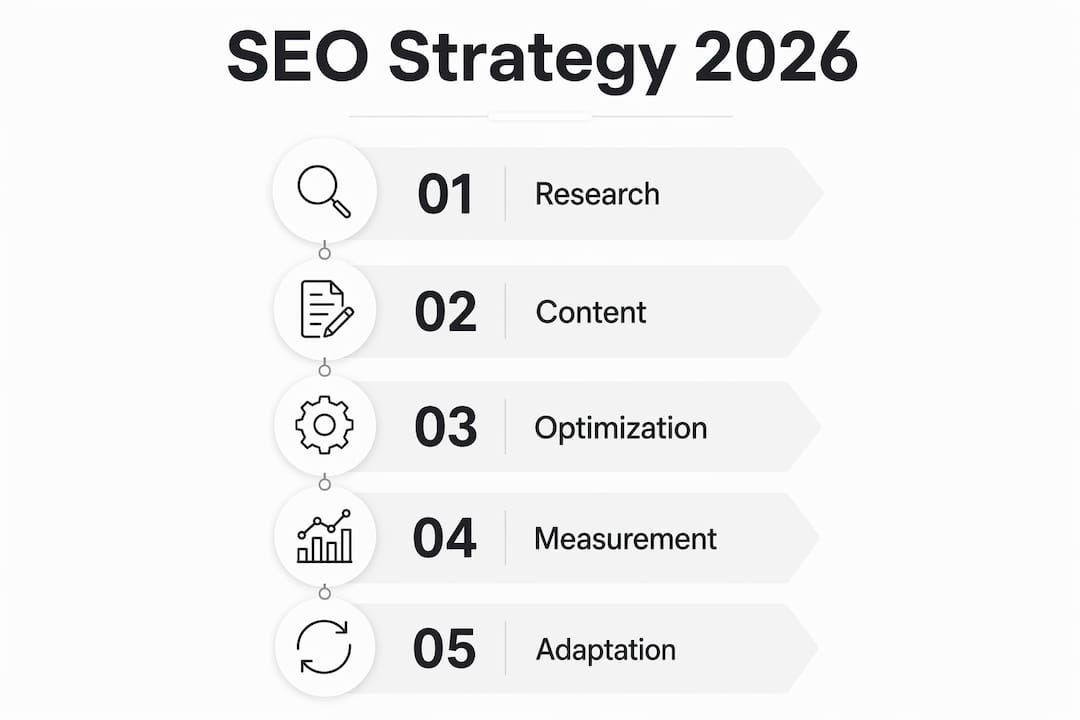
Effective SEO in 2026 rests on four operational pillars. Each one supports the others.
-
Technical foundations. Page speed, mobile responsiveness, and clean site architecture are non-negotiable. Google’s Core Web Vitals remain a ranking signal, and slow pages lose visitors before they read a single word. Run a technical audit at least quarterly.
-
Depth-first content. Thin content is actively penalised. AI-generated content ranks well only when it is original, helpful, humanised, and includes real citations and named authorship. Write for the reader first, then structure for the machine. Cover topics thoroughly, answer follow-up questions, and link to authoritative sources.
-
Continuous operation. SEO in 2026 requires ongoing monitoring, content refreshing, and technical fixes rather than one-time campaigns. Treat SEO like a utility bill, not a one-off project. Consistent refresh and update of content, paired with internal linking and expanded topical coverage, are operational necessities.
-
Brand and citation building. Earn mentions in trade publications, local directories, and relevant online communities. Submit your business to structured data sources like Google Business Profile. Build relationships that generate natural links.
Pro Tip: Use Google Search Console’s Performance report monthly to identify pages losing impressions. Refreshing those pages with updated information and added FAQ sections often recovers traffic within six to eight weeks.
| SEO element | 2020 approach | 2026 approach |
|---|---|---|
| Primary goal | Rank for target keywords | Earn brand recognition and citations |
| Content format | Keyword-optimised articles | Structured, FAQ-rich, citation-dense content |
| Technical focus | Meta tags and backlinks | Schema markup, Core Web Vitals, crawlability |
| Measurement | Organic click volume | Brand mentions, entity associations, referral traffic |
| Operational model | Campaign-based | Continuous monitoring and updating |
For practical guidance on applying these principles, the SEO strategies for small businesses resource covers real-world examples across different sectors.
How do you measure SEO success in 2026?
Traditional click metrics tell only part of the story. Tracking beyond organic clicks provides a more complete picture of SEO value, particularly as AI Overviews reduce direct traffic from mid-page positions.
The metrics worth tracking now include:
- Brand mentions. Use tools like Google Alerts or media monitoring platforms to track how often your business name appears online. Rising mentions indicate growing authority.
- Entity associations. Check whether your business appears in Google’s Knowledge Graph for relevant search terms. This signals that Google understands your brand and its context.
- Citation rates. Monitor whether your content is referenced by other websites, AI tools, or industry publications. Citations are the new backlinks.
- Referral traffic. Traffic arriving from brand mentions and citations often converts at a higher rate than generic organic traffic, because the visitor already has context about your business.
- Customer lifetime value by channel. Customers acquired through organic search tend to have stronger brand affinity. Tracking their long-term value reveals the true return from SEO investment.
| Metric | What it measures | Why it matters in 2026 |
|---|---|---|
| Brand mentions | Frequency of business name online | Indicates growing authority and AI citation potential |
| Entity inclusion | Presence in knowledge graphs | Confirms Google understands your brand |
| Referral traffic | Visits from citations and mentions | Often higher-converting than generic organic traffic |
| Content citation rate | How often your content is referenced | Signals trust and relevance to AI retrieval systems |
For a broader view of which digital marketing metrics to prioritise alongside SEO, tracking the right numbers from the start saves significant time and budget.
Key takeaways
SEO in 2026 delivers lasting competitive advantage when it combines technical rigour, citation-dense content, and continuous brand authority building across AI-powered search environments.
| Point | Details |
|---|---|
| Organic search dominates traffic | Organic search drives 53% of trackable website visits, more than paid and social combined. |
| AI Overviews change click behaviour | AI Overviews appear on 30% of queries, cutting CTR for positions 4–10 by up to 60%. |
| Recognition outperforms rankings | Brand mentions and entity authority in knowledge graphs are harder to displace than keyword positions. |
| Structured data is non-negotiable | FAQ schema and structured markup help AI tools cite your content across multiple platforms. |
| SEO is an ongoing operation | Continuous content refreshing, technical audits, and citation building replace one-time campaigns. |
SEO in 2026: a perspective from the field
The businesses I see struggling with SEO in 2026 share one trait. They are still measuring success by their position for three or four keywords. That mindset made sense in 2015. It does not reflect how search works today.
The shift I find most significant is the move from campaign thinking to operational thinking. SEO used to be something you did once or twice a year. You hired an agency, they built some links, you ranked better, and everyone moved on. That model is finished. The businesses winning now treat SEO the way they treat customer service: it never stops, it requires consistent attention, and the results compound over time.
What I tell every business owner I work with is this: your website is not a brochure. It is the most active salesperson you have. It needs to be updated, tested, and improved continuously. The same applies to your SEO. A page you wrote in 2023 may be losing ground right now because a competitor refreshed their version last month. Staying still is moving backwards.
The integration of SEO with wider digital marketing is where I see the biggest untapped opportunity. Businesses that align their SEO content with their social media, email, and paid campaigns build brand recognition faster. Each channel reinforces the others. That is not a theory. It is what the data shows, and it is what I see in practice.
— tibor
How Fyldedigital helps businesses stay visible in 2026
Fyldedigital works with business owners and marketing teams who want SEO that keeps pace with how search actually works today.
The team at Fyldedigital builds SEO programmes around the principles covered in this article: technical foundations, structured content, brand authority, and continuous improvement. Whether you need a full SEO best practices review or a fresh audit of your current performance, the approach is always grounded in what drives real business results. If you are unsure where your SEO currently stands, a free SEO review for your business is the clearest starting point.
FAQ
What is the importance of SEO in 2026?
SEO drives 53% of all trackable website traffic, making it the single largest source of online visitors. Its importance in 2026 extends to brand recognition across AI-powered search tools, not just traditional keyword rankings.
How have AI Overviews changed SEO strategy?
AI Overviews appear on roughly 30% of informational queries and reduce click-through rates for positions 4–10 by 30–60%. Businesses must now optimise for citation within AI answers using structured data and FAQ schema.
What SEO metrics should businesses track in 2026?
Brand mentions, entity associations in knowledge graphs, citation rates, and referral traffic now matter as much as organic click volume. These metrics reflect true SEO value in an AI-influenced search environment.
Is SEO still worth the investment in 2026?
Well-executed SEO delivers a median ROI of 748% over three years. No other digital channel consistently matches that return over the long term.
What is Answer Engine Optimisation (AEO)?
AEO is the practice of structuring content so that AI-driven search tools can retrieve and cite it directly. It extends traditional SEO by prioritising FAQ schema, structured data, and citation-dense writing.