Citation building is the deliberate process of creating, claiming, and correcting online mentions of your business name, address, and phone number (NAP) to improve your visibility in local search results. Get it right and Google, Bing, and AI tools like ChatGPT all receive consistent, trustworthy signals about where you are and what you do.
Three things you can do in the next hour:
- Run a quick Google search for your business name and note every listing where the address or phone number differs from your website.
- Claim or verify your Google Business Profile if you have not already — it is the single most influential listing for local visibility.
- Open a spreadsheet and record your official NAP exactly as it should appear everywhere: business name, full address, primary phone number.
That spreadsheet becomes your source of truth for every submission that follows.
Key takeaways
Consistent, accurate citations on authoritative UK directories are the foundation of local search visibility — quality and NAP consistency matter far more than raw listing volume.
| Point | Details |
|---|---|
| Audit before you build | Search for existing citations first; fix inconsistencies before creating new listings. |
| NAP consistency is non-negotiable | Use one exact name, address, and phone format across every platform, every time. |
| Prioritise Google Business Profile | Claim and fully optimise it first — it carries more local ranking weight than any other single listing. |
| Quality beats volume | Forty accurate, high-authority citations outperform two hundred thin or inconsistent ones. |
| Fyldedigital manages the full process | Fyldedigital’s done-for-you service covers audit, clean, build, and monitor with quarterly reporting. |
Table of Contents
- What citation building actually means for your business
- The different types of citations you will encounter
- Why citations still matter for local SEO in 2026
- Where to build your first citations — UK priority order
- How many citations should you aim for?
- How to build citations step by step
- Common mistakes and how to keep citations healthy
- How Fyldedigital audits and manages citations for UK businesses
- What I have learned from working on citation audits
- Fyldedigital’s citation and listings service for UK businesses
- Sources
What citation building actually means for your business
A local citation is any online mention of your business’s NAP data, whether partial or complete. It does not need to include a link to count. A listing on Yell with your address and phone number is a citation. So is a mention in a local news article that names your business and its location.
The common fields that make up a full citation are:
- Business name (exact, consistent spelling every time)
- Address (including postcode, formatted identically across all platforms)
- Phone number (primary number, same format: 01253 000000 or +44 1253 000000, but never both on different sites)
- Website URL
- Opening hours
- Business category (choose the most specific option available)
- Short business description
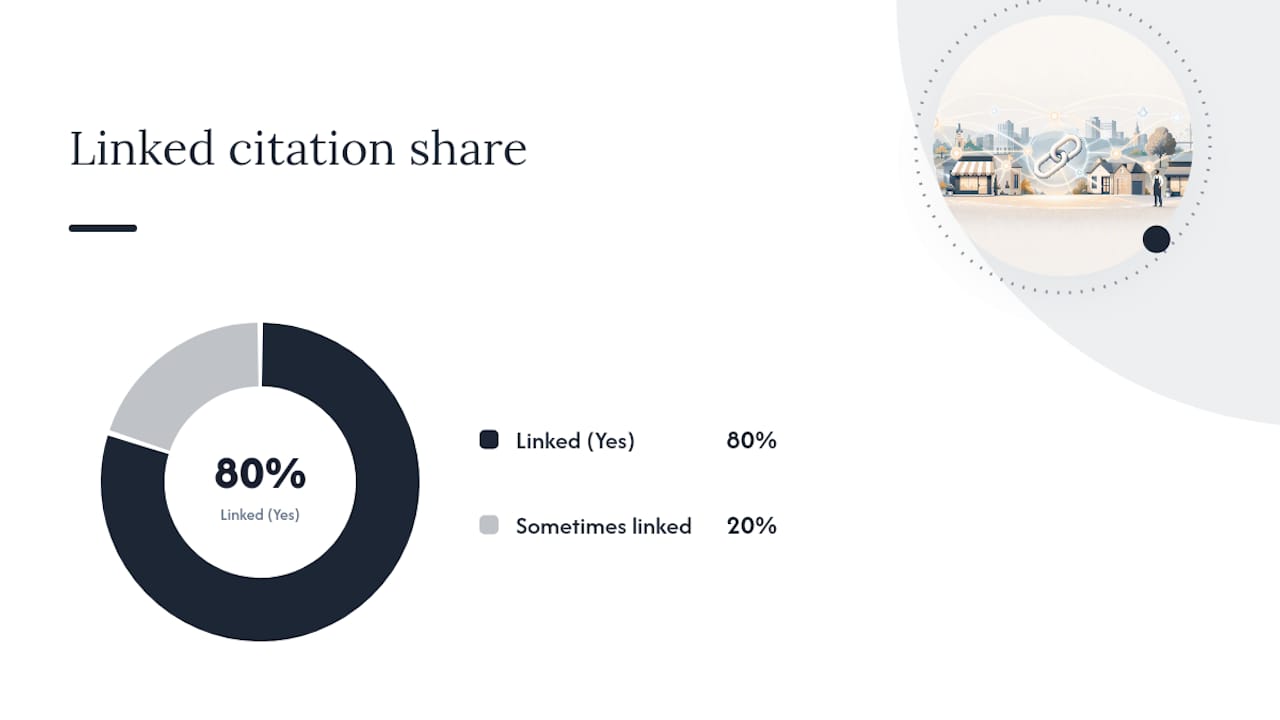
Citations split into two types: linked (the listing includes a clickable URL to your site) and unlinked (NAP data only, no link). Both carry value. Linked citations contribute a small SEO signal through the backlink; unlinked citations still validate your business data for search engines and map services.
The different types of citations you will encounter
Understanding the four main citation forms helps you prioritise where to spend your time.
Structured citations appear on formal directory platforms with defined fields: name, address, phone, category, hours. Yell, Thomson Local, and Google Business Profile are all structured.
Unstructured citations are mentions within editorial content — a blog post, a local news article, or a forum thread that names your business and location without a formal listing format.
Review and profile citations sit on platforms where customers leave ratings. Google, Yelp, and Facebook Business Pages all combine NAP data with social proof, making them doubly useful.
Social and professional profile citations include your Facebook Business Page, LinkedIn company page, and any trade association profile. These social profiles form part of your citation coverage and are often among the first results Google surfaces for a brand search.
AI citations are a newer category. An AI citation is a webpage that a large language model (LLM) uses as a source when generating an answer. According to Moz’s Whiteboard Friday on AI citations, earning these requires on-site answer capsules (concise, factual paragraphs under clear headings), proprietary data, and placements on sites the model already trusts.
| Citation type | UK example | Linked? | Primary value |
|---|---|---|---|
| Structured directory | Yell, Thomson Local | Usually yes | NAP consistency, discovery |
| Unstructured editorial | Local newspaper mention | Sometimes | Trust, brand authority |
| Review/profile | Google, Yelp | Yes | Trust, conversion signals |
| Social/professional | Facebook Business, LinkedIn | Yes | Brand presence, NAP coverage |
| AI citation | Moz, industry publications | Yes | LLM visibility, AI answer inclusion |
Why citations still matter for local SEO in 2026
Citation signals remain among the most important local search ranking factors. Consistent, accurate citations tell Google that your business is real, established, and located where you say it is. That trust directly influences whether you appear in the local pack — the map-based results that dominate the top of many local searches.
The practical benefits break down like this:
- Local pack visibility: Google cross-references your NAP data across multiple sources. Agreement between sources strengthens your position; contradictions weaken it.
- Map accuracy: Apple Maps, Google Maps, and Bing Maps all pull data from directories. Incorrect listings push customers to the wrong address.
- Consumer trust: A business that appears consistently across Yell, Google, and a trade directory reads as established and credible.
- Review synergy: Platforms like Yelp and Google combine citation data with reviews, so a well-maintained listing amplifies both signals simultaneously.
The importance of citations extends into AI-powered search. Tools like ChatGPT and Perplexity increasingly surface local business information in their answers. To be included, your business needs both off-site trust signals (mentions on authoritative sites) and on-site, extractable answer capsules that LLMs can quote directly. Structured, factual content under clear headings is what makes your pages citable by AI systems.
Practical signal: A business with a strong profile of consistent, accurate citations on authoritative UK directories will typically outperform competitors with a larger number of inconsistent listings. Volume without accuracy is noise.
Where to build your first citations — UK priority order
Not all directories carry equal weight. Foundational listings like Google Business Profile and major UK directories such as Yell should be secured first, before you move to niche or supplementary platforms.
Tier 1 — Non-negotiable foundations:
- Google Business Profile (the single most influential listing)
- Bing Places for Business
- Apple Maps Connect
Tier 2 — High-authority UK directories:
- Yell (the UK’s largest online directory)
- Thomson Local
- UK Business List
- Approved Business (particularly useful for B2B firms seeking industry trust signals)
- FreeIndex
- Scoot
Tier 3 — Sector-specific and local:
- Trade association directories (Federation of Small Businesses, relevant sector bodies)
- Local chamber of commerce listings
- TripAdvisor, Checkatrade, or Rated People (depending on your sector)
- Local news sites and community portals
Tier 4 — Review and social profiles:
- Facebook Business Page
- Yelp UK
- LinkedIn company page
- Trustpilot (if relevant to your sector)
Many UK directories offer free and paid listing tiers. Paid upgrades are optional — prioritise accuracy and verification over premium features on every platform before spending on enhanced placements.
How many citations should you aim for?
There is no universal magic number. The right volume depends on your industry, location, and competitive set.
The factors that determine your target:
- Competition density: A solicitor in central Manchester needs more citations than a specialist supplier in a rural market town, simply because the competitive field is larger.
- Number of locations: Each physical location needs its own consistent citation set. A business with three branches needs three distinct NAP profiles.
- Industry norms: Hospitality, healthcare, and legal services tend to have more directory options than, say, bespoke manufacturing.
- Existing coverage: If you already appear on 30 directories with consistent data, adding 10 more high-authority ones will move the needle more than adding 50 thin, low-authority ones.
A practical approach: search Google for your nearest direct competitor and note how many and which directories they appear on. That gives you a real-world benchmark rather than an arbitrary target. BrightLocal’s citation building guidance reinforces that quality and consistency across a set of high-authority citations beats hundreds of thin listings.
Pro Tip: Use Whitespark’s Local Citation Finder to identify which directories your competitors rank on that you do not. Discovery before mass submission saves significant time and targets the placements that actually matter in your sector.
How to build citations step by step
Follow this sequence to build citations methodically rather than scattering submissions across random directories.
-
Audit existing citations. Search Google for your business name in quotes, then repeat with your phone number and address. Log every result in a spreadsheet. Note mismatches, duplicates, and outdated information. Tools like BrightLocal’s Citation Builder can automate much of this discovery phase.
-
Create your source-of-truth record. Before submitting anywhere, confirm the exact NAP format you will use everywhere. Decide whether your business name includes “Ltd”, whether your address uses “Street” or “St”, and which phone number is primary.
-
Claim existing listings. Many directories already have a listing for your business, often with incorrect data. Claim ownership via the platform’s verification process (phone, email, or postcard) rather than creating a duplicate.
-
Create new listings on priority directories. Work through Tier 1, then Tier 2, then Tier 3 in order. Complete every available field — partial listings are weaker than complete ones.
-
Optimise each listing. Add photos, a business description, opening hours, and the correct category. For AI citation value, write a short answer capsule in your description: two or three factual sentences that directly answer what your business does, where it operates, and who it serves.
-
Verify and document. After each submission, screenshot the live listing as proof. Record the URL, login credentials, submission date, and verification status in your tracking spreadsheet.
Spreadsheet columns to include:
| Column | Purpose |
|---|---|
| Directory name | Platform identifier |
| Listing URL | Direct link to your live listing |
| Login email | Account access |
| Verification method | Phone / email / postcard |
| Status | Live / pending / claimed / rejected |
| Last updated | Date of most recent edit |
| Notes | Discrepancies, pending actions |
Pro Tip: Always photograph or screenshot your live listing immediately after verification. If a directory later changes your data (it happens with aggregator-fed platforms), you have a timestamped record of what was correct.
The full audit and review process often surfaces citation issues alongside other local SEO gaps — it is worth running both together.
Common mistakes and how to keep citations healthy
The most damaging citation errors are not always obvious. Here are the red flags to watch for:
- Inconsistent NAP formatting: “The Fylde Bakery” on one site and “Fylde Bakery Ltd” on another creates conflicting signals.
- Duplicate listings: Two live listings for the same business on the same platform confuse both search engines and customers.
- Thin or incomplete listings: A name-only entry with no address, phone, or category carries almost no value.
- Wrong business category: Selecting a broad category when a specific one exists reduces relevance for targeted searches.
- Outdated information: An old phone number or a previous address left uncorrected actively harms trust.
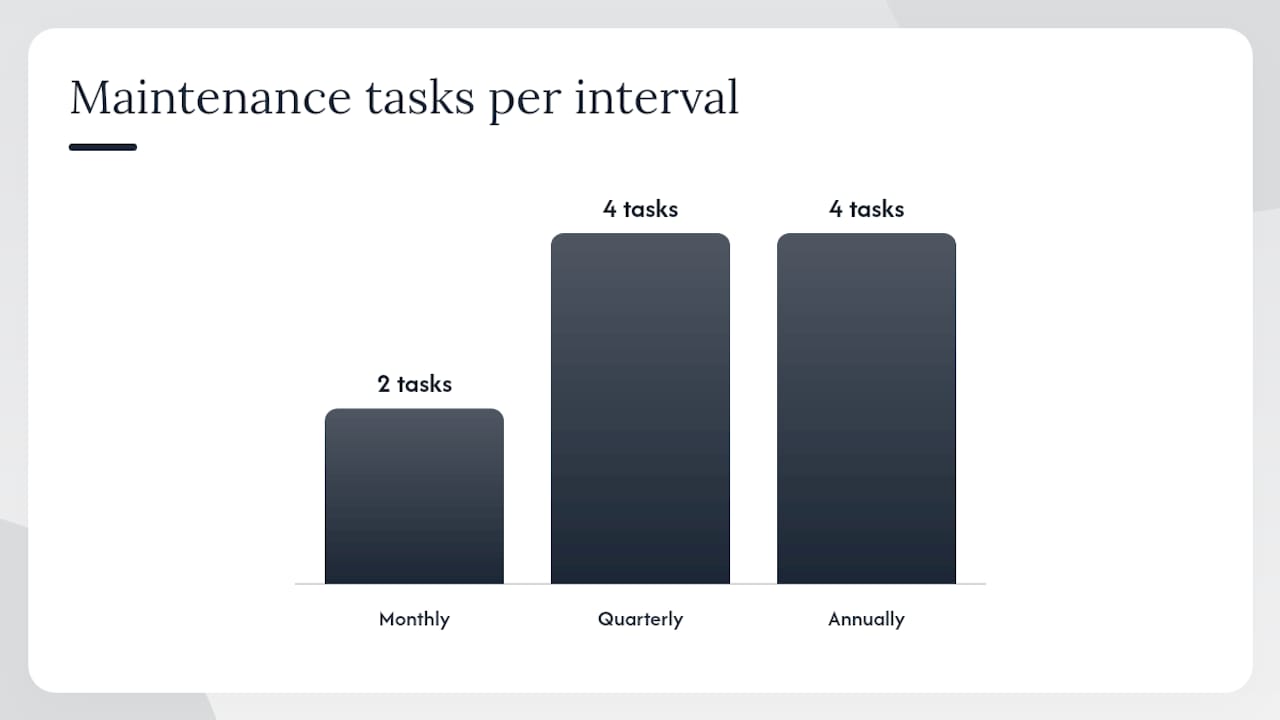
A realistic maintenance schedule:
- Monthly: Check Google Business Profile for suggested edits (Google sometimes auto-applies changes from third-party sources). Verify your top five listings are still accurate.
- Quarterly: Run a broader audit across your full citation set. Check for new duplicates, update any listings where hours or services have changed, and add any new high-authority directories you have identified.
- Annually: Full refresh — review every listing, update photos, confirm categories still reflect your current offering, and remove or merge any duplicates that have appeared.
When a third-party directory shows incorrect data that you cannot edit directly, contact the platform’s support team with your correct NAP and a link to your official website as evidence. For persistent errors on aggregator-fed platforms (such as those that pull data from data brokers), you may need to correct the data at the aggregator level rather than on each individual directory.
How Fyldedigital audits and manages citations for UK businesses
Fyldedigital follows a structured five-stage methodology for every citation project: audit, clean, build, monitor, report.
The process in practice:
- Audit: We identify every existing citation using a combination of manual search and discovery tools, logging accuracy, completeness, and duplicate status.
- Clean: Duplicate listings are merged or removed; incorrect NAP data is corrected at source, including aggregator-level fixes where necessary.
- Build: New listings are created on priority directories in order of authority, with every field completed and photos uploaded.
- Monitor: Ongoing checks flag any changes made by third parties or data aggregators, so corrections happen quickly rather than months later.
- Report: Clients receive a clear record of every listing, its status, and any changes made during the period.
Client deliverables typically include an audit spreadsheet, verified listing URLs with screenshot evidence, a monitoring dashboard, and a quarterly summary report.
Businesses that go through this process typically see measurable improvements in listing accuracy and local search visibility within 60–90 days, particularly in the local pack and Google Maps results. The SEO growth outcomes from combined local SEO and citation work are most pronounced for businesses that previously had inconsistent or incomplete NAP data across their listings.
Pro Tip: If you are managing citations yourself, treat your Google Business Profile as the master record. Every other listing should mirror it exactly. When you update your hours or address, update Google first, then work through your directory list.
What I have learned from working on citation audits
The most common thing I see when auditing a new client’s citation profile is not missing listings — it is conflicting ones. A business that has traded for five or more years often has three or four versions of its address scattered across directories, usually from an old postcode, a previous trading name, or a phone number that changed years ago.
My practical recommendation: before you submit to a single new directory, spend an hour cleaning what already exists. One accurate listing on a high-authority platform like Yell or Google is worth more than ten new submissions built on a shaky foundation.
The one caution I would add about automation: tools that distribute your NAP data to dozens of directories simultaneously save real time, but they do not guarantee accuracy. Aggregator-fed platforms sometimes override your submitted data with older records. Manual verification after any automated submission is not optional — it is the step that determines whether the work actually sticks.
Fyldedigital’s citation and listings service for UK businesses
Fyldedigital offers a done-for-you citation service that removes the manual effort of auditing, claiming, and maintaining your business listings across UK directories. Rather than spending hours tracking down inconsistent NAP data yourself, you get a clean, verified citation profile built to the same standard we apply to our own local SEO campaigns.
The managed service covers: citation audit and gap analysis, duplicate removal, new listing creation across priority UK directories, verification evidence, and ongoing monitoring with quarterly reporting. Packages are available as one-off projects or as part of a broader local SEO retainer.
To request a free citation audit for your business, visit the Fyldedigital services page or get in touch directly. We will identify your current citation gaps and show you exactly what needs fixing before any work begins.
Sources
These resources are worth bookmarking whether you are managing citations yourself or briefing an agency.
Authoritative guides:
- Local citations: what they are and how they help local search
- What is Local Citation Building for SEO? – BrightLocal
- What Is Local SEO Citation—A Complete Overview and Step-By-Step Guide
Tools for audits and ongoing management:
Broader local SEO context: