Many small and medium-sized business owners hear the term “digital consultancy” and assume it means either IT support or social media management. It means neither. Understanding what is digital consultancy, and how it genuinely differs from those services, is the difference between making a smart investment and wasting your budget. This guide covers exactly what digital consultancy is, how the engagement process works, the real benefits it delivers for businesses like yours, and how to choose the right partner without making costly mistakes.
Table of Contents
- Key takeaways
- What is digital consultancy?
- How a digital consultancy engagement works
- Benefits of digital consultancy for small businesses
- How to choose the right digital consultant
- My honest take on digital consultancy for SMBs
- How Fyldedigital can help your business
- FAQ
Key takeaways
| Point | Details |
|---|---|
| Digital consultancy is strategic | It uses technology and data to align your digital efforts directly with your business goals, not just fix tech problems. |
| Sequencing matters | Skipping the diagnostic phase is the leading cause of failed digital projects, so good consultants always audit before acting. |
| Consultants are not contractors | Hiring a consultant to do daily execution work creates frustration. Their value is in strategy, governance, and direction. |
| Timing signals are clear | If your outcomes consistently lag behind your plans, or your team lacks the expertise to close that gap, a consultant can help. |
| Collaboration beats reports | The most effective digital consultancy is embedded and ongoing, not a one-off study that sits in a drawer. |
What is digital consultancy?
Digital consultancy is the practice of using technology, data, and product thinking to help a business achieve specific, measurable results. That definition matters because it distinguishes it sharply from two services that get confused with it constantly.
An IT contractor fixes or builds things. A traditional management consultant assesses your organisation and writes a report. A digital consultant does something different. They sit at the intersection of strategy, technology, and customer experience, helping you understand what to do, why to do it in a certain order, and how to measure whether it is working.
The core areas a digital consultant covers typically include:
- Digital strategy: Identifying where your business needs to compete online and what capabilities you need to get there
- Data and analytics: Turning the numbers your business already generates into decisions rather than spreadsheets
- Customer experience: Mapping how people interact with your brand digitally and identifying where they drop off or disengage
- Change management: Helping your team adopt new processes, tools, or ways of working without losing momentum
- Digital marketing consultancy: Aligning your online marketing channels with your broader business objectives
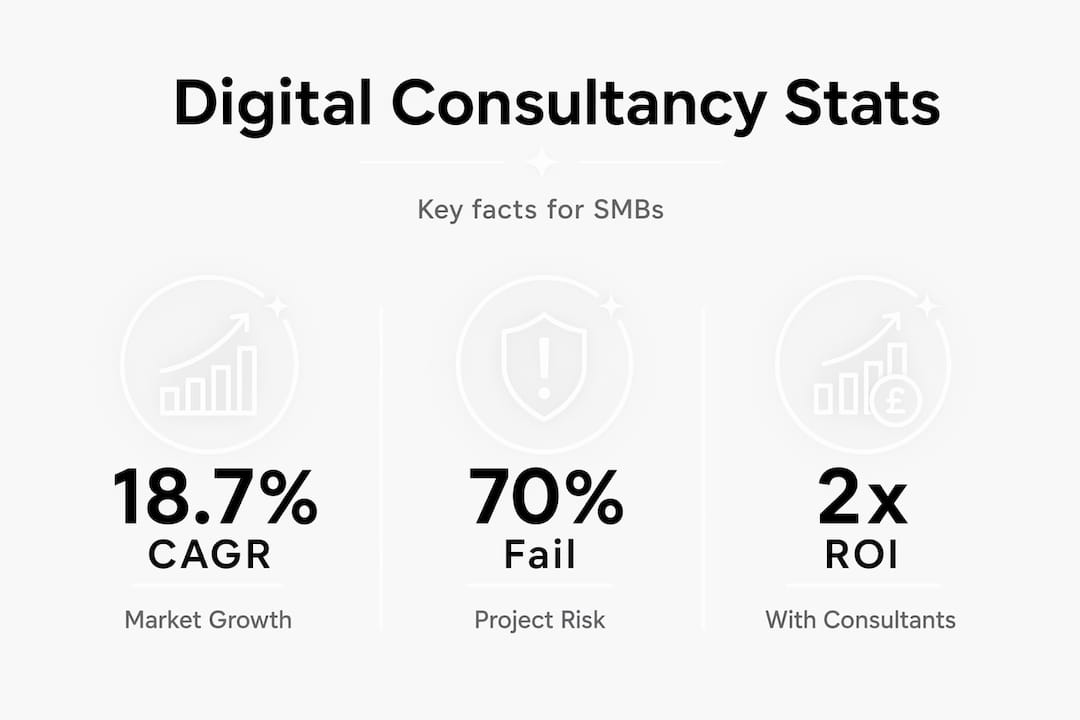
The digital transformation consulting market is growing at an 18.7% compound annual growth rate as of 2026, driven by demand for AI consulting and digital risk management. That growth reflects how many businesses now recognise they need strategic guidance rather than more tools. Buying software without a coherent strategy is like buying gym equipment without knowing your fitness goals.
Importantly, digital consultants focus on technology and data in ways general management consultants do not. The outcome focus and strategic sequencing they bring is what justifies the investment. Without that focus, you end up with activity rather than progress.
How a digital consultancy engagement works
Understanding the process helps you set realistic expectations. Good digital consultancy follows a clear phased approach, and the order of those phases is not arbitrary.
-
Diagnostic phase: The consultant audits your current digital setup, including your website performance, analytics, marketing channels, and internal capabilities. They establish KPI baselines so everyone agrees on what the starting point actually is. Skipping this diagnostic phase is the most common cause of project failure. The first weeks focus on alignment, not immediate deliverables.
-
Strategy development: The consultant evaluates the real tradeoffs your business faces and builds a strategy linked to your actual business objectives. This is where the thinking happens. Not every digital opportunity is worth pursuing, and a good consultant tells you which ones to ignore.
-
Roadmap creation: A clear roadmap sets out what happens, who owns it, and by when. Without clear ownership, strategy documents collect dust.
-
Pilot initiatives: Rather than betting everything on a full rollout, engagements typically begin with two pilot initiatives that prove value before scaling. This approach manages risk while building confidence internally.
-
Execution support and performance review: The consultant stays involved through delivery, reviewing performance against the baselines set in phase one and adjusting the approach as needed.
Pro Tip: Ask any potential consultancy partner what their diagnostic process looks like before you engage. If they want to jump straight to recommendations without an audit, treat that as a warning sign.
The most effective digital consulting firms combine strategy and execution under one roof, aligning stakeholders and staying involved through delivery. This matters because strategy that never gets built is worth nothing.

Benefits of digital consultancy for small businesses
The benefits of digital consultancy become tangible quickly once you understand what you are actually paying for. Here is what changes when you work with the right partner.
-
Strategy that connects to your goals: Your digital marketing, your website, and your data start working together rather than pulling in separate directions. The consultant links every initiative to a business outcome you actually care about, whether that is more enquiries, better conversion rates, or stronger brand awareness in your region.
-
Improved customer experience: A digital consultant maps the journey your customers take online and identifies where that experience breaks down. For many SMBs, this reveals that the website is doing more harm than good as a sales tool. Learn more about digital marketing and how it connects to this kind of strategic thinking.
-
Avoiding the 70% failure rate: Approximately 70% of digital transformation initiatives fail due to cultural, organisational, and strategic shortcomings. Technology alone does not transform a business. A consultant who understands change management significantly reduces that risk for you.
-
Bridging strategy and execution: Many businesses have a plan on paper but no clear path from thinking to building. Effective digital consulting firms bridge that gap, keeping strategy and delivery aligned throughout the project.
The trigger points that suggest your business needs a consultant are worth knowing specifically. You should consider digital strategy consulting if your revenue targets are not being met despite increased digital spending, if your team lacks the in-house expertise to assess why, or if you are about to make a significant investment in technology and want to reduce the risk of getting it wrong.
Pro Tip: Do not wait until a project has already failed to bring in a consultant. Involving them before you commit budget to a major digital initiative saves considerably more than it costs.
How to choose the right digital consultant
Choosing well here matters as much as the decision to hire in the first place. A poor match wastes time, money, and organisational goodwill.
The table below helps clarify what separates a strong consultancy partner from a weak one.
| What to look for | What to avoid |
|---|---|
| Clear diagnostic process before recommendations | Jumping straight to solutions without an audit |
| Accountability for outcomes, not just outputs | Delivering a report and disappearing |
| Collaborative, embedded working style | Working in isolation and presenting findings |
| Experience relevant to your sector and size | Generic credentials with no SMB track record |
| Phased pilots before full commitment | Demanding large upfront investment before proving value |
Beyond the comparison, there are specific questions you should ask before signing anything. Ask how they have measured success in previous engagements. Ask who specifically will work on your account. Ask what happens when the strategy needs to change based on new data.
One of the most common mistakes SMBs make is hiring consultants as contractors for daily execution work. That causes frustration on both sides. A consultant’s value is in strategic design and governance. If you need someone to write social posts every week, that is a different role entirely.
The modern consulting model has moved away from “study, report, and leave” towards co-creation and continuous partnership. Look for a partner who is willing to be accountable for results, not just recommendations. That shift in accountability changes everything about how the engagement feels and what it produces. You can also review Fylde Digital’s approach to see how a practical, results-focused partnership looks in practice.
Finally, set clear KPIs at the start of the engagement and agree on how progress will be reviewed. Vague objectives produce vague results. The more specific you are about what success looks like, the better positioned your consultant is to deliver it.
My honest take on digital consultancy for SMBs
I have worked with enough small and medium-sized businesses to notice a pattern. Most arrive expecting a consultant to hand them a finished plan and then disappear. Some expect the consultant to do everything themselves. Neither expectation leads to good results.
What I have found actually works is an embedded, collaborative model where the consultant is genuinely invested in what happens after the strategy document is written. The thinking and the building cannot be separated cleanly. When they are, things fall apart in the gap between the two.
I also think many SMBs underestimate how much of the value in digital consultancy is in what the consultant tells you not to do. Avoiding the wrong investment, the wrong platform, or the wrong sequence is worth more than the most polished strategy deck. I have seen businesses save tens of thousands of pounds by pausing a technology purchase they were about to make in the wrong order.
My advice is straightforward. Be honest about what your business actually needs right now. If you need clarity on where to focus, a digital consultant is the right hire. If you need someone to execute campaigns week to week, hire a specialist practitioner. Knowing the difference before you engage saves everyone a great deal of time.
— tibor
How Fyldedigital can help your business
If this article has given you clarity on what digital consultancy involves, the natural next step is working with a team that can deliver on both the strategy and the execution. Fyldedigital works with small and medium-sized businesses across the Fylde Coast and beyond, translating digital strategy into visible, measurable growth.

From web design in Blackpool built for conversions and mobile performance, to SEO campaigns that build long-term organic visibility, Fyldedigital’s full range of services is designed to support your business at every stage of its digital journey. You can request a free website and SEO review directly from the site, so you start with data rather than guesswork.
FAQ
What does a digital consultant actually do?
A digital consultant uses technology, data, and strategic thinking to help businesses achieve specific outcomes. They differ from IT contractors in that they focus on strategy, customer experience, and measurable business results rather than day-to-day execution.
How is digital consultancy different from digital marketing?
Digital marketing focuses on channels such as SEO, paid advertising, and social media. Digital consultancy sits above that, setting the strategy that determines which channels to use, in what order, and how to measure whether they are working.
When should an SMB hire a digital consultant?
You should consider hiring a digital consultant when your outcomes are consistently lagging behind your plans, when you lack the internal expertise to diagnose why, or when you are about to make a significant technology investment and want to reduce the risk of failure.
Why do digital transformation projects fail so often?
Around 70% of digital transformation initiatives fail because technology investment alone is not enough. Cultural, organisational, and strategic alignment must accompany the technology, which is exactly where a good digital consultant earns their fee.
What is the biggest mistake businesses make when hiring a digital consultant?
The most common mistake is treating consultants as contractors and expecting them to carry out daily execution tasks. Consultants are most valuable in the strategic design and governance role. Misunderstanding that distinction leads to frustration and poor value for money.