Tracking digital metrics is defined as the systematic measurement of key online performance indicators to turn raw data into business decisions. For small and medium-sized business owners, this practice separates guesswork from growth. A meta-analysis of 138 studies covering nearly 20,000 participants found that tracking goal progress produces a medium effect size (d = 0.40) on overall success. That figure means businesses that monitor performance consistently achieve significantly more than those that do not. Understanding why track digital metrics matters is the first step towards building a marketing strategy that actually works.
Why track digital metrics at all?
Digital performance measurement is the process of collecting, analysing, and acting on data from your online channels. The industry term for this practice is digital analytics, and it covers everything from website traffic to paid advertising returns. Most business owners have access to more data than they realise. The real problem is knowing which numbers to pay attention to and what to do with them.
Tracking digital metrics gives you a clear picture of what is working and what is wasting your budget. Without it, you are making decisions based on instinct rather than evidence. A well-structured digital marketing strategy depends on reliable data to allocate spend, adjust campaigns, and measure progress against real business goals.

What are digital metrics and which ones matter for SMBs?
Not all metrics carry equal weight. The most useful way to categorise them is by the stage of the customer journey they measure.
- Acquisition metrics tell you how people find your business online. Key examples include organic search traffic, cost per click, and customer acquisition cost (CAC).
- Engagement metrics show how visitors behave once they arrive. Bounce rate, average session duration, and pages per visit fall into this group.
- Conversion metrics measure the actions that generate revenue. Conversion rate and profit on ad spend (POAS) are the most direct indicators of marketing effectiveness.
- Retention metrics track how well you keep existing customers. Repeat visit rate and email open rate are common examples.
The critical distinction is between vanity metrics and actionable metrics. Vanity metrics, such as total page views or social media follower counts, inflate reports but rarely connect to revenue. Actionable metrics, such as conversion rate or CAC, correlate directly with business impact and drive real decisions. Focusing on the wrong numbers is one of the most common and costly mistakes SMB owners make.
| Metric category | Example metrics | Business impact |
|---|---|---|
| Acquisition | Organic traffic, CAC, cost per click | Shows how efficiently you attract new customers |
| Engagement | Bounce rate, session duration | Reveals content and website quality |
| Conversion | Conversion rate, POAS | Directly links marketing spend to revenue |
| Retention | Repeat visit rate, email open rate | Measures loyalty and long-term value |
Understanding key digital marketing metrics in each category helps you prioritise where to focus your attention and budget.
How does tracking digital metrics drive business performance?
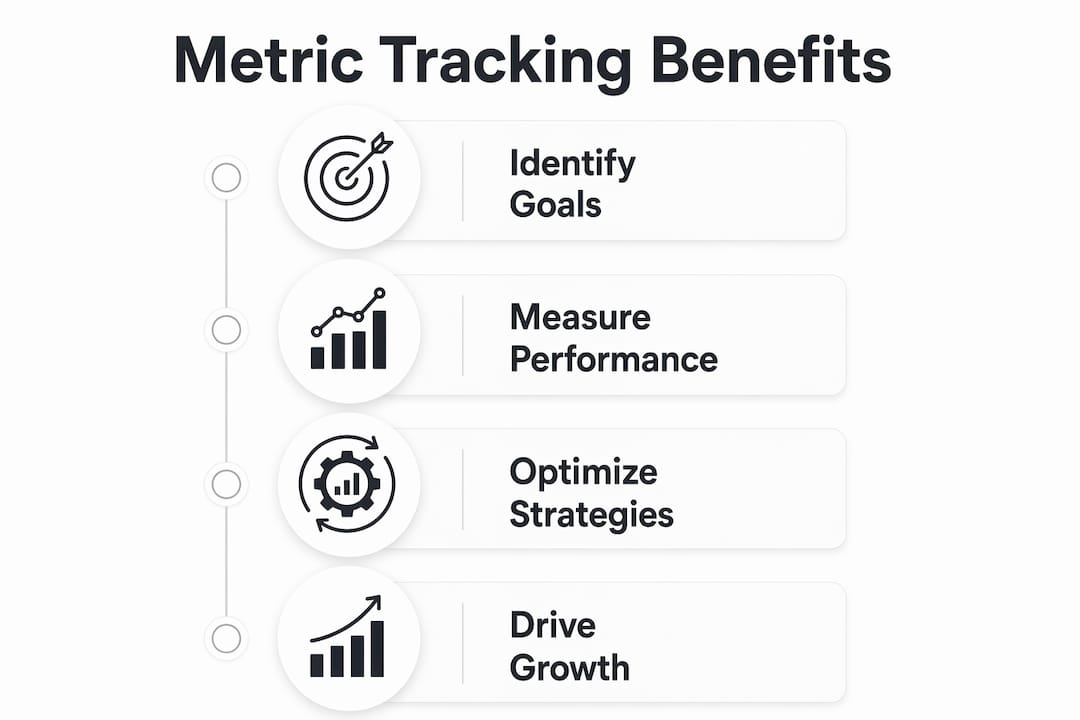
Tracking metrics does more than produce reports. It creates a feedback loop that drives continuous improvement across your marketing and operations. Systematic performance tracking bridges the gap between seeing data and understanding root causes, which is where real decisions get made.
Real-time dashboards are one of the most practical tools for achieving this. Operational case studies show that real-time visibility can reduce customer service resolution times by 22% within 30 days. That is not a marginal gain. It is the kind of improvement that directly affects customer satisfaction and repeat business.
There is also a psychological dimension that most business owners overlook. Metric visibility promotes natural self-correction and faster improvement than private reporting. When your team can see performance data in real time, they respond to it without waiting for a management directive.
Tracking acts as a continuous improvement engine. It enables early intervention to fix campaign drift before major losses occur, turning data from a record of the past into a tool for shaping the future.
Pro Tip: Make your key metrics visible to your whole team, not just buried in a monthly report. A shared dashboard creates accountability and encourages people to act on what they see.
What are the common pitfalls in tracking digital metrics?
Most businesses have plenty of data but struggle to turn analytics into decisions that improve performance. The gap is usually caused by data quality problems, not a lack of information.
The most common tracking pitfalls for SMBs include:
- Broken tracking configurations. Site updates, theme changes, and plugin conflicts regularly break analytics tags without anyone noticing.
- Privacy settings and ad blockers. These cause significant data loss in standard browser-based tracking setups.
- Data decay. Tracking configurations break over time due to site updates and privacy changes. Quarterly audits are the recommended minimum to maintain accuracy.
- Relying on vanity metrics. Reporting on follower counts or raw traffic without connecting them to conversions creates a false sense of progress.
- Incomplete multi-channel data. Measuring only one channel, such as your website, while ignoring email, paid search, or social media, produces a distorted picture.
The difference between reporting and analytics is worth understanding clearly. Reporting tells you what happened. Analytics tells you why it happened and what to do next. Most SMBs stop at reporting and miss the value that comes from deeper analysis.
Pro Tip: Combine first-party data collection with server-side tracking to recover data lost to ad blockers and privacy restrictions. First-party tracking methods recover on average 34.2% more conversions and lower customer acquisition cost as a result.
How to set up digital metric tracking for your SMB
Setting up a reliable tracking system does not require a large budget or a dedicated data team. It requires a clear plan and consistent habits.
- Define your business goals first. Every metric you track should connect to a specific outcome, such as generating enquiries, increasing online sales, or reducing cost per lead. Goals without metrics are just wishes.
- Choose a primary analytics platform. Google Analytics 4 is the industry standard for website measurement and is free to use. Pair it with Google Search Console for organic search data.
- Audit your existing tracking setup. Check that all analytics tags and pixels are firing correctly. Schedule this audit quarterly to catch issues caused by site updates or privacy changes.
- Build a simple dashboard. Pull your most important KPIs into one view. Focus on conversion rate, traffic sources, CAC, and bounce rate as a starting point.
- Set a regular review cadence. Weekly check-ins for campaign performance and monthly reviews for broader trends give you enough frequency to act without creating data fatigue.
- Act on what you find. Data only has value when it changes a decision. If your bounce rate is high on a specific page, test a new headline or layout. If a paid channel has a poor POAS, reallocate that budget.
For PPC campaigns specifically, understanding how to measure PPC success is a separate discipline worth studying in detail. The metrics that matter for paid search differ from those that matter for organic traffic or social media.
Multi-channel measurement is the goal most SMBs should work towards. Tracking each channel in isolation misses the interactions between them. A customer might discover you through organic search, return via a social media post, and convert after clicking a paid ad. Attribution modelling, even in its simplest form, helps you understand that full picture.
Accuracy in your data builds trust across your team. Accurate metrics motivate teams to act on what they see. Generic or incorrect data generates scepticism and compliance rather than genuine improvement.
Key takeaways
Tracking digital metrics is the single most reliable way for SMBs to connect marketing activity to business outcomes and make decisions that improve performance over time.
| Point | Details |
|---|---|
| Define goals before metrics | Every KPI you track must connect directly to a specific business outcome. |
| Prioritise actionable metrics | Focus on conversion rate, CAC, and POAS rather than vanity metrics like follower counts. |
| Audit tracking quarterly | Site updates and privacy changes break configurations; regular audits maintain data accuracy. |
| Make metrics visible | Shared dashboards create team accountability and faster self-correction than private reports. |
| Act on data, not just collect it | Tracking only delivers value when it changes a decision or adjusts a campaign. |
What I have learned from watching SMBs track the wrong things
Working with small and medium-sized businesses on their digital marketing, I have seen the same pattern repeat itself. A business owner invests time setting up analytics, pulls a report every month, and feels reassured by rising traffic numbers. Then, six months later, they cannot explain why enquiries have not grown. The traffic was real. The engagement was not.
The shift that changes everything is moving from reporting to analysis. Reporting tells you what the numbers are. Analysis tells you what they mean and what to do next. That shift is harder than it sounds because it requires you to trust your data, and trust only comes from accurate tracking.
Privacy changes and data fragmentation are making this harder in 2026. Browser restrictions, cookie consent requirements, and the growth of ad blockers mean that standard tracking setups miss a meaningful share of conversions. Server-side tracking and first-party data strategies are no longer optional for businesses that want reliable numbers.
My honest view is that most SMBs should spend less time looking at more metrics and more time acting on fewer, better ones. Pick three to five KPIs that directly connect to revenue. Track them consistently. Review them on a fixed schedule. The businesses I have seen grow fastest are not the ones with the most sophisticated dashboards. They are the ones that act on what they see.
— tibor
How Fyldedigital supports SMB marketing performance
Fyldedigital works with small and medium-sized businesses across the Fylde Coast and beyond to build digital marketing systems that produce measurable results. Every project, from web design in Blackpool to SEO and PPC management, is built with performance tracking at its core.

A website that does not track visitor behaviour is a missed opportunity. Fyldedigital builds conversion-focused websites that integrate analytics from day one, so you always know which pages generate enquiries and which ones need attention. If you want a clearer picture of how your digital presence is performing, request a free website and SEO review from Fyldedigital today.
FAQ
What does tracking digital metrics mean for a small business?
Tracking digital metrics means systematically measuring key online performance indicators, such as conversion rate, traffic sources, and customer acquisition cost, to understand how your marketing is performing and where to improve.
Which digital metrics should SMBs focus on first?
Start with conversion rate, bounce rate, and customer acquisition cost. These three metrics connect directly to revenue and give you a clear view of whether your marketing spend is working.
How often should I review my digital metrics?
Review campaign performance weekly and broader trends monthly. Audit your tracking setup quarterly to catch broken tags or configurations caused by site updates and privacy changes.
Why do vanity metrics cause problems?
Vanity metrics like total page views or social media followers look positive in reports but do not correlate with revenue. Relying on them leads to decisions based on false signals rather than real business performance.
What is the difference between digital reporting and digital analytics?
Reporting tells you what happened, such as how many visitors your site received. Analytics explains why it happened and identifies what action to take next, which is where the real business value lies.